Choose the screen and its position before paying for more computing power: a bright window can make tables difficult to read regardless of the desktop behind them. A compact desktop suits browsing, spreadsheets and modest local analysis if its software and display connections meet your needs; an upgradeable tower makes more sense when you expect local files or applications to grow. Consider a workstation only for a defined demanding local workload, and check whether your chosen desktop includes a monitor.
Who this setup suits
Glare-conscious public-data explorer
You read tables and charts near a bright window, so screen placement and lighting matter before extra computing capacity. The Health and Safety Executive identifies repositioning a screen or using blinds as ways to address glare.
Growing local-analysis user
You download spreadsheets or CSV files and may later keep larger datasets or run local scripts. Memory and storage options matter if you expect that work to expand; the Office for National Statistics describes public datasets available as XLS or CSV downloads.
Demanding local data-science user
You have a defined need for substantial local processing, visualisation or specialist software. That is a reason to assess workstation configurations rather than assume ordinary browsing calls for one.
What to check before buying
For public-data work beside a bright window, settle the screen and desk layout, then match the computer to the analysis you will actually run.
Compact desktop
Choose it when: Desk space is limited and your work centres on browsing, spreadsheets or modest local scripts.
Allow for: A suitable separate display and model-specific limits on changing memory or storage later.
Upgradeable Windows desktop
Choose it when: You expect to retain more local data or add memory and storage as your work develops.
Allow for: More desk or floor space, and verify the upgrade options of the exact model rather than the desktop range.
Workstation
Choose it when: A specific local analysis or specialist application calls for substantial memory, graphics capability or expansion.
Allow for: Hardware aimed at demanding workloads will not, by itself, resolve screen glare or software compatibility.
| Concern |
What to check |
Who this matters to |
| Screen readability |
Check the exact monitor’s anti-glare finish and positioning options; plan how to reduce reflections from the window. |
If reflections obscure rows and charts, I need to see the screen clearly before adding computing power. Around 45% of consumers would put glare and readability first. |
| Growing local analysis |
Check your required software, expected local file sizes and the exact computer’s memory and storage upgrade options. |
When downloaded datasets and local tools start to accumulate, I want room to keep working without replacing the computer. Roughly 33% of consumers would prioritise that growth. |
| Space or specialist compute |
Check the available desk space and display connections, or define the local workload that calls for workstation hardware. |
I either need a smaller computer to leave room for the screen or have a specific demanding task to run locally. About 22% of consumers would make one of those requirements their primary concern. |
Buying pitfalls
-
Choosing the computer but overlooking the screen
A faster processor does not remove reflections from a poorly placed display. The Health and Safety Executive advises repositioning the screen or using blinds to address glare.
Plan the monitor position and connection alongside the desktop; check the exact screen’s finish, brightness specification and adjustment options.
If the screen cannot be positioned comfortably, a monitor arm, blinds or a different monitor may also be needed.
-
Using operating-system minimums as a workload target
Microsoft’s Windows 11 minimum requirements concern installation, not how comfortably a particular desktop will handle your datasets and simultaneous applications.
Size memory and storage around the files and tools you expect to use, and check an upgrade path if those needs may grow.
-
Choosing a workstation without a defined local task
Lenovo and HP position workstation lines for demanding technical workflows; that positioning does not establish a need for one when your work is mainly browsing and spreadsheets.
Identify the application, dataset scale or graphics requirement that would justify workstation hardware before choosing a configuration.
Brands to consider
Dell
Dell lists compact desktops, slim desktops and separate monitors in its UK range.
- Dell describes memory and storage upgrades for its slim desktop range. Its S2725H monitor specifications state an anti-glare coating and typical brightness of 300 cd/m².
- Check the exact desktop’s upgrade options and monitor bundle; a separate monitor specification does not describe the screen supplied with a desktop.
Apple
The Mac mini offers a compact macOS route for a setup with a separate display.
- Apple’s Mac mini technical specifications list a 16GB unified-memory starting configuration and support for up to three external displays.
- Check the exact configuration, required applications and compatibility with your monitors and cables, particularly for employer-managed tools.
Lenovo
Lenovo positions its ThinkStation range for demanding technical work.
- Lenovo describes configurable workstation options for data-science and other compute-intensive workloads.
- A workstation range’s capabilities do not establish that a particular configuration is needed for routine public-data browsing.
HP
HP positions its Z workstations for data-science and technical workflows.
- HP describes desktop workstation options for demanding local analysis and visualisation.
- Check the exact Z model, operating system and graphics requirements rather than applying range-level claims to every configuration.
Joybuy desktop options
These options include compact desktops for a space-conscious, separate-screen setup and an ASUS system aimed at defined local AI or data-science work. For any of them, check the monitor bundle and the screen you intend to use beside the window.
 No image available
FIREBAT R3 Mini PC, Ryzen 5 7430U, 16GB, 512GB SSD
A compact option to assess for browsing public datasets and running your chosen light local tools.
The listed configuration has an AMD Ryzen 5 7430U, 16GB LPDDR4 memory and a 512GB SSD; the title also states 4K triple-screen support. Check the required display outputs and cables, along with whether a monitor is included.
View on Joybuy
 No image available
Lenovo IdeaCentre Mini PC 01IRH10R, Core 5, 16GB, 512GB SSD, 91B2000XUK
Consider this mini desktop if desk space is tight and the exact configuration supports your required data tools.
Its title specifies an Intel Core 5 processor, 16GB RAM and a 512GB SSD. Check memory and storage upgrade options if your local work may grow, and confirm the monitor bundle and display connection.
View on Joybuy
 No image available
Apple Mac mini (2026), M6, 12-core CPU and GPU, 16GB, 256GB SSD
This compact option calls for a macOS compatibility check before you commit to it for local data work.
The listed variant has 16GB memory and a 256GB SSD. Compare that storage with the datasets and applications you plan to keep, and confirm your display connections and monitor bundle.
View on Joybuy
 No image available
SOYO Y5Pro Mini PC, Core i5 8250U/8350U, 8GB, 256GB SATA SSD
Assess this small desktop against browser-led work before relying on it for larger local datasets or several demanding applications.
The title lists Windows 11, 8GB DDR4 memory and a 256GB SATA SSD, but names either an Intel Core i5 8250U or 8350U processor. Confirm the supplied processor, future upgrade options and monitor arrangement.
View on Joybuy
 No image available
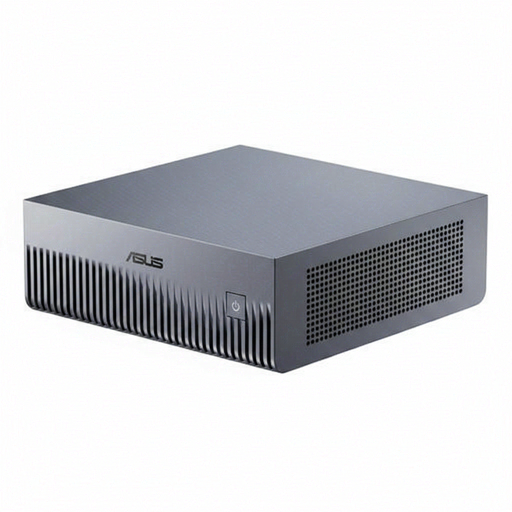
ASUS Ascent GX10, NVIDIA GB10, 128GB, 1TB NVMe SSD, DGX OS
Consider this specialist desktop only if you have a defined local AI or data-science workflow that suits its software environment.
The title specifies NVIDIA GB10 Grace Blackwell, 128GB unified memory, a 1TB NVMe SSD and NVIDIA DGX OS. Confirm application compatibility, the required power supply, display connections and monitor bundle before choosing it.
View on Joybuy
Common questions
Do I need a workstation to explore public datasets?
Not for browsing datasets, using spreadsheets or running modest local scripts alone. Consider one when a defined local workload calls for substantial memory, graphics capability or expansion; Lenovo and HP position their workstation ranges for more demanding technical work.
What matters most when the desk is beside a bright window?
Start with screen placement and glare control rather than the desktop’s processor. The Health and Safety Executive identifies repositioning the screen or using blinds as practical measures; compare the exact monitor’s finish, adjustment options and connections as part of that setup.
Are there UK display-screen rules if I use this desktop for work?
Relevant workplace display-screen arrangements are subject to requirements concerning lighting and contrast under the Health and Safety (Display Screen Equipment) Regulations 1992. Whether and how they apply to your working arrangements depends on the circumstances; ask your employer about its workstation assessment rather than treating a desktop or monitor listing as a compliance certificate.


