For browser-based dataset discovery, API requests and modest local analysis, start with a compact desktop whose actual configuration meets your software and display needs. Consider a tower if local storage or memory needs are likely to grow, or a configured workstation if you already have a demanding local workload. Whichever route you take, check the complete sit–stand setup, not just the computer.
Who each route suits
Standing-desk data explorers
If you mainly search data catalogues, make API requests and work with spreadsheets or notebooks, assess compact desktops alongside the space needed for a separate screen and input devices. The Office for National Statistics provides programmatic access to datasets; the Health and Safety Executive advises looking at the whole workstation, including furniture and working conditions.
Growing local-analysis users
If your local files, notebooks or software environments are likely to grow, compare the installed memory and storage with documented expansion options. Dell describes upgradeable memory and storage in its UK tower range, but the available options depend on the configuration you choose.
Heavy-workflow workstation buyers
If you already use large local datasets, intensive multitasking or specialist graphics software, compare exact workstation configurations rather than product-family names. Lenovo and HP list differing memory and graphics configurations within their UK workstation ranges.
What to check before buying
Choose the desktop route around your local workload, then check whether the computer, display and cables will work throughout the desk’s height range.
Compact desktop
Consider it when: Your work is mainly browser, API, spreadsheet or notebook based and desk space matters.
Trade-off: A small case does not establish what memory, storage or graphics changes will be possible later.
Upgradeable tower
Consider it when: Local files and memory needs may increase beyond your current data-exploration work.
Trade-off: Allow more placement space and verify the upgrade options of the specific build.
Configured workstation
Consider it when: You already know the memory or specialist graphics configuration your local applications require.
Trade-off: A workstation name alone does not identify the components supplied; Lenovo lists distinct ThinkStation P3 Tower Gen 2 configurations.
| Concern | What to check | Who this matters to |
|---|
| Routine exploration |
Check installed RAM, SSD capacity and compatibility with the applications used for browser, API and notebook work. |
If I move between data catalogues, spreadsheets and notebooks, I want a configuration that fits those everyday tasks rather than specialist hardware I cannot use. Around 27% of consumers put routine exploration first. |
| Growing local work |
Compare installed memory and storage with the exact model’s supported expansion options. |
As my local datasets and software environments grow, I want room to adapt the computer without assuming that every version of a tower can be upgraded. For around 27% of consumers, that growth is the primary concern. |
| Specialist compute |
Check the named local applications’ requirements before selecting a discrete GPU or workstation graphics configuration. |
If my visualisation or other specialist software calls for particular hardware, I need to match the configuration to that workload. Specialist compute comes first for around 13% of consumers. |
| Sit–stand integration |
Measure computer placement and cable slack at both desk heights; check display connections and what peripherals are included. |
I need the screen and input devices to remain practical when the desk moves, with cables that reach without strain. Around 33% of consumers make workstation integration their main concern. |
Common buying mistakes
-
Assuming every configuration in a product family is alike
Lenovo lists ThinkStation P3 Tower Gen 2 configurations with 8 GB, 32 GB and 48 GB RAM. The family name therefore cannot tell you how much memory a particular computer includes.
Compare the exact SKU or build, including installed RAM, SSD, graphics, operating system and accessories.
-
Planning for the computer but not the workstation
Lenovo says the monitor, keyboard and mouse are optional and sold separately for its cited ThinkStation listing. The Health and Safety Executive advises considering equipment and furniture together when assessing a workstation.
Measure screen position, computer placement and cable routes at both seated and standing heights before choosing a setup.
A separate display, input devices, monitor support or cable-management parts may also be needed.
-
Choosing dedicated graphics without a software requirement
Graphics-equipped desktop configurations exist, but a browser, API or spreadsheet workflow does not by itself establish a need for a discrete GPU.
Identify the applications and local tasks you will run, then check their graphics requirements before selecting a GPU configuration.
-
Expecting the standing desk to set the screen position
The Royal Orthopaedic Hospital advises positioning the screen directly in front of the user. The computer case does not determine where the monitor and input devices sit.
Check that you can adjust the screen, keyboard and mouse positions when changing desk height, and vary your posture and activity.
Brands and product lines to consider
Dell
Dell’s UK range provides compact desktop and tower options to compare for this task.
- Dell lists the Pro QCM1250 Micro Desktop as ultracompact, with six USB ports, HDMI and DisplayPort.
- Its tower range includes upgradeable memory and storage, but check the ordered configuration, expansion options and included peripherals for the particular model.
Lenovo
Lenovo’s ThinkStation P3 Tower Gen 2 is a workstation line to compare when local workloads call for a specified configuration.
- Lenovo lists configurations with 8 GB, 32 GB and 48 GB RAM, as well as different graphics options.
- Lenovo says the monitor, keyboard and mouse are optional and sold separately for this listing; check the exact build and bundle.
HP
HP’s Z2 Tower G9 range is relevant when comparing a stated workstation configuration with future memory needs.
- HP lists a Z2 Tower G9 configuration with 32 GB RAM and a 1 TB SSD, and describes memory configurations up to 128 GB within the range.
- The range maximum is not the installed memory of every Z2 Tower G9. Confirm the chosen build, graphics and peripherals separately.
Joybuy desktops related to this choice
These choices include compact desktops and towers that may suit different public-data workflows. Compare each configuration with your software, local files and sit–stand layout; gaming or AI-focused components are not automatically necessary for routine exploration.
 No image available
Lenovo Legion T7 34IAS10 tower
Consider this tower if your local files and multitasking call for a specified starting configuration. It lists an Intel Core Ultra 7 265K, 32 GB RAM, a 1 TB SSD, RTX 5070 Ti and Windows 11 Home. Check placement, display connections and the component upgrades you would actually need; its gaming graphics are not established as necessary for routine dataset exploration.
Joybuy
 No image available
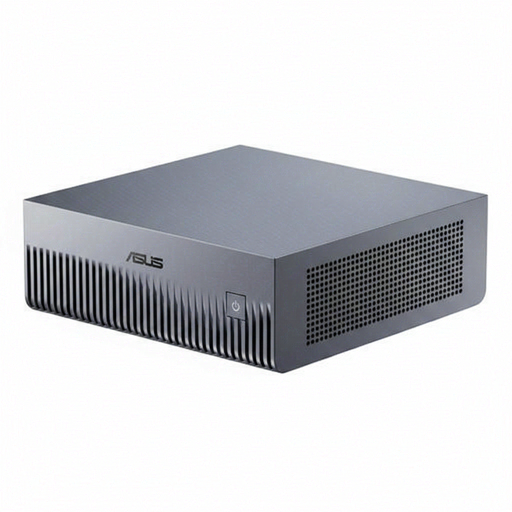
ASUS Ascent GX10, 128 GB unified memory, 1 TB SSD
This compact, AI-focused computer warrants consideration only if your intended applications suit its NVIDIA DGX OS environment. Its named configuration includes NVIDIA GB10 Grace Blackwell, 128 GB unified memory and a 1 TB NVMe SSD. Check Arm/Linux software compatibility, the required power supply and what is included; the stated memory is not user-upgradeable.
Joybuy
 No image available
Apple Mac mini (2026), M6, 16 GB, 256 GB SSD
For a compact desk layout, consider this macOS model if your dataset tools support the platform. The named configuration has an M6 chip with a 12-core CPU and 12-core GPU, 16 GB unified memory and a 256 GB SSD. Check that the storage suits your local files and confirm the connections, peripherals and upgrade options you require.
Joybuy
 No image available
Lenovo IdeaCentre Mini PC 01IRH10R, 91B2000XUK
This compact Windows desktop is a route to consider for everyday exploration where space is limited. Its named configuration includes an Intel Core 5, 16 GB RAM and a 512 GB SSD. Confirm that this SKU has the video outputs your monitor needs, and check memory and storage expansion if local work may grow.
Joybuy
 No image available
CyberPowerPC JOYB1010 desktop tower
Consider this tower if you want a stated memory and storage configuration for local files and multitasking. It lists an Intel Core Ultra 7 265KF, 32 GB DDR5, a 1 TB NVMe SSD, GeForce RTX 5070 12 GB and Windows 11 Home. The monitor, keyboard and mouse are not included; check its placement and expansion options, and do not assume the graphics card is needed for ordinary public-data work.
Joybuy
Frequently asked questions
Does a standing-desk setup need a workstation assessment at work?
For workers covered by display-screen-equipment requirements, the employer’s assessment should address the whole workstation, not just the desktop computer. The Health and Safety Executive says to consider equipment, furniture, working conditions and the job; personal use outside those work arrangements is a different situation.
Where should the monitor sit when I change desk height?
Position the monitor directly in front of you and check its height at the positions you use. The Royal Orthopaedic Hospital advises a forward-facing screen position; the monitor and separate input devices need to be arranged independently of where the desktop case sits.
Will a workstation come with a monitor, keyboard and mouse?
Not necessarily. Lenovo says those items are optional and sold separately on its UK ThinkStation P3 Tower Gen 2 listing. Check the contents of the particular desktop or bundle before planning the complete standing-desk setup.
Which product markings should I check for a desktop bought in Great Britain?
Check the marking applicable to the product and where it will be supplied. UK government guidance dated August 2026 says Great Britain continues to recognise CE marking alongside or in place of UKCA marking in relevant circumstances. That guidance covers England, Scotland and Wales; do not assume the same conclusion applies to Northern Ireland.


