Home-office rehearsal-track editors
You mainly arrange, trim and export tracks. A desktop that fits your workspace and handles those projects matters more than graphics capability intended for other workloads.


Choose the operating system around the DAW, plug-ins and audio-interface drivers you need, then size the processor, memory and storage for your largest expected project. A compact desktop can suit routine rehearsal-track preparation; consider an expandable workstation when you have a specific need for more internal storage, memory or expansion slots.
You mainly arrange, trim and export tracks. A desktop that fits your workspace and handles those projects matters more than graphics capability intended for other workloads.
You record parts or monitor playback through an audio interface. Check processor capacity alongside the interface connection and driver compatibility.
Your sessions use more virtual instruments or a growing sound library. Memory, working storage and any planned expansion become more important as projects grow.
For rehearsal tracks prepared in a home office, establish which software and audio hardware must work together before choosing a desktop configuration. Then compare its capacity with the sessions you expect to run, not just the requirements for installing the DAW.
| Concern | What to check | Who this matters to |
|---|---|---|
| Real-time audio | Compare the processor with your DAW’s guidance for the expected track and plug-in load. Ableton recommends 6- to 12-core Core i7/i9, Ryzen 7/9 or Apple silicon systems for its more demanding Live workflows. | If I record overdubs while a session plays, I need the computer to keep up with the tracks and effects I use. Around 36% of consumers put real-time audio first. |
| Software and interface compatibility | Check the exact DAW release, plug-ins, audio-interface model and drivers against the operating system and processor before ordering. | Keeping an existing project workflow matters if changing platform would leave a required plug-in or interface unusable. Roughly 29% of consumers make compatibility their primary concern. |
| Memory and storage | Allow space for active sessions, samples and exports. For larger Ableton Live projects, Ableton recommends at least 16GB RAM and a 500GB–2TB high-speed SSD. | With a growing sound library, I want room to work without basing the purchase on the size of today’s smallest session. About 21% of consumers prioritise memory and storage. |
| Desk space and connections | Count the display and peripheral connections you need, including a suitable direct port for the audio interface; decide whether future internal upgrades matter. | A crowded home-office desk makes the computer’s footprint and available connections part of the decision. Around 14% of consumers put space, connectivity or expansion first. |
An installation minimum does not describe the capacity you may need for larger sessions. Ableton separately recommends more memory and fast storage for more demanding Live workflows.
Use your expected track count, virtual instruments, plug-ins and project library to choose the configuration.
The DAW can support a processor and operating system while a particular plug-in or audio-interface driver does not.
Check the exact versions of your DAW, plug-ins and drivers together before buying or making a major operating-system update.
Focusrite warns that USB hubs and adapters can cause noise or connection problems with audio devices.
Check for a suitable direct computer port and the connection requirements of your interface.
Expansion options can help a growing setup, but a workstation label or gaming graphics specification does not establish better rehearsal-track performance.
Identify the memory, internal storage or expansion you expect to use before choosing a larger workstation or tower.
The Mac mini is a compact macOS option when your DAW, plug-ins and audio hardware support the chosen Apple-silicon setup.
The Z2 SFF G1i workstation line is worth considering when future internal memory or storage changes are a defined requirement.
Pro Precision towers provide an expansion route for setups with a specific need for internal cards or storage.
These compact Mac and Windows desktops and larger Windows towers offer different starting points for a home-office rehearsal-track setup. Match any choice to your software, audio interface, workspace and expected project size.
 No image available
A compact option if your DAW, plug-ins and audio-interface drivers support this Mac setup.
M5 Pro with 15-core CPU and 16-core GPU; 24GB memory and 512GB SSD. Check which display and input accessories you will need.
No image available
Consider this compact Mac only after checking your exact DAW release, plug-ins and interface drivers against its processor and macOS setup.
M6 with 12-core CPU and 12-core GPU; 24GB memory and 512GB SSD. Check which display and input accessories you will need.
 No image available
A mini Windows desktop to assess if desk space is limited and your audio software and interface support its Windows setup.
Ryzen 7 H 255 with 8 cores and 16 threads; 24GB LPDDR5 memory and 512GB PCIe 3.0 SSD. Check for a suitable direct audio-interface connection.
 No image available
The larger memory and storage may suit a growing project library, provided this Windows configuration works with your DAW and interface.
Intel Core i7, 32GB memory, 2TB SSD, RTX5080 and Windows 11. The graphics specification does not establish an audio benefit; allow space for a tower and check operating noise if recording nearby.
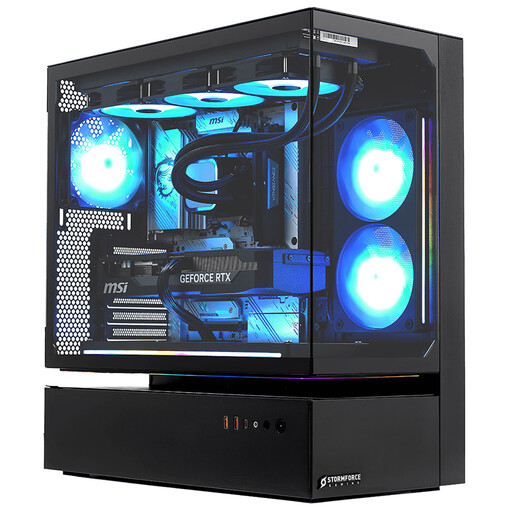 No image available
Consider this tower if your sessions or sound library call for its listed memory and storage, and the Windows setup supports your audio tools.
AMD Ryzen 7, 32GB memory, 2TB SSD and RTX5080. Gaming graphics do not establish better audio performance; plan where the tower will sit and check operating noise if it matters to recording.
Ableton’s guidance for more demanding Live work recommends comparing 6- to 12-core Core i7/i9, Ryzen 7/9 or Apple silicon systems, with at least 16GB RAM and a 500GB–2TB high-speed SSD. Size the final configuration for your own sessions; those recommendations do not guarantee the performance of every project or other DAW.
Yes, Ableton says its macOS Universal version of Live runs natively on Apple-silicon Macs. Check that your exact Live release, plug-ins, audio interface and drivers support the Mac and macOS version you intend to use.
Use a suitable direct computer port where possible. Focusrite warns that hubs and adapters can cause noise or connection problems with audio devices; check your interface’s connection requirements before choosing the desktop.
Confirm that the DAW release, plug-ins, audio interface and drivers support the new operating-system version before updating. Ableton advises checking those dependencies before a major macOS upgrade, particularly when you still need to finish active projects.