Choose the operating system only after checking support for your exact digital audio workstation (DAW), plug-ins and USB audio interface; meeting an operating system’s minimum requirements does not establish that the audio setup will work. A compact Mac mini is worth considering for an established, compatible macOS setup, while configurable Windows desktops suit offices that need particular connections or room to expand. Check the selected configuration, available desk space and interface connection before buying.
Who is this for?
People using an existing audio interface
If you already have a USB audio interface, DAW licences or plug-ins, start with their supported operating systems and any required driver or control software. Focusrite advises checking device and operating-system compatibility for its interfaces; the relevant software publishers’ requirements matter too.
Teams sharing a desk
If the computer will stay in a communal workspace, consider where the case, display and cables will go. Count the connections needed for the audio interface and everyday peripherals before choosing a compact desktop or a larger tower.
Windows office administrators
If the desktop must also serve routine office work, compare the exact processor, memory, storage, ports and support arrangements. Check Windows 11 eligibility where it is required, then assess the DAW and interface separately: Microsoft’s operating-system minimums are not audio-workflow requirements.
What matters when choosing?
Start with the software and interface you intend to keep, then work out where the desktop will sit and which configuration the office needs. The considerations below concern preparing rehearsal tracks alongside work in a shared office.
| Concern |
What to check |
Who this matters to |
| Audio compatibility |
Check support for the exact DAW version, plug-ins and interface on the chosen operating system. Confirm the interface’s required port and driver or control software. |
I want to keep using my current interface and plug-ins without discovering that one cannot run on the new computer. Around 42% of consumers put audio compatibility first. |
| Shared-desk setup |
Measure the available space and count the display, USB and other peripheral connections needed on the exact desktop. |
With several people using the desk, I need the computer and its connections to fit without making the setup awkward. For around 33% of consumers, desk placement and connections take priority. |
| Office use and expansion |
Compare the selected memory, SSD storage, ports and expansion options with the planned projects and office tasks; check support arrangements for the model. |
I need a desktop that can handle our files and routine work, with a configuration we can manage as needs change. Office support, storage and expansion come first for around 25% of consumers. |
Buying pitfalls
-
Relying on operating-system minimums
Microsoft’s Windows 11 minimums concern the operating system, not whether a particular DAW, plug-in or interface will work. Choosing a computer on those minimums alone can leave the rehearsal-track setup unresolved.
Check each software version and interface model against the chosen operating system, including any required drivers, before settling on a desktop.
If an essential plug-in or interface cannot be used, keeping the existing workflow may mean replacing it.
-
Assuming any USB connection will do
An interface can specify a connection standard and setup requirements. Focusrite, for example, says its Scarlett 2i2 needs a USB 2.0-or-higher compliant computer port.
Check your own interface manual for the required connection, power arrangement and software, then compare those requirements with the desktop’s actual ports.
-
Buying from a product-family description
Configurable business desktops can be sold with different memory, storage and connections. A feature listed for a family does not necessarily describe the configuration selected at checkout.
Keep a copy of the selected specification and confirm its RAM, SSD, ports, operating system and support terms before ordering.
Brands to consider for this desktop setup
Apple
Mac mini is a compact route when the office’s DAW, plug-ins and audio interface support the selected macOS version.
- Apple’s Mac mini specifications describe configurable unified memory and SSD storage, with Thunderbolt and HDMI display connectivity.
- Those specifications do not establish support for a particular third-party interface or audio application. Confirm it with the relevant supplier.
Dell
OptiPlex Small Form Factor is a configurable Windows business-desktop route for an office seeking compact placement and expansion options.
- Dell lists DDR5 memory configurations up to 64GB, PCIe NVMe SSD options and up to three PCIe slots for the cited model family.
- Check the features and availability of the exact OptiPlex configuration rather than assuming every family option is included.
Lenovo
ThinkCentre business desktops are relevant when shared-office management and possible expansion matter alongside track preparation.
- Lenovo describes its ThinkCentre M Series in terms of demanding workloads, multiple programs and expandability.
- That is manufacturer positioning, not an audio-performance comparison. Assess the individual model’s configuration and compatibility with the planned audio setup.
Joybuy desktop options
These compact desktops and towers offer different ways to accommodate a shared-office setup. Their listed memory and storage give you configurations to compare, but choose only after checking your software, interface connections and available space.
 Image unavailable
Lenovo IdeaCentre Mini PC 01IRH10R, Core 5, 16GB, 512GB SSD, 91B2000XUK
Consider this mini desktop where the shared desk has limited room. Its listed configuration includes an Intel Core 5 processor, 16GB RAM and a 512GB SSD; check your DAW, plug-ins and interface requirements before choosing it.
View on Joybuy
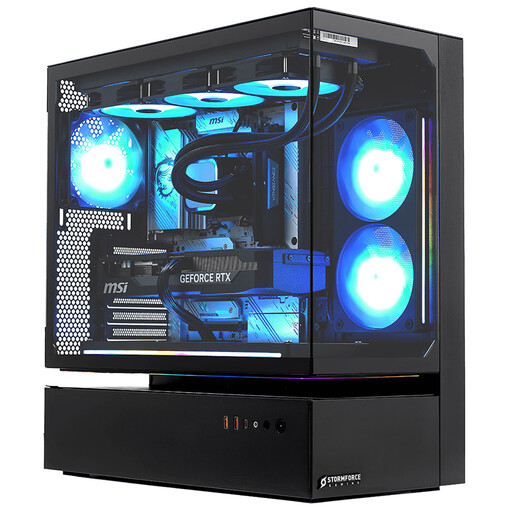 Image unavailable
Stormforce Cyclone, AMD Ryzen 7, 32GB, 2TB SSD, RTX5080
Consider this tower if the office has space for a larger case and wants to compare its listed 32GB RAM and 2TB SSD with its project and file-storage needs. Confirm the required audio-interface connection and allow suitable space for the tower.
View on Joybuy
 Image unavailable
Stormforce Cyclone, Intel Core i7, 32GB, 2TB SSD, RTX5080, Windows 11
For an office considering a Windows tower, compare this model’s listed 32GB RAM and 2TB SSD with the intended DAW projects and local files. Check where the tower will stand, confirm the purchased configuration’s display outputs and verify interface compatibility.
View on Joybuy
 Image unavailable
HP OmniDesk M02-0005na, Ryzen 5 8500, 8GB, 1TB SSD, Windows 11 Home
This tower is an option to assess for a Windows-based office setup with local file storage. Its listed configuration has 8GB RAM and a 1TB SSD; compare the memory with the intended DAW projects and check the interface’s software and connection requirements.
View on Joybuy
 Image unavailable
Apple Mac mini (2026), M6, 12-core CPU and GPU, 16GB, 256GB SSD
Consider this compact desktop for an established macOS audio setup once the exact DAW, plug-ins and interface have been checked. The listed model has an M6 chip with a 12-core CPU and 12-core GPU, 16GB memory and a 256GB SSD; check whether that storage suits the files kept locally.
View on Joybuy
Common questions
Should I decide between macOS and Windows first?
Start with the operating systems supported by your exact DAW version, plug-ins and audio interface, then choose a desktop within that route. Focusrite advises checking interface and operating-system compatibility and using the applicable software or drivers; a matching USB connector alone is not enough to establish compatibility.
What should I check before connecting a USB audio interface?
Match the interface manual’s computer-port and setup requirements to the desktop you intend to buy. Focusrite says its Scarlett 2i2 uses a USB 2.0 Type-C interface connection and needs a USB 2.0-or-higher compliant computer port; after setup, its guide also calls for selecting the interface as the computer’s audio input and output. Check your own model’s requirements rather than applying those details to every interface.
Are Windows 11 minimum requirements enough for preparing tracks?
No: Microsoft’s minimum requirements establish a baseline for Windows 11, not the needs of a particular DAW session, plug-in library or audio driver. Check the software publishers’ requirements and compare them with the exact processor, memory and storage configuration under consideration.
What should the office do with the desktop it replaces?
Check the organisation’s IT-asset and electrical-equipment disposal arrangements before removing the old desktop. GOV.UK describes electrical and electronic equipment as equipment dependent on electric currents or electromagnetic fields; the office should establish the disposal route that applies to its equipment and circumstances.


