For composing and mixing music to an animation, start with a desktop that can run your digital audio workstation (DAW), virtual instruments and audio hardware together; check memory, processor, storage and connections against your actual projects. If you also edit or render the picture, assess graphics and workstation expansion separately. A larger tower is useful when those tasks or planned upgrades call for it, but is not automatically necessary for music-only scoring.
Who is this for?
Virtual-instrument score composers
If you compose to picture with sampled instruments and plug-ins, consider the resources needed by both the DAW and its instruments. Native Instruments highlights memory needs when Kontakt runs inside a host sequencer; graphics hardware should be assessed against any separate picture work.
Composer-editors working with picture
If you also review, edit or export the animation, assess the video application alongside your audio setup. HP distinguishes lighter picture review from more demanding graphics and rendering workflows in its workstation guidance.
Growing project-studio owners
If you plan to add drives, memory or PCIe hardware, check the exact chassis rather than relying on a workstation family name. Dell, HP and Lenovo describe configurable desktop ranges, but the available upgrades depend on the model.
What should you check?
Define the picture task before choosing graphics: playing reference video while composing is a different purchasing decision from editing or rendering animation. Then check the combined audio workload and the connections your studio hardware requires.
| Concern | What to check | Who this matters to |
|---|
| DAW and virtual instruments |
Check your DAW and plug-in compatibility, installed and upgradeable RAM, processor and SSD capacity against the intended sessions and libraries. |
Large sample-based scores need room for instruments and the host DAW to run together; around 45% of consumers put this combined workload first. |
| Picture work |
Establish whether you only play reference video or also edit or render; check the chosen application’s GPU and display requirements. |
When editing or rendering is part of scoring to picture, I need a desktop chosen for those tasks as well as music. Around 33% of consumers prioritise picture capability. |
| Studio connections and expansion |
Match ports to the audio interface and check the exact chassis for storage, RAM and PCIe upgrade options. |
If I expect to add studio hardware or a dedicated project drive, connections and room to expand affect the choice; roughly 22% of consumers make this their primary concern. |
Buying pitfalls
-
Buying to the DAW minimum alone
Avid’s Pro Tools requirements address that application, while Native Instruments notes that Kontakt and its host sequencer both need resources. Meeting one minimum does not settle the needs of a large sample-based project.
List the DAW version, plug-ins, sample libraries and expected session size before deciding on memory, processor and storage.
-
Assuming every workstation expands alike
Compact workstations and towers offer different upgrade options; HP lists one PCIe slot for a cited Z2 Mini configuration. The workstation label does not establish what a particular chassis can accept.
Check the selected configuration’s memory slots, drive bays, PCIe slots, ports and supported upgrades.
-
Overlooking the audio interface and project drive
Avid specifies a dedicated recording and playback drive for Pro Tools and sets out supported audio-device connection paths. Processor and memory specifications alone do not resolve those setup requirements.
Match the desktop’s connections to your interface, then check the chosen DAW’s drive and driver requirements.
-
Choosing graphics before defining the picture task
HP positions workstation graphics for video, motion graphics and rendering workloads. Composing while watching a reference picture does not, by itself, establish a need for a high-end GPU.
Check the editing or rendering software you will actually use, and assess its graphics requirements separately from the DAW’s.
Brands to consider
Dell
Dell Pro Precision and Pro Max desktops are configurable workstation ranges to consider when scoring is combined with graphics-intensive work or planned tower expansion.
- Dell describes options for processors, professional graphics, memory and storage across these ranges.
- Check the selected model’s ports, installed components and upgrade paths; the range description does not establish its fit for your audio setup.
HP
HP Z desktops include compact and tower options relevant to buyers who work with both scores and picture.
- HP positions Z workstation configurations for tasks including HD video editing and review.
- Expansion differs by chassis, so confirm the exact configuration before choosing a compact system for future hardware additions.
Lenovo
Lenovo ThinkStation towers are relevant when configurable storage, memory or graphics are part of a longer-term plan.
- Lenovo describes ThinkStation models as customisable for different workloads.
- Check which upgrades the particular tower supports; a high-end configuration is not automatically needed for DAW-based scoring.
Joybuy desktop choices
These Windows desktops are choices to assess for composing to picture, with several also listing dedicated graphics for projects that include visual work. Match each configuration to your DAW, audio interface, libraries and picture software before choosing.
 No image available
CyberPowerPC JOYB1013, Ryzen 7 9800X3D, RTX 5080, white
Consider this configuration if your scoring projects also call for dedicated graphics; check whether your picture software uses the RTX 5080.
The listed configuration has 32GB DDR5 RAM, a 2TB NVMe SSD, an RTX 5080 with 16GB graphics memory and Windows 11 Home. Confirm DAW and audio-interface compatibility and the upgrades your projects require.
Joybuy
 No image available
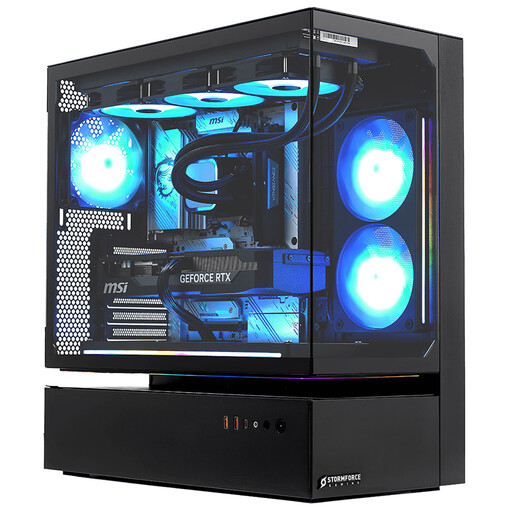
Stormforce Cyclone, Intel Core i7, RTX 5080
This is another desktop to assess when scoring and picture work share a machine; check the editing or rendering application’s requirements before choosing its graphics configuration.
The name lists 32GB RAM, a 2TB SSD, RTX 5080 graphics and Windows 11. Confirm the audio-interface connection and the available memory, drive and PCIe upgrades.
Joybuy
No image available
Stormforce Defiance, Ryzen 7 5700X, RTX 5070
Consider its listed components for a score that involves picture work, while checking the capacity needed by your own instrument libraries and sessions.
The name lists 32GB RAM, a 2TB SSD, RTX 5070 graphics and Windows 11. Check DAW and interface compatibility, along with the exact chassis’s upgrade options.
Joybuy
 No image available
Stormforce Cyclone, AMD Ryzen 7, RTX 5080
Assess this configuration if the same desktop will handle music and graphics-dependent picture tasks; the application’s requirements should determine whether its GPU is relevant.
The name lists 32GB RAM, a 2TB SSD and RTX 5080 graphics. Confirm operating-system and audio-hardware compatibility, plus options for additional memory or project storage.
Joybuy
 No image available
HP M02-0005na OmniDesk, Ryzen 5 8500
For a lighter scoring setup, assess this desktop against the size of your sessions and libraries before committing to its installed memory.
The name lists 8GB RAM, a 1TB SSD and Windows 11 Home. Check whether your workload needs a memory upgrade, what the exact model supports, and the requirements of any picture-editing software.
Joybuy
Frequently asked questions
Is 16GB RAM enough for scoring an animation?
It meets the Windows Pro Tools memory requirement listed by Avid in January 2026, but that alone does not establish capacity for a large virtual-instrument score. Native Instruments notes that Kontakt and its host sequencer both use resources; assess your libraries, plug-ins and sessions before settling on RAM.
Do I need a separate drive for audio projects?
For Pro Tools recording and playback, Avid specifies a dedicated drive and NTFS formatting on Windows. Check your chosen DAW’s own documentation before applying that requirement to another application.
Does scoring to animation require a workstation GPU?
No GPU class follows simply from composing music to picture. Graphics requirements become a separate consideration if you also edit video, create motion graphics or render animation; check those applications’ requirements rather than treating reference-video playback as the same task.
Which Windows version should I check for Pro Tools?
Avid’s Windows requirements published in January 2026 list 64-bit Windows 11 releases 24H2 and 25H2. Check the exact Pro Tools, plug-in and audio-interface versions you intend to use against their respective compatibility information before buying.
What should I do with an old desktop when replacing it?
Use an appropriate electrical-equipment recycling or take-back route rather than putting the desktop in general waste. GOV.UK’s guidance explains the UK waste electrical and electronic equipment framework; ask your retailer or local authority which route is available to you.


