What matters when choosing?
Start with screen placement beside the window, then establish which operating system your tools need and how much memory and storage your work calls for.
All-in-one desktop
Choose when: The built-in display can be positioned comfortably and the computer runs your required software.
Trade-off: The computer and primary screen move together, leaving less freedom to change the screen position independently.
Compact desktop and separate monitor
Choose when: You want to select and position the screen independently, or arrange more than one compatible display.
Trade-off: You must plan the monitor, its connections and the other peripherals as part of the setup.
Tower desktop
Choose when: Your actual applications, local storage needs or expansion plans call for a suitable tower configuration.
Trade-off: It takes more space and still needs a separately chosen monitor; a tower is not necessary merely because the work involves spreadsheets.
| Concern |
What to check |
Who this matters to |
| Screen readability and glare |
Check screen placement relative to the window, brightness and contrast controls, and the available tilt or height adjustment. |
When daylight reflects in the screen, I need to read survey codes and small cell values without losing my place; around 42% of consumers put screen readability and glare control first. |
| Software compatibility |
Confirm the required operating system, application versions, add-ins and employer-managed tools. |
If a required statistical tool, macro or work environment will not run, the desktop cannot do my job; for around 33% of consumers, software compatibility is the primary concern. |
| Capacity and expansion |
Compare configured memory and SSD capacity with your concurrent files and local storage needs; check upgrade options for the exact model. |
With more survey exports and applications open at once, I need enough capacity for the work I expect to do; around 25% of consumers place memory, storage or expansion first. |
Relevant brands for reference
These examples illustrate different desktop and monitor choices; check the exact model and configuration rather than applying a range description to every product.
Apple
Apple offers two distinct macOS layouts: the 24-inch iMac with an integrated screen and Mac mini for use with an external display.
- Apple lists a 4.5K, 500-nit display for the 24-inch iMac and support for up to three external displays for Mac mini.
- Neither display specification establishes that a particular survey tool, plug-in or employer-managed application will run on macOS.
Lenovo
ThinkCentre Tiny is a compact Windows desktop route to consider with a separately selected monitor.
- Lenovo lists a ThinkCentre M90q Gen 5 configuration with Windows 11 Pro, 32GB DDR5 memory and a 1TB PCIe Gen4 SSD.
- Confirm the memory, storage, display outputs and upgrade options for the exact part number you intend to use.
Dell
Dell tower configurations are worth assessing when local workloads or future expansion call for a larger desktop.
- Dell lists a Pro Max Tower T2 configuration with a Core Ultra 7 processor, 16GB DDR5 memory and a 512GB PCIe Gen4 SSD.
- A tower does not establish the capacity you need by itself, and a monitor remains a separate decision.
BenQ
BenQ is a separate-monitor reference when screen positioning and adjustment matter beside a window.
- BenQ lists 400-nit typical brightness, Nano Matte coating and height adjustment for its PD2732U monitor.
- Those specifications do not establish how much glare the monitor will experience in your particular room.
Joybuy desktop choices
These desktops cover an all-in-one screen, a compact computer for a separately positioned monitor and a tower for buyers assessing greater configured capacity. Choose among them only after checking your software and how the screen will sit beside the window.
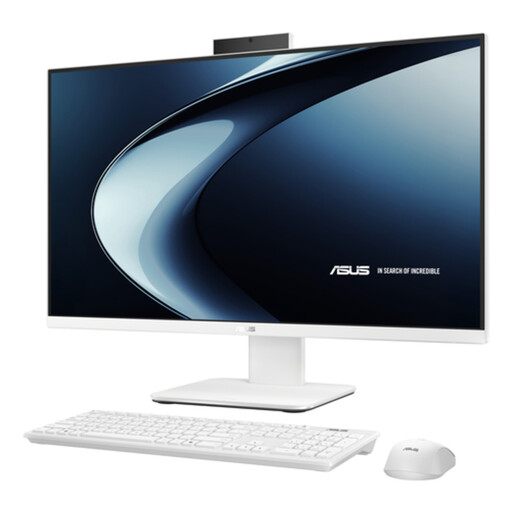 Image unavailable
ASUS V400 AiO V470VAK-WPE032W 27-inch all-in-one
Consider this integrated-screen setup if its display position suits your desk and your required software runs on Windows 11 Home.
The named configuration has a Full HD display, Intel Core i7-13620H processor, 16GB DDR5 memory and a 512GB SSD. Check the screen adjustment options against your window position.
View on Joybuy
 Image unavailable
Apple Mac mini (2026), M6, 16GB, 256GB SSD
Consider this compact desktop if your survey applications run on macOS and you want to position a compatible monitor separately from the computer.
The named configuration has an M6 chip with a 12-core CPU and 12-core GPU, 16GB memory and a 256GB SSD. Plan the monitor, keyboard and mouse, and check the display connections and storage capacity against your workflow.
View on Joybuy
 Image unavailable
CyberPowerPC JOYB1013, Ryzen 7 9800X3D, RTX 5080
Assess this Windows 11 Home tower if your software runs on Windows and its configured memory and storage match work you expect to do locally; the tower format alone is not a reason to choose it for spreadsheet cleaning.
The named configuration includes 32GB DDR5 memory, a 2TB NVMe SSD and an NVIDIA GeForce RTX 5080 16GB. Plan a compatible monitor and its position beside the window.
View on Joybuy
Common questions
Does UK display-screen-equipment law specify a monitor brightness I must buy?
The cited UK Display Screen Equipment Regulations require screen brightness and contrast to be easily adjustable to ambient conditions; they do not give a brightness figure in that requirement. For an in-scope worker, assess the screen alongside its position and the lighting at the workstation rather than choosing by a nit rating alone.
Does display-screen-equipment guidance matter at a home desk?
It can matter if you are an in-scope display-screen-equipment user at work. The Health and Safety Executive includes home workers among the examples covered by its guidance; whether it applies to your work depends on your circumstances and employer assessment, not on a monitor carrying a particular certification.
Should I choose macOS or Windows for cleaning survey data?
Choose the operating system that runs your required survey-data workflow. Before buying, check the exact versions of your spreadsheet and statistical applications, database connections, add-ins, VPN and any employer-managed tools; desktop hardware specifications cannot establish compatibility with those applications.
Is a tower necessary for larger survey datasets?
Not necessarily: compare the memory, storage and expansion requirements of your actual files and applications with the exact desktop configuration. A tower is worth assessing when those requirements justify it, while a compact desktop with sufficient configured capacity may suit less demanding work and still let you position a separate monitor.


