Growing home-film archivists
If your films will mainly stay on one workstation, space for the collection may matter more than portability. Western Digital and Seagate both offer desktop-drive lines with multiple capacity options.


Choose a powered desktop HDD if your main need is room for a growing home-movie collection that stays beside one workstation. A portable SSD makes more sense if you regularly move or work with large video files, provided the computer, port and cable support its faster USB mode. Whichever drive you choose, keep a separate copy of irreplaceable films and settle any file-system changes before loading the archive.
If your films will mainly stay on one workstation, space for the collection may matter more than portability. Western Digital and Seagate both offer desktop-drive lines with multiple capacity options.
If you frequently transfer large clips, switch devices or work from the external drive, a portable SSD is worth considering. Its quoted transfer speeds depend on a compatible computer connection and cable.
If losing family films would be difficult to put right, treat the new drive as one copy within a wider backup routine, not the collection’s only home. Backblaze’s 3-2-1 guidance calls for another copy off-site.
Choose it when: The collection is growing and the drive will normally stay beside your workstation.
Allow for: Mains power and desk space; one drive alone is not a complete backup plan.
Choose it when: You frequently move footage between devices or work directly from the external drive.
Allow for: Quoted maximum speeds depend on the host, USB mode and cable. Check that the chosen capacity will hold your collection.
For home movies on a workstation, start with the need that would most influence your choice: archive space, an active transfer workflow or a separate recoverable copy.
| Concern | What to check | Who this matters to |
|---|---|---|
| Archive capacity and desk setup | Compare the current library and likely growth with the drive’s capacity; check space and mains access for a desktop model. | If my films mostly stay at one workstation, I need room for the collection to grow without choosing portability I rarely use. Around 50% of consumers would put archive capacity and desk fit first. |
| Transfers and connections | Check the workstation’s USB mode and connector, plus the cable required for the drive’s stated speed. | When I regularly import large clips or move a project between devices, the transfer workflow influences my choice. Around 30% of consumers would make that their primary concern. |
| Backup resilience | Plan a separate copy and check that copied films open; copy files elsewhere before reformatting a populated drive. | I cannot rely on one external drive as the only home for irreplaceable footage. For around 20% of consumers, keeping a separate recoverable copy would come first. |
A drive used for convenient local storage can still be lost, fail or have files accidentally deleted. Backblaze’s 3-2-1 guidance describes keeping three copies across two types of media, with one copy off-site.
Keep another copy separately and periodically check that copied movies open.
Samsung’s maximum T7 figures require a USB 3.2 Gen 2 host, a suitable cable and UASP. The drive may transfer files more slowly through a connection that cannot meet those conditions.
Check the workstation’s port and cable before buying, and use a suitable direct connection where practical.
A suitable cable or adapter may also be needed for the workstation’s connector.
Apple warns that formatting a disk or volume erases its files, so changing the file system after migration puts the loaded archive at risk.
Decide how the drive needs to work with your computers before moving films. If it is already populated, copy its files to another location before reformatting.
The Information Commissioner’s Office notes that external drives can retain personal data. Family videos and other files need attention before a drive is sold, given away or disposed of.
Use a deletion method appropriate to the storage media, or arrange secure destruction; do not assume ordinary file deletion is sufficient.
Its My Book and My Book Duo lines are desktop options for a workstation archive.
Expansion Desktop is a powered external-HDD line for storage beside a workstation.
The portable T7 line addresses frequent transfers; T7 Shield adds features intended for use away from the desk.
These desktop HDD, portable HDD and portable SSD options suit different home-movie storage needs. Compare the capacity and connection of each with your workstation and how often the films need to travel.
 No image available
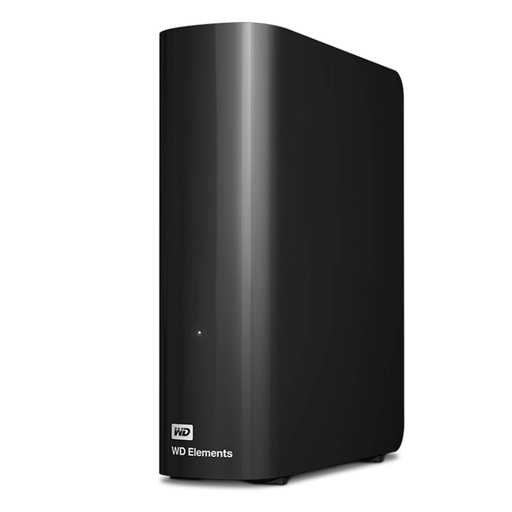
Consider this desktop drive if a sizeable home-movie collection will normally stay beside the workstation.
10TB capacity. Check that you have room and a nearby mains socket; confirm the required file-system setup before moving films from another computer.
 No image available
Consider this portable hard drive when the film collection needs to move with you and your workstation setup suits its Mac-oriented variant.
5TB capacity. Check the file-system and software requirements before relying on it with Windows as well as macOS.
 No image available
Consider the T7 if you frequently move large movie files or work from an external drive and 2TB meets your storage needs.
USB Type-C 3.2 Gen 2, also labelled 3.1 Gen 2. Samsung’s quoted sequential speeds of up to 1,050MB/s read and 1,000MB/s write require a compatible USB 3.2 Gen 2 host and cable, with UASP enabled.
 No image available
Consider this portable SSD if the home-movie drive will travel as well as connect to your workstation; compare its 1TB capacity with your collection’s expected growth.
USB Type-C 3.2 Gen 2, also labelled 3.1 Gen 2. Samsung describes the T7 Shield’s IP65 rating as based on controlled testing and says liquid and dust damage is not covered under its warranty; do not submerge the drive.
 No image available
Consider this portable hard drive if you need to carry a movie collection and want 4TB of storage rather than the selected 1TB portable SSD.
Check the workstation’s USB connection and any Mac file-system requirements before loading films. The drive is not described as waterproof or dustproof.
Choose a desktop HDD if the collection mainly stays at one workstation and capacity is your priority; choose a portable SSD if you frequently move large clips or work from the drive. For the SSD route, check that its capacity is sufficient and that your computer connection can support the speed you expect.
No. Samsung says the T7’s quoted maximum sequential speeds require a USB 3.2 Gen 2 host, a suitable cable and UASP; check those conditions rather than judging speed from the drive name alone.
Choose the file-system setup before loading your films. Apple identifies ExFAT as a Windows-compatible option for volumes over 32GB and warns that formatting erases files, so copy a populated drive elsewhere before changing its format.
No: if it holds the only copy, losing or erasing that drive could mean losing the films. Backblaze’s 3-2-1 guidance describes keeping three copies on two types of media, with one copy off-site; check that your additional copies can be opened.