Choose a mains-powered desktop hard drive if drafts mainly stay at one workstation and a growing archive is your priority; choose a portable SSD if you regularly move files between locations. Check usable capacity, connections and file-system compatibility whichever you choose, and keep recoverable copies elsewhere rather than trusting a single drive with irreplaceable work.
Who each approach suits
Desk-based archive builders
If completed projects remain at one workstation and the library keeps growing, a powered desktop HDD is worth considering. Seagate positions its Expansion desktop range for backup and archiving; allow for its power supply and a permanent place on the desk.
Mobile creative teams
If drafts travel between workspaces, a portable SSD keeps the archive easier to carry. Check the capacity you need and whether your computers and cables can use the drive's stated connection.
Risk-conscious draft custodians
If losing earlier versions would mean recreating work, plan the copies before choosing a drive. The National Cyber Security Centre describes a backup as a copy kept in a separate safe location; one external drive should not be the only copy.
What matters when choosing
Desktop HDD
Choose when: The archive stays at a workstation and needs room to grow; Seagate lists its powered Expansion desktop range from 4 TB to 30 TB.
Trade-off: External power and a desk location make this a less convenient route for moving drafts regularly.
Portable SSD
Choose when: You regularly carry and copy project folders between workspaces; compare the capacity and connection of the exact model.
Trade-off: Stated maximum transfer speeds depend on the host and connection, while any ruggedness claim applies only under its specified conditions.
| Concern | What to check | Who this matters to |
|---|
| Archive capacity |
Add expected project growth and headroom to today's archive size; check usable space after formatting. |
If completed files and older versions keep accumulating, I need room for the next projects without an early move to another drive. Around 36% of consumers put archive capacity first. |
| Moving drafts |
Check the computer port and cable against the drive's speed requirements; assess protection claims against likely handling. |
When I carry drafts between workspaces, transfer time and the risk of knocks matter more to me than keeping the drive on a desk. For around 29% of consumers, portable transfer and handling are the primary concern. |
| Recovering files |
Plan a separate copy, including an offline copy in another location where appropriate, and test restoration. |
If earlier drafts would be difficult to recreate, I need to recover them even if this drive is lost or fails. Recovery comes first for around 21% of consumers. |
| Device access |
Confirm the computers that must read the archive and choose its file system before loading files. |
If I share an archive between Mac and Windows computers, I need both systems to access it as intended. Around 14% of consumers prioritise cross-device access. |
Mistakes to avoid
-
Treating the archive drive as the only backup
Loss, damage or failure of one drive could take the drafts with it. The NI Cyber Security Centre advises keeping three copies on two devices, with one offline in a different location.
Keep separate copies, disconnect a backup drive when its session is finished and periodically check that you can restore files.
-
Choosing by the labelled capacity alone
The space reported by a computer may be lower than the label suggests because of measurement conventions and formatting, as Seagate explains.
Allow for archive growth and compare your needs with the usable space reported after setup.
-
Expecting maximum SSD speed on every computer
Samsung says the cited T7 Shield maximum speeds require a compatible USB 3.2 Gen 2 host and cable and UASP mode; everyday transfers need not reach those figures.
Check your port, cable and copying workflow before making maximum speed a deciding factor.
-
Leaving file-system choices until after copying
A format chosen for one computer may not suit everyone who needs the archive. Changing the format later can mean moving the files elsewhere first.
Decide which systems must access the drive before loading it, back up files before reformatting and eject the drive before unplugging it. Microsoft specifically advises safe removal in Windows to help avoid data loss.
Relevant brands to consider
Seagate
Its Expansion desktop range addresses stationary archiving, while One Touch includes portable HDD and SSD options.
- Seagate lists Expansion desktop capacities from 4 TB to 30 TB for backup and archiving.
- The desktop range requires external power. Check the exact One Touch variant and its setup before relying on advertised password protection or encryption.
Samsung
The T7 Shield is a portable SSD option for drafts that travel between workspaces.
- Samsung specifies up to 1,050 MB/s read and 1,000 MB/s write under compatible connection conditions, plus IP65 testing and a stated 3 m drop test.
- Samsung says resistance varies with conditions and that liquid, dust and drop damage are not covered by its warranty.
Crucial
The X10 is a portable SSD route to consider when a travelling archive also needs substantial stated capacity.
- Crucial lists X10 capacities up to 8 TB, with claimed reads up to 2,100 MB/s and IP65 resistance.
- Crucial notes that performance and compatibility vary with the host and formatting, and that some labelled capacity is unavailable after formatting.
Joybuy drives for draft archives
These desktop and portable drives offer different ways to store design drafts. Choose a capacity and format for your own archive and devices, then keep another recoverable copy.
 No image available
Samsung Portable SSD T7 4 TB, grey
Consider this portable SSD if you move a growing draft archive between locations. Its stated capacity is 4 TB and its connection is USB Type-C 3.2 Gen 2; check your devices and keep a separate backup.
 No image available
Samsung T7 Shield MU-PE1T0S 1 TB, black
Consider this portable SSD if drafts travel and 1 TB meets your archive needs. Samsung specifies USB 3.2 Gen 2 speeds under compatible host and cable conditions; its stated resistance does not replace careful handling or a separate backup.
 No image available
Western Digital My Passport Ultra for Mac 5 TB, silver
This portable external hard drive is an option for a Mac-led archive that needs a stated 5 TB. If Windows computers must also use the drafts, confirm the required file-system workflow before loading the drive.
 No image available
Western Digital Elements Port. 4 TB, black
This 4 TB portable external hard drive suits an archive that needs to move rather than remain on a desk. Check its format against the computers that will access the drafts, and protect the files with another copy.
 No image available
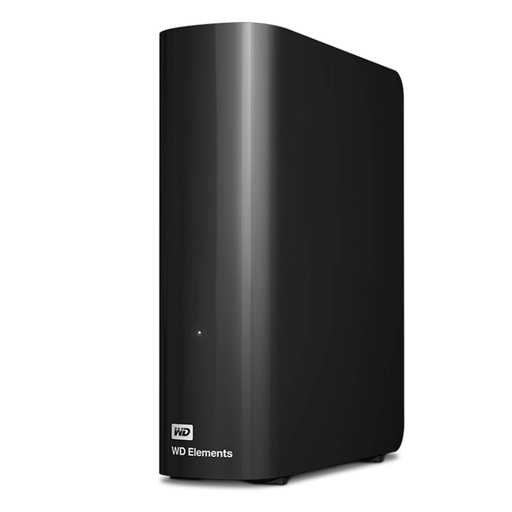
Western Digital Elements Desktop 10 TB
This desktop external hard drive is worth considering for a growing archive kept at one workstation. Its stated capacity is 10 TB; plan for external power, check the intended computer's file-system needs and keep another recoverable copy.
Frequently asked questions
Can one external drive be the only archive of my design drafts?
No: keep another recoverable copy of valuable drafts. The National Cyber Security Centre advises storing a backup in a separate safe location, while the NI Cyber Security Centre recommends three copies on two devices, with one offline in another location; test that you can restore the files.
Should I use ExFAT or APFS for the archive?
Choose the format according to the computers that must use the files. Apple identifies APFS as a macOS file system and ExFAT as a Windows-compatible option in Disk Utility; back up existing files before reformatting a drive.
How should I disconnect an archive drive from Windows?
Use Windows' safe-removal process before unplugging it. Microsoft advises safely removing external drives to help avoid losing data.


