What matters when choosing?
Choose your primary learning task before comparing specifications: a straightforward first installation, room for virtual labs or hardware for a specialist project calls for different checks.
| Concern |
What to check |
Who this matters to |
| Installation and compatibility |
Check the exact configuration against Canonical's Ubuntu certification listing if relevant, or confirm the supplied Linux version. For self-installation, consider Ubuntu's live-USB test. |
I want to learn Linux rather than spend my first sessions resolving boot, software or peripheral problems. Around 42% of consumers would put a workable first setup and everyday compatibility first. |
| Virtual-lab capacity |
Check installed and maximum RAM, SSD capacity and upgrade options. For hardware-accelerated KVM, confirm Intel VT or AMD-V support and the relevant firmware setting. |
Running guests alongside my desktop and development tools means I need capacity beyond the host system alone. For around 33% of consumers, room for virtual labs would be the primary concern. |
| Specialist graphics and compute |
Match the graphics hardware and driver path to the intended project and Linux distribution; check requirements for third-party modules if Secure Boot stays enabled. |
If my projects involve graphics, rendering or AI work, I need to establish their hardware requirements before paying for workstation capabilities. That would be the leading concern for around 25% of consumers. |
Joybuy product choices
This compact ASUS system is an option to assess if your Linux learning includes local AI development. Its Arm-based platform and NVIDIA DGX OS call for a separate compatibility check if your course expects another Linux distribution or particular software.
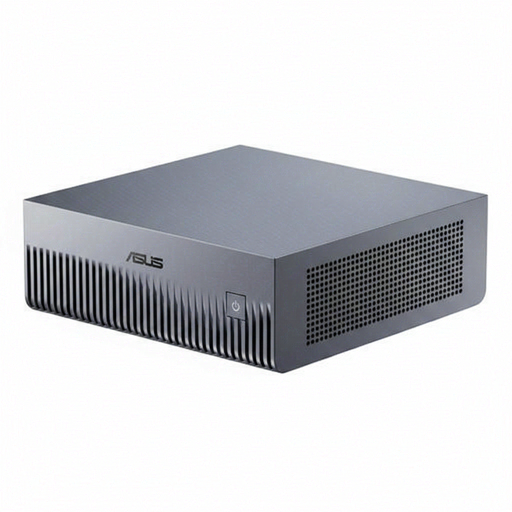 Image unavailable
ASUS Ascent GX10 1TB desktop, NVIDIA GB10 Grace Blackwell
Consider this configuration for Linux learning tied to local AI projects, rather than assuming it fits a general introductory course.
The listed configuration has 128GB unified memory, a 1TB NVMe SSD and NVIDIA DGX OS. Check that your required distribution, course tools and software support its Arm-based platform.
Its stated 128GB unified memory is not user-upgradeable. Before buying, confirm whether a compatible power source meeting the stated 180W EPR PD 3.1 requirement is included.
View on Joybuy
Common questions
Should I buy a Linux-preloaded desktop or install Linux myself?
Choose a preloaded or Ubuntu-certified configuration if a more predictable initial setup matters most; self-installation makes sense if learning the installation process is part of your goal. Check the exact configuration either way. Canonical documents an Ubuntu live-USB test that can run without permanently changing the computer.
How much hardware does a basic Linux learning desktop need?
Start with the requirements of your chosen distribution and planned software, not a specification intended for every Linux workload. Fedora recommends 4 GB RAM and a 40 GB SSD for a good basic Fedora Workstation experience; virtual machines and demanding development tools need separate consideration.
What should I check before buying a desktop for virtual machines?
Check processor virtualisation support, firmware controls, RAM and storage capacity for both the host and its guests. Fedora identifies Intel VT or AMD-V for hardware-accelerated KVM and documents additional storage requirements for individual guests.
Can Secure Boot affect Linux drivers?
Yes, it can affect how third-party drivers or custom kernel modules are loaded. Canonical explains that Ubuntu validates critical components under Secure Boot, so check the relevant signing and key-enrolment procedure for your distribution and hardware before relying on those modules.
How do I assess Linux after-sales support?
Confirm that the seller's support covers your exact hardware configuration and intended Linux distribution. Lenovo publishes Linux support material, while Entroware advertises warranty terms for its store range; neither establishes the terms for a different seller or configuration.


