Dark-scene detective-game players
If much of your play involves searching dim interiors for clues, you may want to compare panel type, stated contrast and picture controls before focusing on the highest refresh-rate figure.


A 27-inch QHD IPS monitor is a sensible starting point if the same student-room screen will handle detective games and coursework. If dark-scene contrast matters more to you, compare an OLED model’s stated display specifications and conditions instead; if desk space is tight, check speakers and stand adjustment on the exact model. Whichever route you take, confirm that your PC or console, connection and cable support the resolution and refresh mode you intend to use.
If much of your play involves searching dim interiors for clues, you may want to compare panel type, stated contrast and picture controls before focusing on the highest refresh-rate figure.
A screen used for coursework as well as games needs to fit your desk and viewing position. QHD resolution, stand movement and the connections for your devices deserve attention alongside gaming specifications.
If there is little room for separate speakers or accessories, check the exact monitor’s audio options, inputs and cable requirements before ordering.
Start with the kind of scene you want to inspect and the devices you will connect, then weigh the desk features you will use every day. IPS, OLED and VA are panel choices; speakers, stand adjustment and shadow controls vary by model rather than belonging to one exclusive route.
| Concern | What to check | Who this matters to |
|---|---|---|
| Dark-scene clarity | Compare panel type and the exact model’s stated contrast and HDR conditions; check whether it has dark-area picture controls. | If I spend time looking for clues in dim rooms, I want to judge the screen’s dark-scene characteristics rather than rely on an HDR label. Around 33% of consumers put this concern first. |
| Study and gaming on one desk | Check for 2560 × 1440 resolution and the stand movements you need, particularly height adjustment. | When coursework and games share one screen, I need a comfortable position for longer desk sessions. For around 25% of consumers, mixed desk use is the main priority. |
| Movement and compatibility | Distinguish native from overclocked refresh rates, then match the intended mode to your device, input and cable. | I want movement to look smooth, but only at a resolution and refresh rate my PC or console can output. That compatibility-led need comes first for around 25% of consumers. |
| Sound and connections | Check built-in speakers or headphone output and the HDMI or DisplayPort inputs required by your devices. | With little space for extra equipment, I would rather establish how sound and cables will work before choosing a monitor. Around 17% of consumers chiefly prioritise a low-clutter setup. |
LG lists 180Hz as the native rate for the 27GS75QN-B; its optional 200Hz overclocked mode requires a DisplayPort 1.4-capable graphics card and cable.
Check your device’s output and the monitor’s input requirements before choosing a refresh mode.
HDR support, panel type and stated contrast describe different characteristics. An HDR label alone does not establish how two monitors compare when showing shadowed game scenes.
Compare the exact models’ display specifications and any conditions attached to brightness or contrast claims.
BenQ describes a 2.1-channel speaker system on the MOBIUZ EX2710Q, while Dell lists speakers and height, tilt, swivel and pivot adjustment on the S2725DSM. Neither feature set should be assumed for another model.
Check the stand, audio output, ports and supplied cables against your planned setup.
A model without the feature you need may call for separate speakers, headphones, an adapter, a monitor arm or another cable.
Joybuy’s page for the AOC Q27G42XNE retains product details but says that listing is no longer available.
Check the live listing, exact model, seller and order terms before making a purchase decision.
These model examples show different features worth checking; a brand name alone does not establish that every monitor in its range has them.
LG’s 27-inch QHD IPS and OLED examples suit different priorities within the same student-room decision.
The EX2710Q is relevant when built-in sound and on-monitor picture controls matter in a small room.
Samsung’s G50F provides a QHD Fast IPS example with gaming specifications and a dark-area picture control.
The S2725DSM is a mixed study-and-gaming example where screen positioning and built-in sound are priorities.
The Q27G42XNE is a model-specific example of QHD gaming features, not an indication of current availability.
These listings offer OLED options for comparing dark-scene display specifications, plus a larger curved VA option. Check each screen’s size against your desk and its intended display mode against your device; a panel type or stated specification is not a guarantee of how a particular game will look.
 No image available
Consider this OLED model if comparing dark-scene display options is your priority.
The product name states 27-inch QHD, 240Hz refresh and 0.03ms response time. Check your device’s supported display mode and whether the monitor has the audio features you need.
 No image available
This QD-OLED option is relevant if you want to compare dark-scene display characteristics and a high stated refresh rate.
The product name lists 2560 × 1440 resolution, 240Hz, 0.03ms and Adaptive-Sync. Confirm the exact panel dimensions before ordering: the listing title says 27 inches, while its technical details say 26.5 inches.
 No image available
Consider this QD-OLED model if dark-scene display specifications and a high stated refresh rate are important to you.
The product name lists 280Hz and 0.03ms. Its title says 27 inches while the technical details say 26.5 inches; confirm the panel size, your device’s intended display mode and the manufacturer’s OLED care guidance.
 No image available
This smaller-screen QD-OLED listing is another option for comparing dark-scene display specifications on a student desk.
The product name states 2560 × 1440 resolution, 240Hz, 0.03ms, HDR10 and FreeSync Premium Pro. Check your device and cable for the display mode you want; HDR10 alone does not establish dark-scene performance.
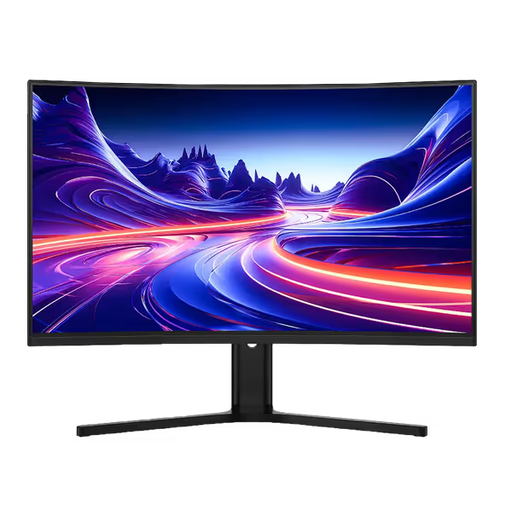 No image available
Consider this larger curved VA option only after checking that its screen will fit your desk and preferred viewing position.
The product name states 2560 × 1440 resolution, 180Hz, 1ms MPRT, two HDMI inputs and two DisplayPort 1.4 inputs. Check which connection supports your intended refresh mode and whether you need separate audio equipment.
Not necessarily: compare the screen’s resolution and dark-scene characteristics as well as its refresh rate. Check that your device can use the mode you choose; LG says the 27GS75QN-B needs a DisplayPort 1.4-capable graphics card and cable for its optional 200Hz overclocked mode.
HDR10 support alone cannot tell you that. Compare the exact monitor’s panel type, stated contrast, HDR characteristics and any picture controls, keeping their measurement conditions in mind rather than assuming two HDR-labelled screens will look alike.
Confirm the exact model, seller, delivery terms and how to request a return. GOV.UK says customers can cancel eligible distance orders up to 14 days after delivery without giving a reason, subject to applicable exceptions. That change-of-mind cancellation position is distinct from remedies for faulty, damaged or misdescribed goods and from any additional retailer policy.
Use an appropriate electrical reuse or recycling route rather than general waste. GOV.UK identifies the Waste Electrical and Electronic Equipment Regulations 2013, as amended, as the UK framework underpinning recovery, reuse and recycling of electrical and electronic equipment.