
24/7 Customer Support

Free returns

Same-day & Next-day Delivery

Quality Guaranteed

Unlock Your Welcome Offers: FREE Delivery | Up to 80% OFF | Free 30-day JoyPlus trial
Download the APP
Keeping a home hygienically clean can feel like a constant task, especially in busy households. Between work, family and daily life, finding time for deep cleaning isn't always easy. This is where the convenience of antibacterial wipes comes in, offering a quick and effective way to tackle germs and grime on various surfaces.
As a trusted name in household hygiene, Dettol offers a range of wipes designed for different cleaning jobs. But with several options available, how do you choose the right one for your needs? This guide is designed to help you navigate the choices, understand the key features of each type and select the most suitable Dettol antibacterial wipes for your home.
Selecting the correct wipe ensures you get an effective clean without damaging surfaces. Here are a few practical points to consider before you buy.
Not all wipes are created equal. Dettol formulates its products for specific challenges around the home.
Beyond the basic function, look for features that suit your preferences and household needs.
Always read the product label to see which surfaces the disinfectant wipes are suitable for. Most are designed for hard, non-porous surfaces. It is generally advisable to avoid using them on materials like porous stone, untreated wood, marble, brass or fabrics, as they can cause damage. If in doubt, test on a small, inconspicuous area first.
Here are our recommendations from the Dettol range, each suited for different cleaning scenarios in a UK home.

Why It Stands Out: These wipes are specifically engineered for the bathroom. According to the manufacturer, they are twice as strong as regular Dettol cleansing surface wipes, giving them the durability needed to scrub away stubborn soap scum and limescale. They are formulated to kill 99.9% of bacteria and viruses, leaving surfaces hygienically clean.
Pros:
Who is it for? Ideal for households looking for a powerful and convenient solution dedicated to keeping bathroom surfaces sparkling and hygienic.
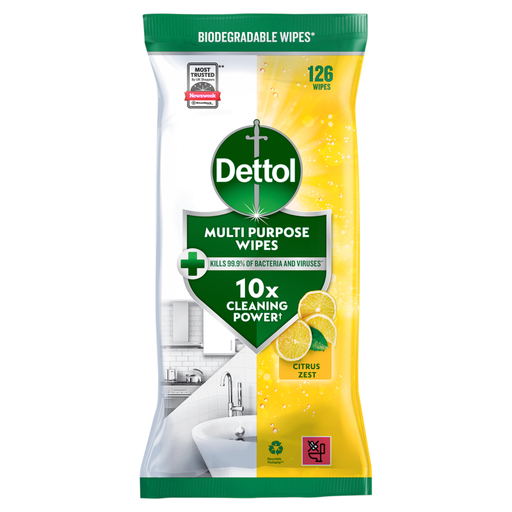
Why It Stands Out: These are excellent multi-purpose surface wipes for everyday use. The large 126-wipe pack offers great value for families. A key feature is that the wipe material is biodegradable under industrial compost conditions (per European Standard EN 13432). They are suitable for a wide range of surfaces, including kitchen wipes for worktops, high chairs and even hard, non-porous toys. According to the 2024 BrandSpark International UK Trust Study, it was voted the most trusted multi-purpose disinfecting wipes brand by UK shoppers.
Pros:
Who is it for? Perfect for busy households needing a reliable, all-purpose wipe for daily cleaning tasks across different rooms.

Why It Stands Out: Designed specifically for floors, these antibacterial floor wipes are extra-large to cover more ground with a single sheet. The formula is made to cut through common floor messes, including kitchen grease and general dirt, without using bleach. They are suitable for a variety of hard flooring common in UK homes, such as vinyl, sealed laminate, linoleum and glazed tiles.
Pros:
Who is it for? A great choice for anyone who wants a quick and easy way to clean and disinfect hard floors without the hassle of a mop and bucket.
While these Dettol wipes cover many common household needs, you may be looking for something different. For a wider selection of cleaning and hygiene solutions, you can explore our full range of cleaning and disinfectant wipes.
No, Dettol antibacterial surface wipes are designed for cleaning and disinfecting household surfaces only. They are not intended for personal hygiene, such as cleaning hands or face. Always check the product warning, which typically states "Not for personal use."
Not all of them are. However, some products in the range, like the Dettol Anti-Bac Surface Wipes Citrus, are made with a biodegradable wipe material. The packaging specifies that they biodegrade under industrial compost conditions according to European Standard EN 13432. Always check the pack for specific environmental information.
It is important to only use these wipes on hard, non-porous surfaces. You should avoid using them on porous materials like marble, unfinished wood and carpet. They are also not recommended for use on brass, copper or unwaxed vinyl. For any delicate surface, it is always best to test on a small, hidden area first.