
24/7 Customer Support

Free returns

Same-day & Next-day Delivery

Quality Guaranteed

Unlock Your Welcome Offers: FREE Delivery | Up to 80% OFF | Free 30-day JoyPlus trial
Download the APP
Choosing the right toys for a toddler can feel like navigating a maze. You want something that will capture their attention, but you also want to know it’s helping them learn and grow. With so many options available, it’s easy to feel overwhelmed. This guide is designed to cut through the clutter, offering practical advice and a few carefully selected ideas to help you find engaging and beneficial developmental toys for toddlers.
Our goal is to provide clear, objective information so you can choose toys that support your child's journey through these crucial early years, focusing on fun, safety and skill-building.
Before looking at specific products, it’s helpful to have a framework for what makes a good developmental toy. Here are a few key points to consider during your search.
In the UK, all toys sold must meet the EN71 safety standard, which covers aspects like flammability, chemical composition and physical properties to prevent choking hazards. Always check for the CE or UKCA mark, which indicates compliance. Beyond the label, consider the toy's construction. Toddlers are not known for being gentle, so look for items made from robust, non-toxic materials that can withstand enthusiastic play. Rounded edges and secure parts are also important features for safe play.
A one-year-old has very different needs from a three-year-old. The most effective toddler activity toys are those that meet your child where they are while offering a gentle challenge.
Some of the most valuable toys are those that can be used in multiple ways. A set of blocks, a sand and water table or a simple play-mat can become a castle, a science lab or a stage for a concert. These open-ended toys fuel creativity and problem-solving skills, offering far more long-term value than a toy that only does one thing.
Based on the principles of safety, engagement and developmental value, here are a few recommendations that stand out.
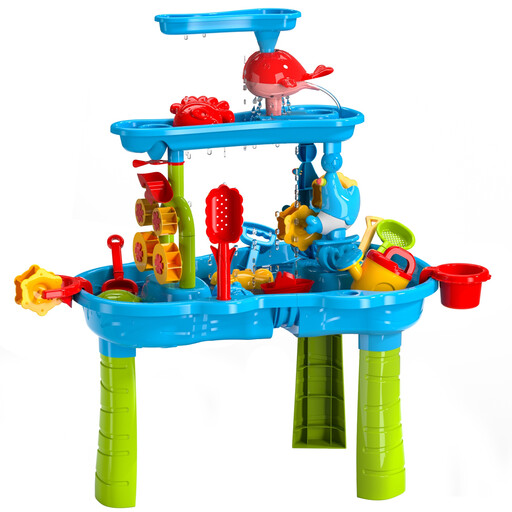
Why It Stands Out: This activity table is a classic for a reason. It provides a dedicated space for messy, sensory play, which is fundamental for early learning. The multi-tier design adds an extra layer of engagement, allowing water to cascade down and turn a windmill. It’s one of the most versatile outdoor toys for toddlers that can also be brought indoors (with sand or other sensory materials) for year-round fun.
Pros:
Who is it for? Parents looking to encourage outdoor and sensory play. It’s an excellent choice for children who love hands-on exploration and a great option when considering toddler gifts for the summer months.
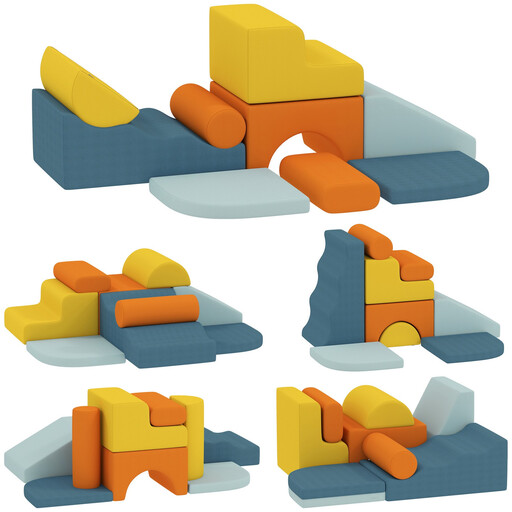
Why It Stands Out: This set brings the fun of a soft play centre into your home. Comprising nine different shapes, these foam climbing blocks allow toddlers to build, climb and crawl in a safe environment. It’s a fantastic tool for developing gross motor skills, balance and coordination. The modular nature of the set also sparks creativity, as children can rearrange the pieces to create their own obstacle courses and structures.
Pros:
Who is it for? Families seeking a solution for indoor soft play, especially for active toddlers who need a safe outlet for their energy. It’s ideal for children aged 18 months to 6 years.
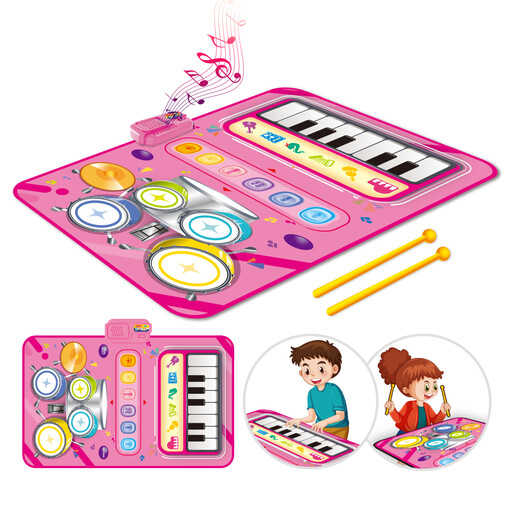
Why It Stands Out: This musical playmat combines physical activity with auditory learning. It features 13 piano keys and 6 drum functions, allowing children to explore sounds and rhythms by stepping and tapping. Unlike a stationary keyboard, this mat encourages full-body movement, helping to develop coordination and a sense of rhythm. It’s a fun, interactive way to introduce early musical concepts.
Pros:
Who is it for? Toddlers and pre-schoolers who show an interest in music and sound. It’s a great toy for cooperative play between siblings or with parents.
The products highlighted here are just a starting point. Every child is unique, and the perfect toy is one that aligns with their individual interests and developmental needs. If you’d like to explore a wider range of toys designed to engage a child's senses, browse our full collection.
[Explore our complete range of sensory children's toys here](https://www.joybuy.co.uk/explore/sensory-childrens-toys/VDkJHzcv)
1. What types of toys are good for toddler development? Good developmental toys engage a toddler's senses, encourage problem-solving and help develop motor skills. Look for categories like building blocks for creativity, sensory toys for kids (like play-doh or water tables) for tactile exploration, puzzles for cognitive skills and active toys like climbers or musical mats for gross motor development.
2. How do I know if a toy is safe for my toddler? In the UK, always look for the UKCA or CE mark, which signifies that the toy meets the EN71 safety standard. Additionally, inspect the toy for small parts that could be a choking hazard, sharp edges or flimsy construction. Choose age-appropriate toys and always follow the manufacturer's recommendations for use and supervision.
3. Are more expensive developmental toys better? Not necessarily. A toy's value lies in its ability to engage a child and support their development, not its price tag. Often, simple, open-ended toys like blocks, art supplies or a sand and water table offer more long-term play value than expensive electronic gadgets. Focus on durability, safety and how the toy aligns with your child's interests.