What to compare before buying
Start with the nutrition panel and ingredients, then decide whether the pack size, storage period and unit price fit the way your household actually eats cereal.
| Priority |
What to check |
Your needs |
| Sugars and carbohydrate |
Compare sugars and total carbohydrate per 100g. Then calculate the amount for the portion you pour, including milk or yoghurt where relevant. |
I want to compare cereals on the same basis instead of relying on a pack claim or a manufacturer’s serving guide. Diabetes UK says there is no one-size-fits-all diabetes diet. |
| Fibre and wholegrain |
Check fibre per 100g and per serving, plus the grain ingredients. Read fibre alongside sugars and carbohydrate rather than treating one figure as the whole comparison. |
I prefer a cereal with wholegrain ingredients or more fibre, while still seeing clearly how its sugars and carbohydrate compare with other options. |
| Pack value and storage |
Compare the current unit price per 100g or per kilogram. Check net weight, best-before date and storage instructions before choosing a large format. |
I want a larger pack only when it suits our household’s rate of use and does not create avoidable waste. UK government guidance distinguishes best-before dates, which relate to quality, from use-by dates, which relate to safety. |
| Allergens and ingredients |
Read the current ingredients and allergen statement. Check for cereals, milk and nuts, especially in muesli and fruit-and-nut blends. |
Someone in my household may need to avoid particular ingredients, so I need the current pack label to work for everyone before buying in bulk. |
Joybuy cereal options
These Joybuy options cover portioned oat sachets, a large wholegrain wheat-biscuit pack and a fruit-and-nut oat cereal for shoppers comparing breakfast formats and label information.
 Image unavailable
Quaker Oat So Simple Big Bowl Original 6 Pack 231g
Individually portioned sachets may suit a repeatable breakfast routine.
Each sachet is stated as 38.5g. The listing gives 59g carbohydrate, 1.0g sugars and 9.0g fibre per 100g, with wholegrain rolled oats listed as the ingredient.
The six-sachet, 231g pack should be compared by current price per 100g with larger packs. Check oat suitability where gluten-containing cereals are avoided.
Joybuy
 Image unavailable
Weetabix Super Size 72 Pack 1.52kg
This 72-biscuit format may suit repeat household breakfasts with a stated two-biscuit serving.
The listing states 1.52kg and 95% wholegrain wheat, with sugars shown per 100g and per two-biscuit serving.
Check the current pack for carbohydrate and fibre values if these are priorities, and confirm unit price, best-before date, wheat and barley allergens before bulk buying.
Joybuy
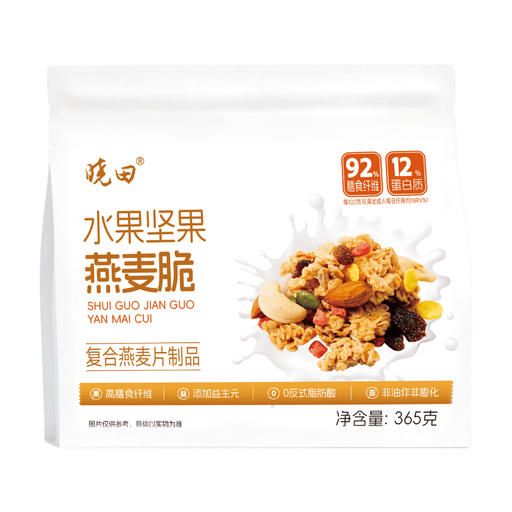 Image unavailable
Xiao Tian Fruit & Nut Oat Crunch 365g
A ready-to-eat fruit-and-nut oat cereal for shoppers who prefer a crunchy format.
The listing states at least 47% oat flakes, 42.5g carbohydrate and 22.9g dietary fibre per 100g.
Check the current nutrition panel for sugars before comparing it for diabetes-related needs. It lists oats, almonds and cashews, alongside dried fruit and coconut ingredients.
Joybuy
Frequently asked questions
Is there a breakfast cereal automatically suitable for everyone with diabetes?
No. Diabetes UK states that there is no one-size-fits-all diabetes diet. Compare sugars, carbohydrate and fibre on the label, then make the serving fit your own diabetes-management plan; seek personalised advice from your diabetes team where needed.
Does “no added sugar” mean a cereal is low in total sugars?
No. The claim describes added sugar, not necessarily total sugars. The Alpen No Added Sugar Muesli listing, for example, includes raisins and states 18g sugars per 100g, so check both the total-sugars line and the ingredients list.
How can I compare two cereal value packs fairly?
Compare current price per 100g or per kilogram, then compare sugars, carbohydrate, fibre and salt per 100g. Check the serving size separately because NHS guidance notes that manufacturer portions may not match the amount you pour.
How should I store a large cereal pack, and what does best-before mean?
Follow the storage instructions on the pack and keep it sealed where appropriate. UK government guidance says a best-before date relates to food quality, while a use-by date relates to safety, so choose a large pack only if your household can use it while it remains at its intended quality.
What allergen checks matter before buying a value pack?
Read the current ingredients and allergen statement rather than relying on the cereal name. The examples reviewed include wheat and barley in Weetabix and Bran Flakes, and milk, oats, nuts and wheat in Alpen No Added Sugar Muesli.


