What should you check before buying?
Start with the portion you expect to eat and the allergen you need to avoid. Then compare other nutrition values on the same portion basis.
| Priority | What to check | Your needs |
|---|
| Total carbohydrate |
Read total carbohydrate per bar or serving on the nutrition panel. Check the bar size and how many bars you will eat; compare like-sized portions. |
I need to account for the carbohydrate in my actual snack, not just its sugars figure. |
| Specific allergens |
Check the full ingredients, highlighted allergens and any precautionary wording. Confirm that a free-from claim names the exclusion you require. |
If I avoid gluten or another allergen, I need the exact pack to address that requirement; a different free-from claim is not enough. |
| Other nutrition values |
Compare sugars and saturated fat per bar and per 100g. Read fibre and protein as additional figures, not substitutes for carbohydrate and allergen checks. |
For a snack I buy regularly, I want to compare similar portions rather than judge a bar by its oat or protein description. |
Brand and product references
These examples show why claims and nutrition figures need to be checked for the particular range or bar, not assumed across a brand.
Graze
Graze positions its Oat Boost flapjacks around wholegrain oats and lower sugar.
- Graze makes a lower-sugar comparison for its Oat Boost range against bars in its own comparison.
- That comparison does not give the total carbohydrate or allergen information for the flavour you intend to buy.
TREK
TREK presents vegan and gluten-free protein-bar ranges, including oat flapjacks.
- TREK states that its Protein Flapjacks contain 9g plant-based protein.
- Check the chosen flavour’s own gluten and allergen statements and carbohydrate per bar; a range description does not replace its label.
Eat Natural
Eat Natural’s Peanuts & Dark Chocolate Protein Bar provides a product-specific example of a gluten-free claim alongside other allergen declarations.
- Eat Natural lists 13.4g carbohydrate, 10.0g sugars and 7.8g protein per 40g bar.
- The bar contains peanuts and soya and carries precautionary warnings for milk and tree nuts; gluten-free does not mean free from those allergens.
Kellogg's
Kellogg's Rice Krispies Cereal & Milk Bar illustrates why the size of a bar alone cannot establish its carbohydrate content.
- Kellogg's lists 15g carbohydrate and 5.8g sugars per 20g bar.
- Its listed ingredients and allergen information include wheat, milk and soya-derived ingredients; check the exact pack for your exclusion.
Cereal and protein bars on Joybuy
These flapjack and nut-bar options offer different flavours and pack sizes to assess against your carbohydrate plan and specific allergen requirement. Check the exact product label before choosing.
 No image available
TREK Salted Caramel Protein Flapjacks, 3 x 50g
For a 50g flapjack, check carbohydrate per bar against your intended portion and read the exact pack’s gluten and soya information if either matters to you.
 No image available
TREK Cocoa Oat Protein Flapjacks, 3 x 50g
Compare the carbohydrate and sugars for the 50g bar with other portions you are considering, and check the oat and soya declarations if relevant to your exclusion.
 No image available
Nature Valley Protein Salted Caramel Nut Bars, 4 x 40g
The pack contains four 40g nut bars. Check carbohydrate per bar and the full peanut, almond, milk and soya information if you need to avoid any of these allergens.
 No image available
Nature Valley Protein Peanut & Chocolate Cereal Bars, 8 x 40g
For this pack of eight 40g bars, check carbohydrate for the portion you will eat and read the peanut and other allergen declarations; the protein-bar description cannot answer either question.
 No image available
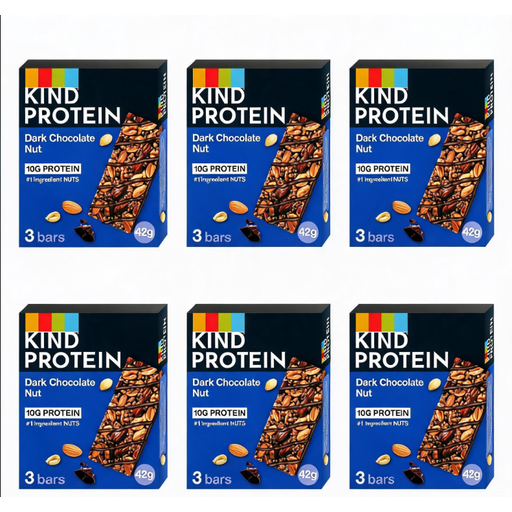
KIND Protein Dark Chocolate Nut Bars, 3 x 42g x 6pcs
Confirm how the stated 42g bars fit the amount you intend to eat, then check total carbohydrate and the full nut and soya declarations. Check the ingredients too if you avoid honey.
Frequently asked questions
Does a gluten-free cereal bar automatically suit someone with diabetes?
No. Gluten-free describes its gluten content, not its total carbohydrate or portion size. Diabetes UK advises checking the carbohydrate on the detailed nutrition label, while the Food Standards Agency notes that oats can remain an allergen in gluten-free foods.
Is a no-added-sugar or lower-sugar bar enough to guide my choice?
No. Check total carbohydrate for the portion you will eat as well as sugars. A lower-sugar description may help compare similar bars, but it does not show whether the exact bar fits your carbohydrate plan.
Which figure should I use when counting carbohydrate?
Use total carbohydrate for the amount of bar you will eat. Diabetes UK explains that detailed labels give carbohydrate per 100g and often per portion; check whether the stated portion matches yours. If your insulin plan involves carbohydrate counting, follow the individual guidance from your diabetes care team.
Does vegan or plant-based mean free from common allergens?
No. Those descriptions do not establish that peanuts, soya, milk or tree nuts are absent. Read the exact bar’s ingredients, highlighted allergens and any precautionary wording against the allergy you need to manage.
Does gluten-free mean a bar contains no oats?
No. A gluten-free bar may contain oats. The Food Standards Agency notes that oats remain an allergen in their own right, so check the ingredients if oats are among the foods you need to avoid.


