Households needing a six-pint quantity
Sainsbury's lists 3.4L six-pint bottles of plain milk. This format suits a household prepared to mix and pour separate drinks; the bottle itself is not a ready-to-drink milkshake.


If the household needs six pints, start with a milk base and prepare individual milkshake-style servings: Sainsbury's lists 3.4L six-pint bottles of plain milk, while the ready-to-drink examples listed by Tesco come in smaller formats. Smaller prepared drinks offer a defined bottle size, but neither that size nor a “no added sugar” claim establishes whether a serving fits an individual carbohydrate plan. Diabetes UK advises checking total carbohydrate; compare the label per 100ml and for the amount you will actually drink.
Sainsbury's lists 3.4L six-pint bottles of plain milk. This format suits a household prepared to mix and pour separate drinks; the bottle itself is not a ready-to-drink milkshake.
The relevant amount is the total carbohydrate in the drink actually served. Diabetes UK advises using carbohydrate information on food labels and notes that insulin-to-carbohydrate ratios differ between people.
The National Institute for Health and Care Excellence recommends individualised dietary advice for adults with type 2 diabetes. Its general healthy-eating advice includes choosing lower-fat dairy products, rather than relying on a drink being described as suitable for diabetes.
Choose the format around the quantity you need and whether you want to prepare each serving. Then use the current label to compare the amount you would actually pour or drink.
Consider it when: the household needs 3.4L and can prepare separate milkshake-style servings.
Trade-off: plain milk needs preparation, and additions change the finished drink's ingredients and carbohydrate content.
Consider them when: a ready-to-drink bottle or multipack is more useful than a six-pint supply.
Trade-off: a defined bottle size is not automatically the portion you will drink, and “no added sugar” does not mean carbohydrate-free.
| Priority | What to check | Your needs |
|---|---|---|
| Quantity and format | Check whether the pack contains plain milk or a prepared drink. Sainsbury's lists plain milk at 3.4L (six pints); Tesco's listed ready-to-drink examples include smaller bottles and multipacks. | For several people, I can make separate servings from a larger milk bottle. If I need a drink ready to open, a smaller prepared format may be more practical. |
| Carbohydrate and portion | Compare total carbohydrate per 100ml, then calculate it for the amount you intend to drink. Check whether the label's stated portion matches that amount; Diabetes UK advises using total carbohydrate information when counting carbohydrates. | My glass may hold more than the label's stated serving, so I want to compare the amount I will actually pour. |
| Sugar wording | Read “no added sugar” or “reduced sugar” alongside total carbohydrate, sugars and the ingredients list. Diabetes UK notes that dairy contains naturally occurring sugar. | If a bottle says “no added sugar”, I still want to know what its carbohydrate figure means for my planned portion. |
| Wider nutrition | Compare energy and saturated fat on the same per-100ml basis, then consider the portion. For adults with type 2 diabetes, NICE recommends individualised dietary advice and includes lower-fat dairy in its general healthy-eating advice. | For a drink I choose regularly, I want to compare more than its sugar wording while following my own dietary plan. |
| Ingredients and allergens | Read the current ingredients list. GOV.UK states that specified allergens present as ingredients in prepacked food and drink must be clearly labelled; milk is one of them. | If I need to avoid an ingredient, I must check this particular pack, even when its bottle size and nutrition figures suit me. |
Milk contains naturally occurring lactose. Diabetes UK advises checking total carbohydrate rather than using a sugar claim to judge a drink's carbohydrate content.
Compare carbohydrate per 100ml and for the amount you plan to drink on the current pack.
Sainsbury's six-pint listings are for 3.4L plain milk. The ready-to-drink examples in Tesco's listings use smaller formats, so a six-pint milk bottle and a prepared shake serve different purposes.
Choose plain milk if you intend to make separate servings; choose a prepared drink by checking its actual pack volume and label.
A bottle's volume and the nutrition label's stated portion may both differ from what goes into a glass. That changes the amount of carbohydrate represented by the serving.
Decide how much you will pour before using the per-100ml or per-portion figures.
A listing's format description helps identify a product, but its ingredients and nutrition details may not match the pack you buy.
Read the current ingredients, allergen information and nutrition panel when making the final comparison.
These retailer-listed examples illustrate the difference between a six-pint milk base and smaller prepared drinks; a brand name alone does not establish a drink's nutritional fit.
Sainsbury's lists British semi-skimmed and whole milk in 3.4L (six-pint) bottles.
Tesco lists Yazoo no-added-sugar chocolate drinks in a 6 × 200ml multipack and a 1L chocolate milkshake bottle.
A Tesco listing identifies a Mars no-added-sugar chocolate-flavoured milk drink in a 400ml bottle.
Tesco listings include Frijj drinks in 330ml and 950ml formats and a 400ml strawberry drink described as having no added sugar.
Tesco lists an own-label chocolate-flavoured milk in a 1L bottle among ready-to-drink milkshakes.
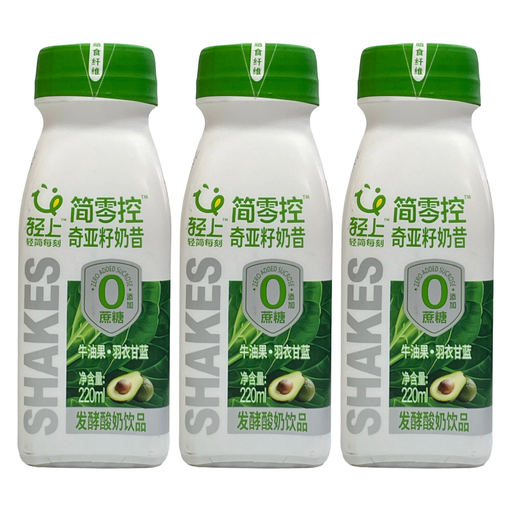
This Joybuy option is a multipack of smaller ready-to-drink bottles, not a six-pint milk base. Compare its stated bottle size and current nutrition label with the portion you intend to serve.
 No image available
Three ready-to-drink 220ml bottles offer smaller individual portions rather than a six-pint household supply. The product description lists sugar among the ingredients despite using no-added-sugar wording: check the current pack's ingredients and total carbohydrate before relying on that claim or comparing a serving with your own plan.
No. Diabetes UK notes that dairy contains naturally occurring sugar and advises checking total carbohydrate on the label. Compare the figure with the amount you will drink rather than judging the serving by the claim alone.
Start with total carbohydrate per 100ml and for your intended serving. The NHS explains that nutrition labels also show information such as sugars, energy and saturated fat; use the same basis when comparing different bottle sizes, then read the ingredients list.
No. A label can provide carbohydrate information, but Diabetes UK says insulin-to-carbohydrate ratios differ between people. Follow your established plan and ask your diabetes healthcare team about dosing questions rather than using a generic drink recommendation.
Check the ingredients list on the current pack. GOV.UK states that specified allergens present as ingredients in prepacked food and drink must be clearly labelled there, and milk is one of those allergens.