
24/7 Customer Support

Free returns

Same-day & Next-day Delivery

Quality Guaranteed

Unlock Your Welcome Offers: FREE Delivery | Up to 80% OFF | Free 30-day JoyPlus trial
Download the APP
Die-cast model cars can be display pieces, children’s toy cars or thoughtful car collector gifts, but product listings do not always make the differences clear. A low-priced model may be small enough for a pocket, while another may need a dedicated shelf. Some have opening doors and pull-back action; others are designed mainly for display.
Before buying, UK shoppers should look beyond phrases such as “highly detailed” or “premium design”. The important questions are whether the scale suits your space, whether the age guidance matches the intended user, and whether the construction offers the features you actually want.
A 1:36 scale model car is larger than a 1:64 die-cast car, but the listing may not always show the finished dimensions. Scale describes the model compared with the real vehicle: a 1:36 model is approximately one thirty-sixth of the original length.
This matters when creating a display collection or buying several vehicles for a garage playset. A 1:18 motorcycle, for example, may need more shelf space than a 1:42 car.
“Die-cast” normally refers to a metal body, often combined with ABS plastic, rubber tyres or other components. It does not automatically mean the vehicle is suitable for young children. Some realistic models include delicate doors, mirrors, suspension parts or small accessories and carry an age recommendation of 14+.
Always check the manufacturer’s stated age guidance and warnings. Products containing small parts should not be given to children below the stated age, and younger children should use suitable models under adult supervision where advised.
Opening-door model cars, movable bonnets, suspension and pull-back mechanisms can add interest, but not every buyer needs all of them. A collector may prioritise accurate body lines and interior details, while a child may prefer a sturdy freewheel vehicle or a playset with ramps and a turntable.
Choose features according to the intended use rather than treating a longer feature list as automatically better value.
Common options include:
If the product page does not provide full dimensions, compare the stated scale with a model you already own. Leave space around opening doors and moving parts so the vehicle can be handled without knocking nearby models.
Look for a clear material description. Zinc alloy or die-cast metal bodies are commonly paired with ABS plastic and rubber tyres. Check whether the listing identifies metal content, rather than relying only on a photograph.
Moving parts should also be specified clearly. Opening doors, bonnets, rear suspension, foldable stands and pull-back mechanisms each affect how the model is used. A pull-back model car is suitable for simple rolling play, but repeated force may place more stress on wheels and axles than careful display use.
For children’s toy cars, check:
Models labelled 14+ should be treated as collectables rather than general toddler toys. For younger children, products with clear 3+ or 5+ guidance and robust play features may be more appropriate.
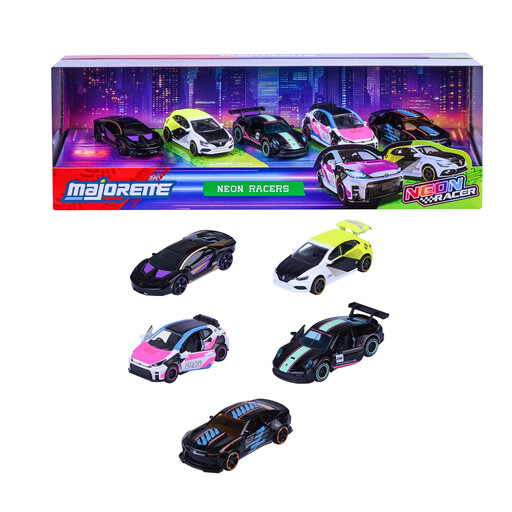
Why This Fits Their Persona: Five compact vehicles provide an accessible way to begin a collection or create a small play selection without needing much storage space in a UK bedroom or flat.
The listing states the 1:64 scale, five-car format, suspension and opening doors, while also showing a small-parts warning and a 3+ suitability notice.
Five die-cast vehicles in one gift set; compact format with suspension and detailed interiors.
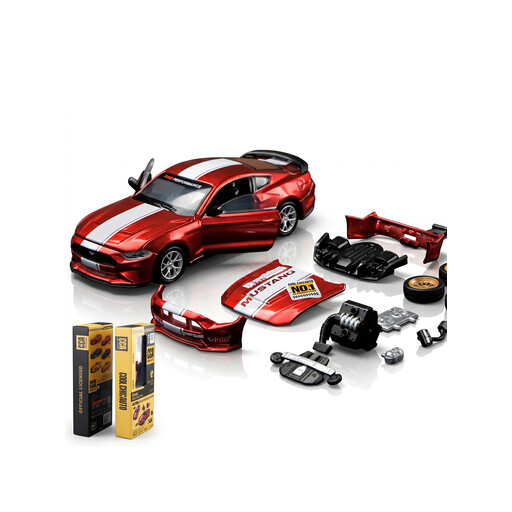
Why This Fits Their Persona: A car enthusiast wanting a focused display model can choose a medium-sized Ford replica with visible interior and exterior details.
It clearly states the 1:42 scale, die-cast metal construction, opening doors and bonnet, plus a recommended age of 14+.
Opening body panels; metal body with plastic components; suitable for display-focused collectors aged 14+.
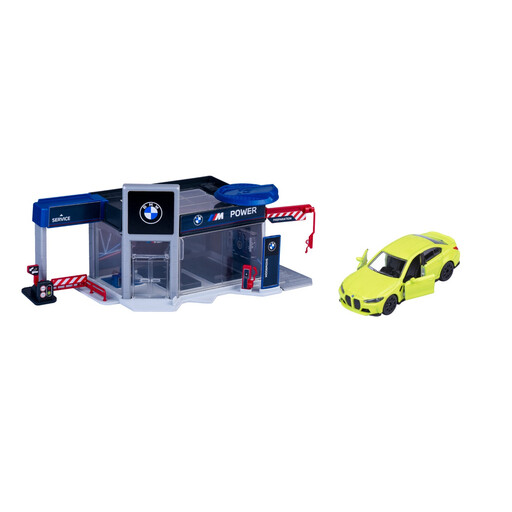
Why This Fits Their Persona: Families seeking a reusable play environment get a showroom format rather than a single loose vehicle, making it suitable for repeated indoor play.
The set identifies its play functions, included vehicle, dimensions and 5+ age guidance, with a small-parts warning for younger children.
Includes one BMW M3 die-cast car, two display spaces, sliding windows, a turntable and an EV charging point.
We have compiled a complete, real-time list of products that fully satisfy these strict selection criteria and UK safety regulations.
Collectors looking for specific marques may also consider the CCA 1:18 Yamaha YZF-R1 motorcycle replica, which includes a retractable stand and rear suspension. For motorsport and classic-car fans, the 1:36 BMW M3, Ford Mustang and Lamborghini models combine opening doors with pull-back movement. The 1:56 Volkswagen T1 Bus offers a smaller format, while a 1:44 Dodge Challenger includes opening doors and pull-back action.
When comparing licensed car replicas, confirm that the listing explicitly identifies licensing. Also check care instructions: some metal model vehicles should be wiped with a dry cloth rather than washed with water.
Some are, but suitability varies by product. Check the stated age guidance, small-parts warnings and construction. A product marked 14+ is generally intended for older users and display, while a clearly labelled 3+ or 5+ model may be more suitable for children when used as directed.
A 1:36 or 1:42 scale model car offers more visible detail and presence on a shelf. 1:64 die-cast cars are easier to arrange in groups and usually need less storage space. For a consistent collection, choose models in the same scale where possible.
Dust them with a soft, dry cloth. Follow the individual product instructions, especially where rubber, painted surfaces or moving parts are involved. Avoid water if the manufacturer advises against it, and operate doors, bonnets and stands gently to reduce wear.