For a weekend breakfast, choose a diet or zero-sugar cola by checking the sugars panel and the caffeine information on the exact variant; neither name tells you everything about both. If you do not want to add caffeine alongside tea or coffee, look for an explicitly caffeine-free version, then check its sweeteners and pack format before buying.
Who is this choice for?
Breakfast cola drinkers comparing sugars
If you want cola with breakfast but are choosing between regular and diet varieties, read the sugars figure on the nutrition panel. Pepsi UK lists 0g sugars for Pepsi Max and Diet Pepsi, while Tesco lists less than 0.1g per can for its Diet Cola; the stated serving basis matters when comparing labels.
People avoiding caffeine in their breakfast drink
A diet or zero-sugar name does not establish whether a cola contains caffeine. Compare the exact variant with any coffee or tea you also plan to drink, and look for an explicit caffeine-free label if you do not want caffeine in the cola.
Households choosing between cans and a bottle
Portioned cans may suit separate breakfasts; a larger bottle may suit a shared meal. Check the opened-bottle instructions before choosing the latter: Tesco says its 2L Caffeine Free Diet Cola should be consumed within three days of opening.
What should you check?
Start with the sugars declaration, decide whether caffeine belongs in your breakfast drink, then check ingredients and how you will use the pack.
| Priority |
What to check |
Your needs |
| Sugars |
Read the sugars value and whether it is given per 100ml, per serving or per can. Confirm the nutrition panel on the exact variant rather than relying only on “diet” or “zero sugar”. |
I want to choose my breakfast cola using the sugars figure on the pack, with like-for-like serving sizes when I compare options. |
| Caffeine |
Check for caffeine in the ingredients or an explicit “caffeine free” or “no caffeine” label. Pepsi UK lists caffeine in Pepsi Max and Diet Pepsi, but labels Pepsi Max No Caffeine separately. |
If I am also having coffee or tea, I want to know whether my cola adds caffeine; otherwise, I can choose a clearly labelled caffeine-free version. |
| Sweeteners |
Read the full ingredient list on the chosen variant, including any phenylalanine statement. Do not assume two sugar-free colas use identical ingredients. |
The particular sweeteners or label statements matter to me, so I need to check the can or bottle I will actually drink. |
| Pack format |
Compare the number and size of cans with the bottle size. For a bottle, read its storage and use-after-opening instructions; Tesco specifies three days after opening for its 2L Caffeine Free Diet Cola. |
For an occasional breakfast, individual cans may be easier to portion. If several people will share a bottle, I want its opened-product instructions to fit how quickly we will use it. |
Common buying mistakes
-
Assuming “diet” means caffeine-free
Pepsi UK lists caffeine in Pepsi Max and Diet Pepsi, and Tesco describes its standard Diet Cola as containing caffeine. The name describing sugars does not settle the caffeine question.
Choose a variant explicitly labelled “caffeine free” or “no caffeine” if you want to avoid caffeine in your breakfast cola.
-
Assuming every sugar-free cola has the same ingredients
A sugars declaration does not identify the sweeteners used or tell you whether the pack carries a phenylalanine statement.
Read the ingredients and statements on the exact flavour and variant, especially if either detail affects your choice.
-
Choosing a large bottle without checking the opened-product instructions
Tesco says its 2L Caffeine Free Diet Cola should be consumed within three days once opened. That timeframe may not fit a bottle opened for just one occasional breakfast.
Check the bottle’s own instructions and consider portioned cans if you expect to drink cola only occasionally.
An opened bottle left beyond its stated use period may mean some of the drink goes unused.
Brand and own-label references
These product-line examples show why the variant name and pack label matter more than a brand name alone.
Coca-Cola
Coca-Cola Great Britain presents Coca-Cola Zero Sugar Caffeine Free as a separately named option without sugar or caffeine.
- The caffeine-free wording distinguishes this variant from a standard zero-sugar cola.
- Check the exact Coca-Cola or Diet Coke variant rather than applying one variant’s caffeine information to the whole range.
Pepsi
Pepsi UK lists Pepsi Max, Diet Pepsi and Pepsi Max No Caffeine as distinct cola products.
- Pepsi UK lists 0g sugars for the referenced Pepsi Max and Diet Pepsi products and identifies a separate no-caffeine Pepsi Max variant.
- Pepsi Max and Diet Pepsi list caffeine in their ingredients; choose by the complete variant name, not the Pepsi name alone.
Tesco
Tesco lists a caffeine-containing Diet Cola in 8 × 330ml cans and a separate 2L Caffeine Free Diet Cola.
- The can multipack and larger caffeine-free bottle offer different ways to serve cola at a weekend meal.
- Tesco specifies consumption within three days of opening for the 2L caffeine-free bottle; check the label for the pack you buy.
Joybuy cola options
These 24 × 330ml can multipacks cover Diet Coke, Pepsi Max and Coca-Cola Zero Sugar variants for a weekend breakfast, including two whose names explicitly say they contain no caffeine. Check each pack’s current nutrition and ingredient labels for the details that matter to you.
 No image available
Diet Coke No Caffeine 24 × 330ml
The explicitly named no-caffeine variant suits a breakfast choice where you do not want caffeine in the cola. The 24 individual 330ml cans allow separate servings; check the sugars panel, sweeteners and any phenylalanine statement on the pack.
View on Joybuy
 No image available
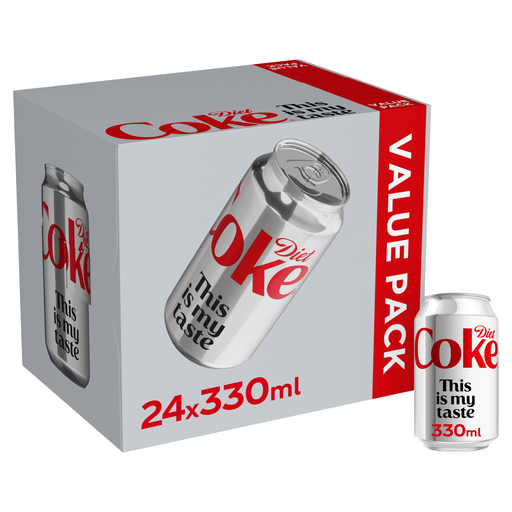
Coca-Cola Diet Coke 24 × 330ml
This 24-can Diet Coke pack is an option if caffeine in your breakfast cola fits your plans. This variant contains caffeine, so take other caffeinated drinks into account; check its sugars panel and ingredient statements on the cans.
View on Joybuy
 No image available
Pepsi Max Caffeine Free 24 × 330ml
This explicitly labelled caffeine-free Pepsi Max variant fits a breakfast where you want cola without caffeine. It comes as 24 individual 330ml cans; read the exact pack for its sugars figure, sweeteners and phenylalanine statement.
View on Joybuy
 No image available
Pepsi Max 24 × 330ml
Choose this standard Pepsi Max variant only if caffeine in the cola fits your breakfast plans; Pepsi UK lists caffeine in Pepsi Max ingredients. The pack contains 24 × 330ml cans. Check the current can for its sugars figure and ingredient statements.
View on Joybuy
 No image available
Coca-Cola Zero Sugar 24 × 330ml
This is the standard Zero Sugar variant, not the separately named caffeine-free version. Its 24 × 330ml can format allows individual servings; check the current ingredients for caffeine and sweeteners, as well as the sugars declaration.
View on Joybuy
Frequently asked questions
Is diet cola always caffeine-free?
No. Pepsi UK lists caffeine in Pepsi Max and Diet Pepsi, while Tesco describes its standard Diet Cola as containing caffeine. If you want to avoid caffeine in your breakfast cola, choose a variant explicitly labelled “caffeine free” or “no caffeine” and check its pack.
Can a diet or zero-sugar cola replace a sugary cola when comparing sugars?
It can be a lower-sugar choice when the exact product’s nutrition panel confirms the difference. GOV.UK names sugar-free drinks among possible swaps for sugary drinks; compare sugars on the stated per-100ml or serving basis rather than assuming every product with “diet” in its name has the same figure.
How long can I keep a large cola bottle after opening?
Follow the instruction on the particular bottle. Tesco says its 2L Caffeine Free Diet Cola should be kept cool, out of sunlight and consumed within three days once opened; another product may have different directions.


