Hosts serving a mixed adult group
Individual cans make self-service straightforward; sharing bottles let guests pour their own amount over ice. The format matters as much as the cola name when planning how drinks will be set out.


Choose a zero-sugar cola if that is the shared requirement, then decide how guests will serve themselves: cans provide individual portions, while large bottles can be poured over ice. If anyone needs a caffeine-free choice, buy one explicitly labelled no caffeine; neither “diet” nor “zero sugar” establishes that on its own. Check the exact pack for ingredients and any phenylalanine statement that matters to your guests.
Individual cans make self-service straightforward; sharing bottles let guests pour their own amount over ice. The format matters as much as the cola name when planning how drinks will be set out.
Set aside a clearly labelled no-caffeine cola rather than relying on the word “diet”. Standard variants in the cited Coca-Cola, Pepsi and own-label ranges include caffeine or caffeine flavouring.
Compare the stated sugar content, caffeine ingredients and pack format of the exact products. A similar “diet” or “zero sugar” description does not establish the same formulation or flavour.
Start with the guests’ ingredient requirements, then choose a pack format that suits how the drinks will be served.
| Priority | What to check | Your needs |
|---|---|---|
| Sugar and energy | Read the sugars and energy declarations on the exact pack, using the same per-100ml or per-serving basis when comparing products. “Diet” alone does not give a numerical value. | I want a cola without sugar on the drinks table. If energy matters too, I can compare the figures printed on each label. |
| Caffeine | Look for an explicit no-caffeine variant and check its ingredients. Standard Coca-Cola Zero Sugar lists caffeine flavouring; Pepsi Max and the cited Asda and Sainsbury's diet colas also list caffeine or caffeine-containing flavourings. | Some guests avoid caffeine, so I need their cans or bottles to be identifiable separately from the standard cola. |
| Serving format | Check can count and volume, or bottle size, against the way drinks will be served. The cited Pepsi Max pack contains 8 × 330ml cans; the cited own-label sharing bottles hold 2 litres each. | For self-service, individual cans may be simpler. If guests will pour over ice, I may prefer bottles and plan how opened bottles will be stored. |
| Ingredients and warnings | Read the current sweetener list and warning statements on each chosen variant. Several cited colas carry a “contains a source of phenylalanine” statement; formulations differ between products. | When an ingredient or warning matters to a guest, I need to check that specific cola rather than assume all no-sugar versions are alike. |
A standard diet or zero-sugar cola may still contain caffeine, leaving no suitable cola among the drinks for guests who avoid it.
Choose an explicitly labelled no-caffeine variant for those guests and keep it clearly separate when serving.
Sweeteners differ across the cited products, and several carry a phenylalanine statement.
Check the ingredients and warning on the exact pack before serving it to anyone for whom they matter.
An individual can and an opened sharing bottle call for different serving and storage arrangements.
Check the number and size of servings you want. For the cited Asda and Sainsbury's 2-litre diet colas, the labels say to refrigerate after opening and consume within three days.
England's Department of Health and Social Care guidance on certain HFSS products concerns retail promotion and placement, while food and drink provided in state-funded schools in England is covered by separate school-food requirements.
For a school-run Christmas event, ask the school or caterer to check the exact product and event against the requirements that apply there.
These examples show why the variant and its label matter more than the brand name alone; they do not indicate which products are available from Joybuy.
Coca-Cola Zero Sugar and Diet Coke No Caffeine serve different caffeine needs.
The cited range includes standard zero-sugar cola, Diet Pepsi and a separately named no-caffeine variant.
Tesco lists own-label diet cola in bottle and multipack formats.
The cited own-label Diet Cola is a 2-litre sharing bottle.
The cited own-label Diet Cola is a 2-litre bottle for shared pouring.
These options cover caffeine-free cans, standard zero-sugar cans and Coca-Cola Zero Sugar sharing bottles for different ways of serving party drinks.
 No image available
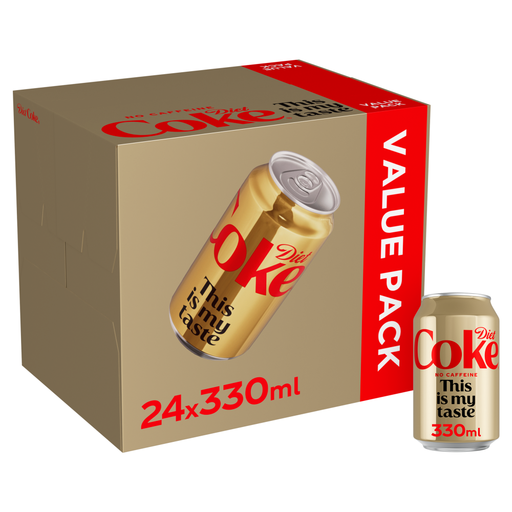
A caffeine-free, zero-sugar cola in individual cans for self-service. It contains sweeteners and carries a phenylalanine statement; check the current pack if either matters to a guest.
 No image available
Individual no-caffeine cans for guests who need that distinction, with 0g sugars per 100ml stated in the product information. The cola contains sweeteners and carries a phenylalanine statement.
 No image available
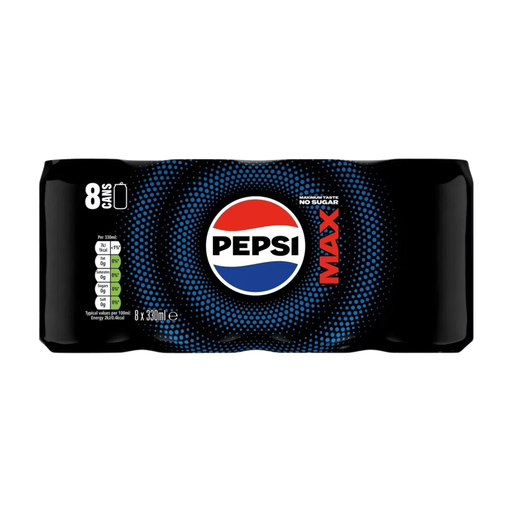
Eight individual 330ml cans for a self-service drinks table. Joybuy lists 0g sugars and 1 kcal per can; Pepsi UK lists caffeine, sweeteners and a phenylalanine statement for Pepsi Max. This is not the no-caffeine variant.
 No image available
A 24-can option for individual zero-sugar servings. The product information lists 0g sugars per 100ml; the cited Coca-Cola Zero Sugar formula contains caffeine flavouring and carries a phenylalanine statement.
 No image available
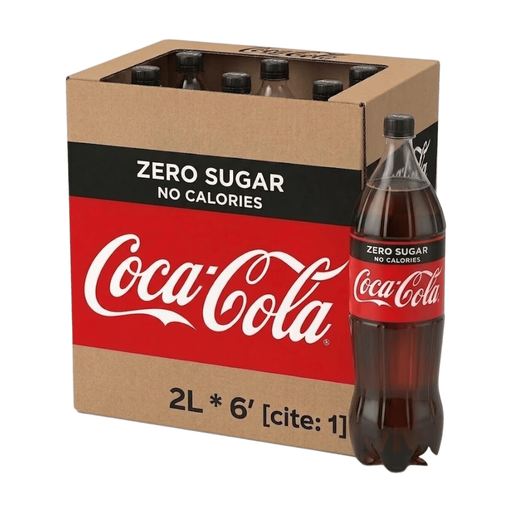
Six 2-litre sharing bottles for pouring drinks over ice or letting guests choose their serving size. The product information lists 0g sugars per 100ml; the cited formula contains caffeine flavouring and carries a phenylalanine statement.
No. The cited Diet Pepsi, Asda Diet Cola and Sainsbury's Diet Cola ingredient information lists caffeine or caffeine-containing flavourings. Choose an explicitly labelled no-caffeine variant when that distinction matters.
No. The cited Asda and Sainsbury's own-label diet colas list sucralose and acesulfame K, while the cited Diet Pepsi lists aspartame and acesulfame K. Read the exact current product label, including any phenylalanine statement.
Follow the storage instructions on each bottle. The cited Asda and Sainsbury's 2-litre diet colas say to refrigerate after opening and consume within three days.
No. Department for Education guidance says food and drink provided in state-funded schools in England is subject to school-food requirements. Ask the school or caterer to assess the particular product and how it will be provided at the event.
No. Department of Health and Social Care guidance for England addresses promotion and placement of certain HFSS products by businesses, including online retail equivalents; it does not set the school-food requirements or determine which cola to serve at a private party.