Households buying bottles to share
A 2-litre own-label diet cola may suit a shop centred on shared drinks. Tesco, Asda and Sainsbury's each list a 2-litre option; check the current bottle label when choosing between them.


For a large family shop, choose a 2-litre diet cola if you want bottles to share, or a multipack if individual cans are more useful. If anyone needs to avoid caffeine, choose a product specifically labelled caffeine-free rather than relying on a diet or zero-sugar label. Check the current ingredients and nutrition panel for each product, particularly when sweeteners matter to your household.
For a large household, the useful distinction is often between bottles for sharing, cans for individual portions and products with particular ingredient requirements.
A 2-litre own-label diet cola may suit a shop centred on shared drinks. Tesco, Asda and Sainsbury's each list a 2-litre option; check the current bottle label when choosing between them.
If reducing sugar is the reason for switching, compare sugars per 100ml on the nutrition panel. A diet or zero-sugar name does not tell you which sweeteners the drink contains.
If someone needs a caffeine-free cola or has phenylketonuria (PKU), read the specific product's ingredients and warnings. Standard Coca-Cola Zero Sugar and Pepsi Max list caffeine and aspartame; Pepsi Max Caffeine Free is a distinct product.
Start with the requirement that would rule out a product, then choose a pack format that fits how the household will use it.
| Priority | What to check | Your needs |
|---|---|---|
| Sugar content | Read sugars per 100ml and per serving on the current nutrition panel. Coca-Cola Great Britain lists Coca-Cola Zero Sugar at 0g sugars per 100ml. | I'm changing from sugary cola and want to compare the actual sugar figures, not just the name on the front. |
| Caffeine | Check for a caffeine-free product name and read the ingredients. Pepsi UK lists caffeine in standard Pepsi Max, while Pepsi Max Caffeine Free is a separate no-sugar product. | Someone in the household wants to avoid caffeine, so an ordinary zero-sugar cola will not answer that requirement by itself. |
| Sweeteners | Read the individual sweeteners and any phenylalanine warning on the pack. Coca-Cola Great Britain lists aspartame in Coca-Cola Zero Sugar; Pepsi UK lists it in both standard and caffeine-free Pepsi Max. | When shopping for someone with PKU, I need to check the exact product rather than assume all diet colas use the same ingredients. |
| Pack format | Check bottle volume or can size, the number of containers and storage directions after opening. | Will we share an opened bottle, or would separate cans fit the way we serve drinks? |
| Flavour choice | Distinguish Diet Coke, Coca-Cola Zero Sugar, Pepsi Max and own-label diet cola; a shared sugar description does not make them the same product. | Our household has a cola preference, so I want the right variant as well as the right pack. |
Standard Coca-Cola Zero Sugar and Pepsi Max list caffeine. Pepsi Max Caffeine Free is a different variant.
If caffeine matters, check both the variant name and the current ingredients before adding a multipack to the shop.
Pepsi UK lists aspartame and acesulfame K in Pepsi Max Caffeine Free.
Read the sweeteners and any phenylalanine warning on the exact pack, particularly when shopping for someone with PKU.
A large pack can leave several bottles to store if the household opens more than one at a time.
Match the number and size of bottles to how they will be used, and follow each label's storage directions after opening.
These product lines offer different variants and formats; the brand name alone does not establish their ingredients.
Coca-Cola Zero Sugar and Diet Coke are separate cola lines.
Pepsi Max and Pepsi Max Caffeine Free are distinct no-sugar variants.
Tesco lists an own-label Diet Cola in a 2-litre bottle for sharing.
Asda lists a 2-litre own-label Diet Cola.
Sainsbury's lists an own-label Diet Cola in a 2-litre bottle.
These Joybuy options include a large-bottle pack and canned multipacks of branded diet or zero-sugar cola. Choose by the variant and serving format your household needs.
 No image available
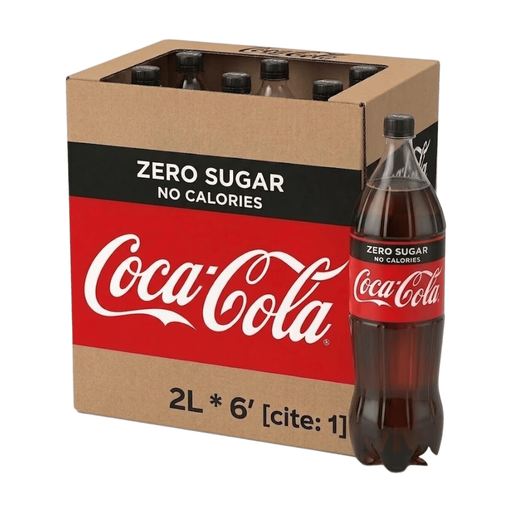
Six 2-litre bottles provide cola for sharing across a large shop. Coca-Cola Great Britain lists 0g sugars per 100ml for this product line and includes caffeine and aspartame in its ingredients. Check the pack's storage directions once a bottle is opened.
 No image available
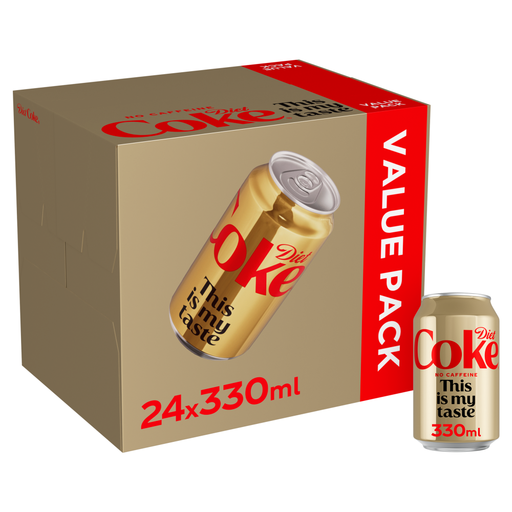
This caffeine-free variant comes as 24 individual 330ml cans. Check the current ingredients and phenylalanine warning if shopping for someone with PKU; caffeine-free does not mean sweetener-free.
 No image available
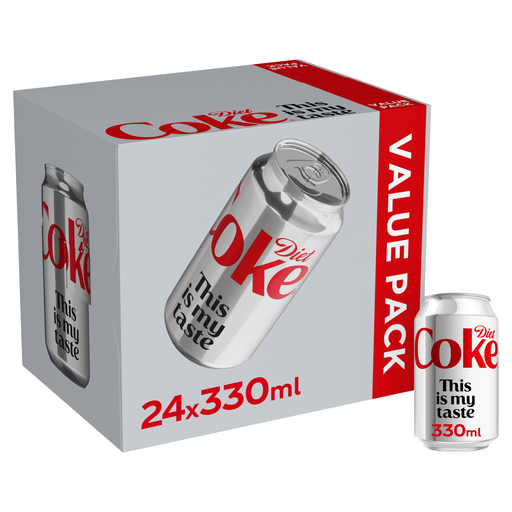
A 24-can pack offers individual 330ml servings for a household that prefers Diet Coke. This is not the No Caffeine variant; check the current ingredients if caffeine or sweeteners affect your choice.
 No image available
This caffeine-free variant comes in 24 individual 330ml cans. Pepsi UK lists aspartame and acesulfame K in Pepsi Max Caffeine Free, so check the current label if sweetener ingredients matter.
 No image available
A 24-can pack gives the household individual 330ml servings of standard Pepsi Max. Pepsi UK lists caffeine and aspartame in this variant; choose the specifically labelled caffeine-free variant if avoiding caffeine is necessary.
No. Coca-Cola Great Britain and Pepsi UK list caffeine in standard Coca-Cola Zero Sugar and Pepsi Max. Look for a specifically caffeine-free variant and check its current ingredients.
Check the exact product's ingredients for aspartame and its label for a phenylalanine warning. Coca-Cola Zero Sugar, Pepsi Max and Pepsi Max Caffeine Free list aspartame; do not assume a caffeine-free variant is also free of that sweetener.
Choose bottles if you expect to pour shared servings; choose cans if separate, unopened portions fit your household better. Check the bottle's directions for storage after opening before deciding how many to buy.
No. Read the ingredients on each product. Coca-Cola Great Britain lists aspartame in Coca-Cola Zero Sugar, while Pepsi UK lists aspartame and acesulfame K in both Pepsi Max and Pepsi Max Caffeine Free.