For festival food, choose the exact cola variant around your guests’ needs: check its sugar value, then decide whether flavour preference or caffeine avoidance narrows the choice. Coca-Cola describes Zero Sugar as closer to its original cola flavour and Diet Coke as lighter; standard diet and zero-sugar products are not automatically caffeine-free, so check the pack’s caffeine and sweetener information before serving.
Who is choosing the drinks?
Shoppers cutting back on sugar
If you are serving cola with shared food, check the sugar figure per 100ml on the exact variant. Flavour is a separate choice: Coca-Cola describes its Zero Sugar and Diet Coke recipes as having different taste profiles.
Hosts looking for a caffeine-free option
For guests who avoid caffeine, choose a variant explicitly labelled caffeine-free or no caffeine. Standard Pepsi Max and Diet Coke list caffeine, while separately named no-caffeine variants are available.
Shoppers checking ingredients for guests
Sweetener and phenylalanine statements matter when choosing for someone with phenylketonuria (PKU). The NHS says aspartame is unsuitable for people with PKU, so read the current pack rather than relying on its diet or zero-sugar name.
What should you check before buying?
Start with the exact variant’s nutrition and ingredient information, then check whether the container size and pack quantity work for serving food.
| Priority |
What to check |
Your needs |
| Sugar content |
Read sugars per 100ml on the exact product. Pepsi UK lists 0g for Pepsi Max, and Tesco Groceries lists 0g for Coca-Cola Zero Sugar; Coca-Cola Great Britain lists 10.6g per 100ml for Coca-Cola Original Taste. |
I want a cola with a stated sugar value that fits what I am buying for the table, rather than choosing by the colour or name of the pack. |
| Caffeine |
Check the full variant name and ingredients. Pepsi UK lists caffeine in standard Pepsi Max; Pepsi Max No Caffeine is a distinct product. Coca-Cola Great Britain likewise identifies a separate Diet Coke No Caffeine variant. |
For an evening gathering or guests avoiding caffeine, I need a clearly labelled no-caffeine option, not just a diet cola. |
| Sweeteners |
Read the current ingredients and any phenylalanine statement. Pepsi UK lists aspartame and a phenylalanine statement for standard Pepsi Max; the NHS says aspartame is unsuitable for people with PKU. |
If someone I am serving has PKU, the sweetener information matters independently of whether the drink contains sugar. |
| Serving format |
Compare the number of containers, volume per container and total volume. A 24 x 330ml pack contains 7.92 litres; check how many cans you can serve and chill. |
I would like individual cans for sharing, but I need to know whether the pack has enough for the guests and space available. |
Common mix-ups when choosing cola
-
Assuming diet cola is caffeine-free
Standard Pepsi Max and Diet Coke list caffeine, while their no-caffeine alternatives are separate variants. Picking the wrong name on a similar-looking pack can defeat a caffeine-avoidance requirement.
Look for an explicit no-caffeine or caffeine-free label and check the ingredients on the pack you buy.
-
Treating zero sugar as suitable for every ingredient requirement
A sugar-free label does not describe the sweeteners. The NHS says aspartame is unsuitable for people with PKU, and Pepsi UK lists a phenylalanine statement for standard Pepsi Max.
If PKU is relevant to a guest, check the current ingredients and phenylalanine statement for the exact variant.
-
Assuming multipacks contain the same quantity
A pack of 24 cans and a pack of 16 cans provide different numbers of individual drinks, even when both use 330ml cans. That difference matters when planning servings and chilled storage.
Count the containers and check their volume before deciding how many packs you need.
Brand and own-label ranges to consider
These range descriptions help distinguish variants; check the current pack for the ingredients and nutrition of the drink you select.
Coca-Cola
Coca-Cola Zero Sugar, Diet Coke and separately named no-caffeine variants offer different flavour and caffeine choices within the range.
- Coca-Cola Great Britain describes Zero Sugar as closer to Coca-Cola Original Taste and Diet Coke as having a lighter flavour blend.
- Regular Diet Coke lists caffeine flavouring and aspartame. Check the exact variant if caffeine or sweeteners affect your choice.
Pepsi
Pepsi UK identifies Pepsi Max, Diet Pepsi and Pepsi Max No Caffeine as distinct cola options.
- Pepsi UK lists 0g sugars per 100ml for Pepsi Max and identifies a separate Pepsi Max No Caffeine variant.
- Standard Pepsi Max lists caffeine, aspartame and a phenylalanine statement; its ingredients should not be assumed to describe every Pepsi variant.
Tesco
Tesco Groceries lists Tesco Diet Cola and Tesco Xero Cola as own-label 2L bottle options.
- The stated bottle format gives shoppers a pouring option to compare with individual cans.
- Check the current bottle’s nutrition and ingredients before choosing either variant for a sugar, caffeine or sweetener requirement.
Joybuy cola multipacks for sharing
These Joybuy options are canned diet and zero-sugar cola multipacks, including separately named caffeine-free variants, for serving alongside festival food.
 No image available
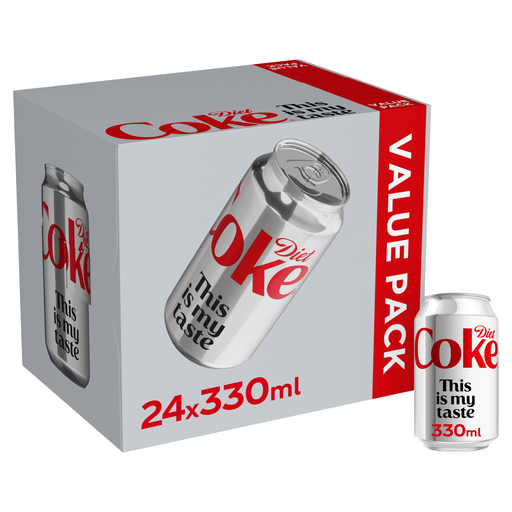
Coca-Cola Diet Coke 24 x 330ml
This 24-can pack provides individual servings for a food gathering; Coca-Cola describes Diet Coke as having a lighter flavour blend than Coca-Cola Zero Sugar.
Standard Diet Coke lists caffeine flavouring and aspartame. Check the current pack if either ingredient matters to a guest.
View on Joybuy
 No image available
Pepsi Max Caffeine Free 24 x 330ml
This explicitly named caffeine-free variant gives hosts a 24-can format when guests need individual servings without caffeine.
Pepsi UK lists 0g sugars per 100ml for Pepsi Max No Caffeine. Check the current pack’s sweeteners and phenylalanine statement for ingredient-specific needs.
View on Joybuy
 No image available
Pepsi Max 24 x 330ml
This 24-can pack suits serving individual cans when the standard Pepsi Max variant is the intended choice.
Pepsi UK lists 0g sugars per 100ml for Pepsi Max, but its standard ingredient list includes caffeine and aspartame and carries a phenylalanine statement.
View on Joybuy
 No image available
Coca-Cola Zero Sugar 24 x 330ml
The 24 individual cans suit group serving if you prefer the original-cola-style flavour direction described by Coca-Cola for its Zero Sugar line.
Tesco Groceries lists 0g sugars per 100ml for this variant and identifies caffeine flavouring in its ingredients. Check the current pack for sweetener requirements.
View on Joybuy
 No image available
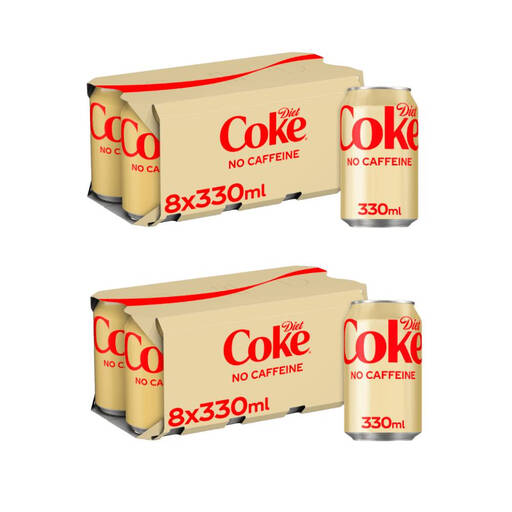
Diet Coke Caffeine Free 2 x 8 x 330ml
This separately named caffeine-free Diet Coke variant comes as two packs of eight cans, offering 16 individual servings.
That is fewer cans than the 24-can options shown here. Check the current pack’s sugar value and sweeteners if those details affect your choice.
View on Joybuy
Questions about diet and zero-sugar cola
Does diet or zero-sugar cola automatically contain no caffeine?
No. Standard Pepsi Max and Diet Coke list caffeine, while Pepsi Max No Caffeine and Diet Coke No Caffeine are separately named variants. Choose one explicitly labelled no caffeine or caffeine-free, and check the exact pack.
What should I check when serving cola to someone with PKU?
Check the exact drink’s ingredients for aspartame and its phenylalanine statement. The NHS says aspartame is unsuitable for people with phenylketonuria (PKU); a zero-sugar label alone does not answer that ingredient question.
Are sweeteners in drinks assessed before use in Great Britain?
Yes. The NHS states that sweeteners undergo a safety assessment before they can be used in food and drink in Great Britain. That general assessment does not remove the need to check a particular drink’s ingredients when PKU is relevant.


