Hosts choosing drinks without sugar
If you are offering cola alongside other picnic drinks, compare the exact packs’ sugar declarations and flavours rather than treating every diet and zero-sugar option as the same drink.


For a picnic, choose the cola flavour your guests are likely to enjoy, then check sugar, caffeine and ingredients on the exact pack. Coca-Cola describes Diet Coke as lighter-tasting and Coca-Cola Zero Sugar as closer to Coca-Cola Original Taste; if anyone needs to avoid caffeine, choose a variant explicitly labelled caffeine-free rather than relying on “diet” or “zero sugar”.
If you are offering cola alongside other picnic drinks, compare the exact packs’ sugar declarations and flavours rather than treating every diet and zero-sugar option as the same drink.
A diet or zero-sugar name does not establish caffeine-free status. Look for an explicitly caffeine-free variant and check its current label.
Choose between individual cans and a sharing bottle according to how guests will be served, and plan what to do with a bottle after opening.
Start with the flavour and ingredient requirements that matter to your guests, then choose a pack format that works for the picnic.
| Priority | What to check | Your needs |
|---|---|---|
| Sugar | Read the sugars figure per 100 ml on the exact pack. Check whether its wording says “no sugar”, “zero sugar” or “no added sugar”. | I want a cola without sugar, so I need the nutrition panel to confirm the choice rather than relying on the product name. |
| Flavour | Coca-Cola describes Diet Coke as lighter-tasting and Coca-Cola Zero Sugar as closer to Coca-Cola Original Taste. These are the manufacturer’s descriptions, not an independent taste comparison. | For several guests, I would rather offer a flavour they recognise than assume all zero-sugar colas taste alike. |
| Caffeine | Choose an explicitly caffeine-free variant when required; check the product name and current ingredients. Do not infer caffeine status from its sugar claim. | Someone at the picnic avoids caffeine, so a standard diet-cola multipack may not meet their requirement. |
| Ingredients | Check the sweeteners and any phenylalanine-source statement on each pack. Formulations can differ between branded and own-label colas. | I need to check the exact label before serving guests with relevant ingredient or dietary requirements. |
| Pack format | Compare individual cans with sharing bottles. For a bottle, read its refrigeration and use-after-opening instructions. | Cans make individual serving straightforward; for a large bottle, I need a plan for anything left after the picnic. |
Standard diet and zero-sugar varieties can contain caffeine, so the wrong multipack may not suit a guest avoiding it.
Choose a product explicitly labelled caffeine-free and check the current ingredient list.
Ingredient lists differ across the branded and own-label products described here. Some branded variants carry a phenylalanine-source statement that matters to people with a relevant dietary requirement.
Read the ingredients and warnings on the exact pack you intend to serve.
An unfinished sharing bottle needs to be handled according to its after-opening instructions, which may not fit the rest of your picnic plans.
Check the label before choosing the bottle size, or consider individual cans.
The Food Standards Agency’s picnic guidance says foods normally kept in the fridge also need to be kept cool at a picnic. That advice concerns chilled food, not a claim that unopened ambient cola needs refrigeration.
Pack chilled picnic food appropriately and plan drink storage separately.
Coca-Cola describes Diet Coke as having a lighter flavour and Coca-Cola Zero Sugar as closer to Coca-Cola Original Taste.
Pepsi lists Diet Pepsi and Pepsi Max as no-sugar colas, with Pepsi Max Caffeine Free as a separately identified option.
Tesco lists a 2-litre Diet Cola and a separate 2-litre Caffeine Free Diet Cola.
Sainsbury's lists a 2-litre diet cola with sweeteners for sharing.
Asda lists a 2-litre diet cola; its product information identifies caffeine.
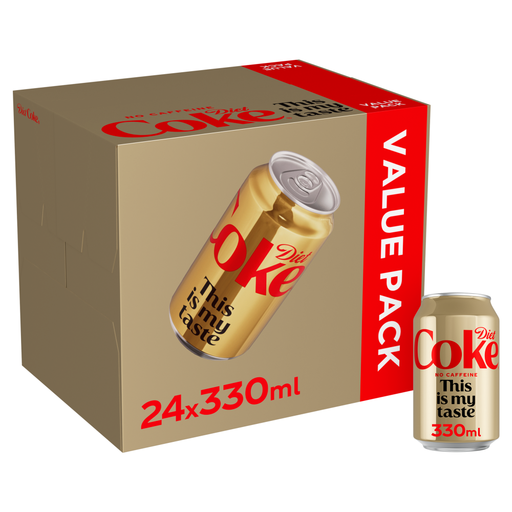
These canned Diet Coke, Pepsi Max and Coca-Cola Zero Sugar multipacks offer individual servings for a picnic. The first two are explicitly named caffeine-free variants; check each pack’s current label for other ingredient requirements.
 No image available
Individual cans for a picnic where a caffeine-free Diet Coke variant is needed. Check the exact pack’s ingredients and phenylalanine-source statement where relevant.
 No image available
A Pepsi Max can multipack explicitly identified as caffeine-free. Read the current pack for its full ingredients and any phenylalanine-source statement.
 No image available
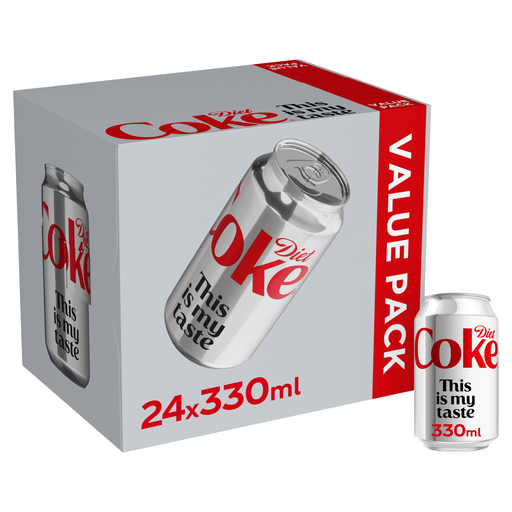
Individual Diet Coke cans for guests who want the lighter flavour profile described by Coca-Cola. This standard variant lists caffeine; check the pack for ingredients and warnings.
 No image available
A zero-sugar Pepsi Max multipack in individual cans. The standard variant lists caffeine, so choose a separately labelled caffeine-free pack if that is required.
 No image available
Individual zero-sugar cans for guests interested in Coca-Cola’s stated Original Taste-style flavour direction. This standard variant lists caffeine; check its current ingredients and warnings.
Coca-Cola says both are sugar-free and calorie-free, but describes Diet Coke as lighter-tasting and Coca-Cola Zero Sugar as closer to Coca-Cola Original Taste. Those descriptions are flavour cues from the manufacturer, not an independent taste verdict.
Not necessarily: standard variants can contain caffeine. If a guest needs to avoid it, choose a product explicitly labelled caffeine-free, such as Diet Coke No Caffeine or Pepsi Max Caffeine Free, and check the current pack.
Some diet and zero-sugar colas containing aspartame carry a phenylalanine-source statement. Check the exact product label if this ingredient is relevant to a guest’s dietary requirements.
Follow the storage and use-after-opening directions on the bottle you bought. The Tesco, Sainsbury's and Asda 2-litre diet cola product information calls for refrigeration after opening, so consider whether you can store any leftovers before choosing that format.