Lunch packers reducing sugar
If you want a cola with less sugar than a regular version, start with the “of which sugars” figure per can. Then check whether its caffeine, ingredients and can size suit your lunch.


For a packed lunch where reducing sugar is the priority, compare the sugars per can: UK product information lists 0g for 330ml cans of Coca-Cola Zero Sugar, Diet Coke and Pepsi MAX. If you also want to avoid caffeine, choose a variant explicitly labelled caffeine-free; check its ingredients and the exact pack size rather than assuming every diet or zero-sugar cola is the same.
If you want a cola with less sugar than a regular version, start with the “of which sugars” figure per can. Then check whether its caffeine, ingredients and can size suit your lunch.
A zero-sugar label does not mean caffeine-free. Look for an explicitly caffeine-free variant if avoiding caffeine is part of your choice.
Individual 330ml cans can be packed one at a time. Before choosing a multipack for repeated lunches, check the number of cans, the exact variant and the current label.
Choose the sugar and caffeine combination you want first, then compare ingredients and pack format on the exact product.
| Priority | What to check | Your needs |
|---|---|---|
| Sugar per can | Read “of which sugars” for the can you will pack. Pepsi UK lists 0g per 330ml for Pepsi MAX and 15g per 330ml for regular Pepsi. | I want to reduce the sugar in my lunch drink, rather than assume every cola with a familiar brand name has the same sugar content. |
| Caffeine | Check both the variant name and ingredients. Standard Coca-Cola Zero Sugar and Pepsi MAX list caffeine; Coca-Cola Zero Sugar Zero Caffeine is a separately labelled option. | If I am avoiding caffeine, I need the can itself to say caffeine-free—not just zero sugar. |
| Ingredients | Read the sweeteners and any phenylalanine statement on the exact pack. Diet Coke’s ASDA listing carries a source-of-phenylalanine warning. | A particular sweetener or label warning may affect which zero-sugar cola I choose. |
| Can and pack size | Check the volume of each can and the number of cans. A multipack of 330ml cans supplies individual lunch servings, but pack quantities differ. | One can needs to fit my packed lunch; I can decide separately how many lunches to buy for. |
Standard zero-sugar colas can still list caffeine. The caffeine-free version is a distinct product, not a property of every diet cola.
Check the full variant name and ingredient list when caffeine avoidance matters.
Sweeteners and nutrition declarations can differ between zero-sugar colas. Sainsbury’s Cola Zero, for example, lists less than 0.5g sugars and 3kcal per 330ml can.
Compare the per-can nutrition panel and ingredients on the flavour and pack you intend to buy.
Pepsi UK lists 15g sugars per 330ml for regular Pepsi and 0g for Pepsi MAX. The NHS advises adults to have no more than 30g of free sugars a day.
If reducing sugar is your aim, check “of which sugars” on the specific can rather than relying on the brand alone.
Pack quantities and variants differ, even when the cans are the same size. An online listing may also differ from the information on the pack received.
Confirm the can count and variant before ordering, then read the pack’s ingredients and nutrition panel.
Coca-Cola’s UK range includes Coca-Cola Zero Sugar, Diet Coke and the separately named Coca-Cola Zero Sugar Zero Caffeine.
Pepsi MAX is Pepsi’s zero-sugar cola in the UK product information; regular Pepsi is a different product.
Sainsbury’s lists an own-label Cola Zero in 330ml cans.
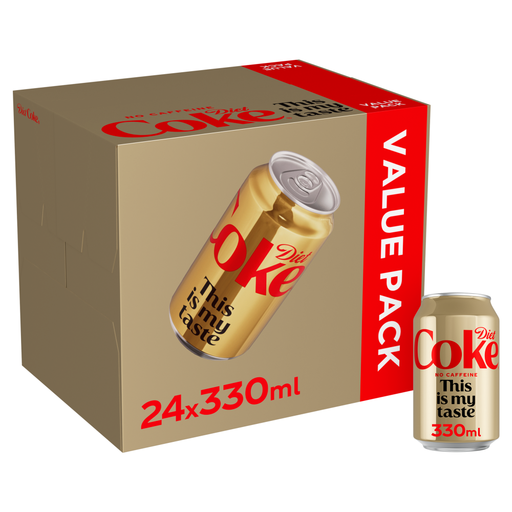
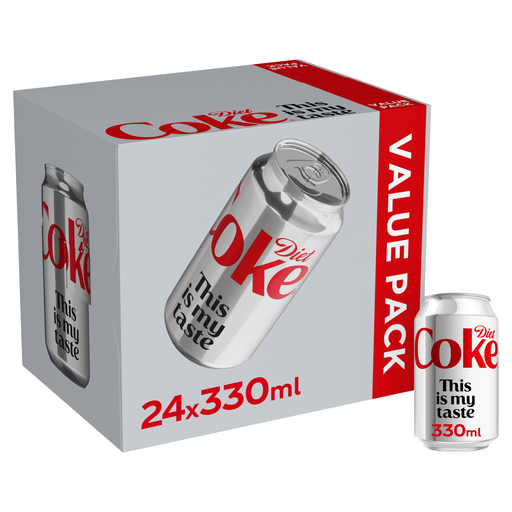
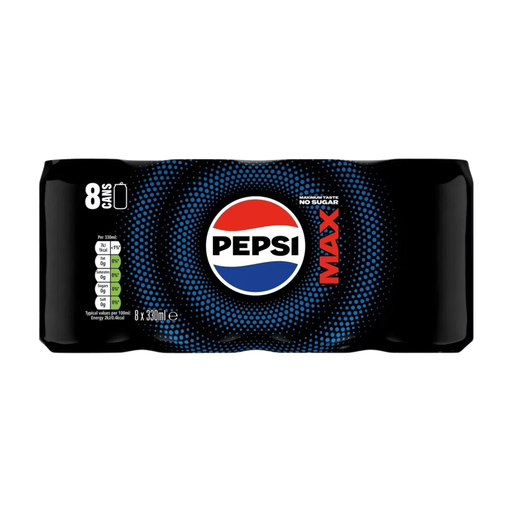
These multipacks offer individual 330ml cans for packed lunches. The selection includes a labelled no-caffeine Diet Coke alongside other diet and zero-sugar colas; check each variant and pack quantity before choosing.
 No image available
An explicitly named no-caffeine variant in individual 330ml cans. Check the pack’s sugars, sweeteners and phenylalanine statement against your requirements.
 No image available
A 24-can Diet Coke pack for individual lunches. This is not the no-caffeine variant; check the can’s caffeine, sweeteners and phenylalanine statement.
 No image available
The product name specifies eight individual 330ml cans. Check the listing and pack before ordering: the supplied product details give a different can count and describe a caffeine status that should not be assumed from the standard Pepsi MAX name.
 No image available
A 24-can pack of the standard Pepsi MAX variant. Pepsi UK lists 0g sugars per 330ml; check the caffeine and sweetener declarations if either affects your choice.
 No image available
A 24-can pack for individual lunches when you want the standard Zero Sugar variant. Its ingredient information lists caffeine; choose an explicitly caffeine-free variant if that distinction matters.
No. Standard Coca-Cola Zero Sugar and Pepsi MAX list caffeine, while Coca-Cola Zero Sugar Zero Caffeine is a separately labelled product. Check the exact variant on the can.
Compare the “of which sugars” figure per serving: Pepsi UK lists 0g per 330ml for Pepsi MAX and 15g for regular Pepsi. The NHS advises adults to have no more than 30g of free sugars a day.
Some diet-cola labels carry a source-of-phenylalanine statement; ASDA’s Diet Coke listing is one example. Read the warning and sweetener ingredients on the exact pack if they affect which product you can choose.
Use a listing to compare options, then check the label on the can you receive before drinking it. Retail product information, including ingredients, can change.