Parents planning school-holiday lunches
Water or plain milk can be the usual lunch drink. If a child wants something fizzy occasionally, compare the nutrition panel with a regular sugary drink rather than choosing by the word “diet” alone.


For a child’s usual school-holiday lunch, choose water or plain milk; NHS guidance identifies these as the preferred everyday drinks. If you want an occasional fizzy drink, compare the sugar figure and check whether the exact product is caffeine free. A diet or zero-sugar drink can reduce sugar compared with a sugary version, but fizzy drinks remain an acidic choice, so NHS oral-health guidance advises keeping them to mealtimes rather than sipping them between meals.
The choice changes depending on whether you need an everyday lunch drink, an occasional fizzy option or a product without caffeine.
Water or plain milk can be the usual lunch drink. If a child wants something fizzy occasionally, compare the nutrition panel with a regular sugary drink rather than choosing by the word “diet” alone.
Zero sugar and caffeine free are separate claims. PepsiCo UK lists caffeine in Pepsi Max, while its Pepsi Max No Caffeine is a distinct product; check the exact can or bottle before packing lunch.
A sugar-free fizzy drink can still be acidic. NHS St George’s oral-health guidance advises keeping acidic drinks to mealtimes, making a drink sipped throughout the afternoon a different choice from one served with lunch.
Decide first whether a fizzy drink is needed for this lunch. If it is, use the exact pack’s nutrition and ingredient labels to distinguish sugar, caffeine and sweetener information; none of those checks removes the acidity consideration.
| Priority | What to check | Your needs |
|---|---|---|
| Everyday drink | Consider water or plain milk before choosing a fizzy drink. Wirral Community Health and Care NHS Foundation Trust recommends making most children’s drinks water or milk. | For an ordinary lunch, I want a drink that does not make a fizzy option the daily routine. |
| Sugar | Read sugars per 100ml and the pack or serving size. Check the nutrition panel even when the product name includes “zero”: Tesco lists Fanta Orange Zero at 0.4g sugars per 100ml. | If I choose something fizzy, I want to know how much sugar the amount being served contains, rather than relying on the product name. |
| Caffeine | Look for caffeine or caffeine flavouring in the ingredients, or an explicit caffeine-free label. PepsiCo UK lists caffeine in Pepsi Max and offers a separate Pepsi Max No Caffeine product. | I’m looking for a caffeine-free lunch drink, so a standard zero-sugar cola may not meet that requirement. |
| Acidity and timing | Check the ingredients for acids and plan when the drink will be served. NHS St George’s advises keeping acidic drinks, including fizzy drinks, to mealtimes. | A drink for lunch is one decision; something to sip repeatedly between meals is another. I want to account for acidity even if the drink contains no sugar. |
| Ingredients and pack | Check the exact variant’s sweeteners and any phenylalanine statement. Read the volume and serving information rather than assuming one bottle equals one serving. | I need the label information to suit the child’s circumstances, and I want to choose the amount served rather than let a larger bottle set it. |
Removing sugar does not remove the acidity consideration. NHS St George’s says acidic drinks, including fizzy drinks, can contribute to tooth erosion.
Keep water or plain milk as the routine choice. If you serve a fizzy drink occasionally, serve it with lunch rather than leaving it to be sipped between meals.
“Diet” and “zero sugar” do not describe caffeine content. PepsiCo UK and Coca-Cola Great Britain list caffeine flavouring in Pepsi Max and Coca-Cola Zero Sugar respectively.
If caffeine is a deciding factor, look for an explicitly caffeine-free variant and check its current ingredient label.
Ingredient lists differ between drinks. For example, PepsiCo UK lists sweeteners and a source-of-phenylalanine statement for Pepsi Max.
Read the statement on the specific can or bottle. Where a child has a relevant medical dietary requirement, use the current label alongside appropriate professional advice.
Pack volume and labelled serving size need not be the same: Tesco describes a 500ml Dr Pepper Zero bottle as two 250ml servings.
Check the volume before packing lunch and decide how much to serve, rather than using the bottle size as the portion.
These examples show why the exact variant matters: a brand can offer both caffeinated and caffeine-free drinks, while sugar figures and ingredient warnings also differ.
For a cola-flavoured option, distinguish Coca-Cola Zero Sugar from Coca-Cola Zero Sugar Zero Caffeine.
Pepsi Max and Pepsi Max No Caffeine offer different answers to a caffeine-free lunch requirement.
Fanta Orange Zero is an orange-flavoured alternative for someone who does not want a cola.
Sprite Zero Sugar is a lemon-and-lime option rather than a cola.
Dr Pepper Zero is a distinct flavoured option when caffeine is acceptable.
Tesco Diet Cola and Tesco Caffeine Free Diet Cola show why own-label cola variants should be compared individually.
These cans provide cola, lemon-and-lime and orange-flavoured options for an occasional lunch drink. Compare the exact product’s sugar and caffeine information before choosing; the product list does not change the advice to make water or plain milk the usual drink.
 No image available
A caffeine-free cola variant in individual 330ml cans if an occasional fizzy lunch drink is wanted. PepsiCo UK identifies Pepsi Max No Caffeine as a no-sugar product; check the exact pack’s ingredients and any phenylalanine statement. NHS St George’s advises serving acidic drinks with meals rather than between them.
 No image available
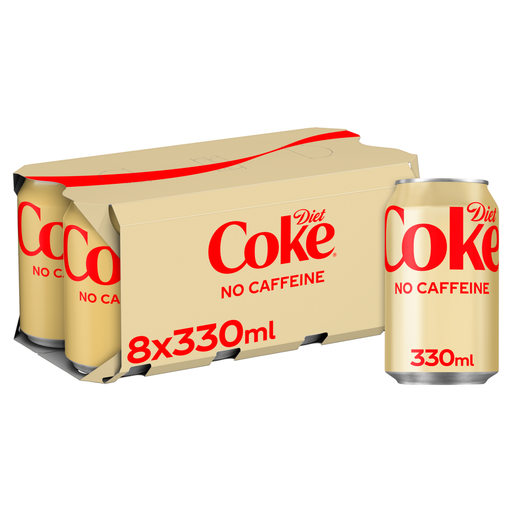
A caffeine-free diet cola in 330ml cans for a lunch where cola flavour is wanted. Check the current pack’s sugar figure, sweeteners and ingredient warnings; “diet” does not replace those checks. As with other fizzy drinks, consider acidity and serve it with the meal rather than for repeated sipping.
 No image available
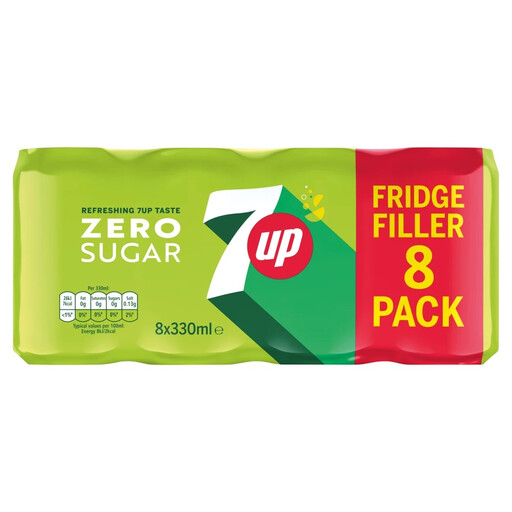
A 330ml-can option if a non-cola fizzy drink is preferred for an occasional lunch. Check the nutrition and ingredient labels for the sugar figure, caffeine information and any relevant warnings rather than inferring them from “Zero”. Fizzy-drink acidity remains a consideration.
 No image available
A zero-sugar cola in 330ml cans, but not the caffeine-free variant: PepsiCo UK lists caffeine among Pepsi Max flavourings. Choose it only if caffeine is acceptable for this lunch, and check the current label for sweeteners and its phenylalanine statement. Keep an occasional fizzy drink with the meal.
 No image available
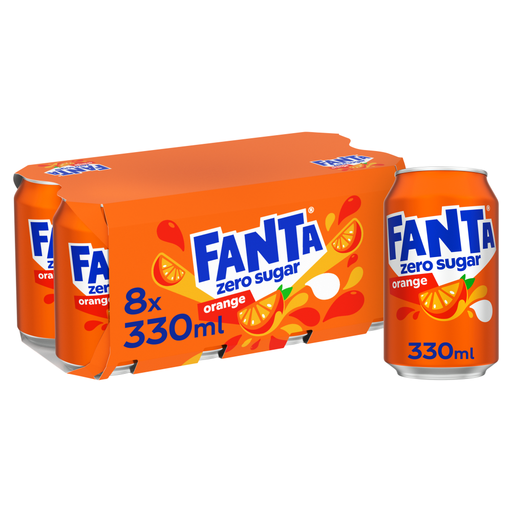
An orange-flavoured alternative to cola in 330ml cans. Tesco identifies Fanta Orange Zero as caffeine free and lists 0.4g sugars per 100ml, so its name should not be read as 0g sugars. Check the current pack’s ingredients and keep an occasional fizzy drink to mealtimes.
If you are choosing between fizzy drinks to reduce sugar, NHS guidance includes diet, sugar-free and no-added-sugar drinks as alternatives to sugary ones. For a child’s usual lunch drink, NHS-linked guidance favours water or milk; a sugar-free fizzy drink can still be acidic, so check its label and keep it as an occasional mealtime option.
No. PepsiCo UK lists caffeine in Pepsi Max, and Coca-Cola Great Britain lists it in Coca-Cola Zero Sugar and Dr Pepper Zero. Caffeine-free variants exist, but confirm that claim on the exact product you are buying.
No. NHS St George’s oral-health guidance says acidic drinks, including fizzy drinks, can contribute to tooth erosion and advises keeping them to mealtimes. A zero-sugar label addresses sugar content, not whether the drink is acidic.
Some drinks with sweeteners carry a source-of-phenylalanine statement; PepsiCo UK lists one for Pepsi Max, for example. Check the current label of the exact variant, particularly if a child has a relevant medical dietary requirement, and seek appropriate professional advice for that requirement.