If you want a fizzy drink with train food while reducing sugar, choose a labelled diet or zero-sugar option and check the sugars figure for the amount you will drink. Choose an explicitly caffeine-free variant if caffeine matters to you, and check for aspartame if you have phenylketonuria (PKU). Sugar-free fizz remains acidic, so water is an alternative when you expect to sip throughout the journey.
Who is this choice for?
Travellers reducing sugar with a meal
If you are taking a sandwich or snack on the train and still want a fizzy drink, compare the sugars figure for the can you intend to drink. A familiar brand name alone does not tell you whether you have picked its diet or standard version.
Travellers avoiding caffeine
If you want a cola without caffeine, look for an explicitly caffeine-free variant and check its ingredients. Diet and zero-sugar wording does not, by itself, mean caffeine-free.
Travellers checking for aspartame
If you have PKU or otherwise need to avoid aspartame, check the ingredients and phenylalanine statement on the exact pack. Several of the zero-sugar drinks discussed here list aspartame; a zero-sugar label is not a substitute for an ingredient check.
What should you check?
Start with the sugars figure for your intended serving, then check caffeine and ingredients before deciding whether a fizzy drink suits the journey.
| Priority |
What to check |
Your needs |
| Sugars |
Read the sugars line per 100ml and for the can or bottle you plan to drink. Check that the diet or zero-sugar wording applies to the exact variant. |
I want a fizzy drink with my food while reducing sugar, so the serving I take on the train matters more than the brand family name. |
| Caffeine |
Check the full variant name and ingredients. Coca-Cola Zero Sugar and Pepsi Max list caffeine; separately named caffeine-free versions offer a different choice. |
For a journey when I do not want caffeine, I would choose a drink explicitly labelled caffeine-free rather than assume a diet cola qualifies. |
| Aspartame |
Read the exact pack for aspartame or E951 and a phenylalanine statement. Check again when buying a familiar product, as recipes can change. |
If I have PKU, I need to avoid a product containing aspartame, regardless of whether its front label says diet or zero sugar. |
| Acidity |
Consider how often you will sip the drink. The NHS associates carbonated drinks with dental erosion because of their acid content, including sugar-free versions. |
If I expect to sip for much of the journey and fizz is optional, I may take water instead. |
| Can format |
Check the can size and pack quantity. A multipack can be divided between journeys, while the nutrition figure should still be read for the individual can. |
For one train meal, I want to know what is in the can I pack, even if I buy several cans together. |
Common label mistakes
-
Assuming zero sugar means caffeine-free
Coca-Cola Zero Sugar, Pepsi Max and Tesco Diet Cola list caffeine, while caffeine-free cola variants are named separately. Choosing by the diet label alone may not meet a caffeine-avoidance preference.
Read the full product name and ingredients; choose a variant explicitly labelled caffeine-free when that is essential.
-
Treating sugar-free fizz as tooth-neutral
Removing sugar does not remove the acidity consideration. The NHS associates carbonated drinks with dental erosion because of their acid content.
If avoiding frequent exposure to fizzy drinks matters more than having one with your meal, choose water instead.
-
Overlooking aspartame on a zero-sugar drink
Some zero-sugar colas and lemon-lime drinks discussed here list aspartame or carry a phenylalanine statement. Aspartame is unsuitable for people with PKU.
If you have PKU, check the exact pack for aspartame or E951 and avoid products that contain it.
-
Relying on an old online ingredient list
Tesco notes that food products can be reformulated, so an earlier listing may not describe the can you buy.
Read the current pack label, particularly when caffeine, sweeteners or PKU-related information affects your choice.
Brand and product-line references
These examples show why the exact variant matters; they do not describe every drink made by each brand.
Coca-Cola
Coca-Cola Zero Sugar is a cola option for reducing sugar; Coca-Cola Zero Sugar Caffeine Free is a separately labelled option for avoiding caffeine.
- Coca-Cola GB lists 0g sugars per 100ml for Coca-Cola Zero Sugar.
- Coca-Cola Zero Sugar lists caffeine. The cited zero-sugar variants also list aspartame, which matters for people with PKU.
Pepsi
Pepsi Max and Pepsi Max No Caffeine offer distinct cola choices when caffeine preference affects the decision.
- Pepsi UK identifies Pepsi Max as a no-sugar drink and offers a separately named No Caffeine variant.
- Pepsi Max lists caffeine; the cited variants list aspartame, so check the pack if you have PKU.
Sprite
Sprite Zero is a lemon-lime option for someone who wants a zero-sugar fizzy drink rather than cola.
- Coca-Cola GB identifies Sprite Zero as a no-sugar variant.
- Sprite Zero lists aspartame; choosing sugar-free fizz also leaves the acidity consideration described by the NHS.
Tesco
Tesco Diet Cola comes in an eight-pack of 330ml cans, a format to consider when packing drinks for more than one meal or journey.
- The Tesco Diet Cola listing identifies it as a no-added-sugar cola with caffeine and sweeteners.
- It is not a caffeine-free choice. Tesco advises checking the pack label because product information can change.
Joybuy fizzy drink options
These packs offer cola, non-cola and fruity sugar-free choices for taking a can with train food. Check the individual pack when caffeine or aspartame affects your choice.
 No image available
Pepsi Max Caffeine Free 24 x 330ml
A separately named caffeine-free cola variant if you want to pack a can without caffeine. The pack contains 24 cans of 330ml. The listed ingredients include aspartame; if you have PKU, check the exact can and avoid it if aspartame is listed.
View on Joybuy
 No image available
Coca-Cola Zero Sugar 24 x 330ml
A zero-sugar cola option when caffeine is acceptable to you. Coca-Cola GB lists 0g sugars per 100ml and identifies caffeine in this variant; the pack contains 24 cans of 330ml. It also lists aspartame, so check the can and avoid it if you have PKU.
View on Joybuy
 No image available
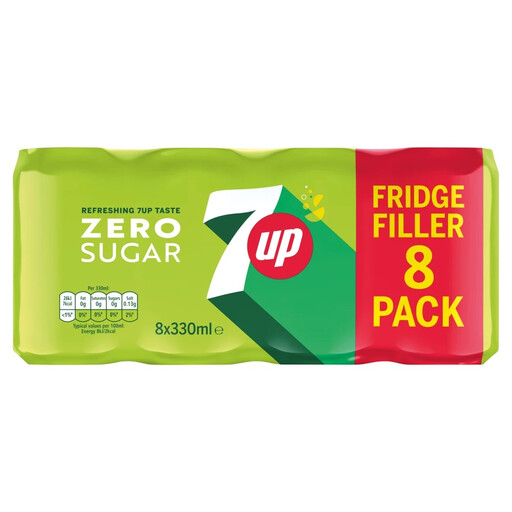
7UP Zero 8 x 330ml
A non-cola zero-sugar option in a pack of eight 330ml cans. Check the exact can for caffeine information if you need to avoid it. The listed ingredients include aspartame; avoid the drink if you have PKU and the pack confirms that ingredient.
View on Joybuy
 No image available
Tango Apple Sugar-Free 24 x 330ml
An apple-flavoured sugar-free choice if you would rather take a fruity fizzy drink than cola. The pack contains 24 cans of 330ml. If avoiding caffeine matters to you, check the ingredients on the exact can before choosing it.
View on Joybuy
Frequently asked questions
Should I choose a zero-sugar drink over regular fizzy drink with train food?
If reducing sugar is your aim, choose a drink whose nutrition label shows zero or less sugar for the serving you will have. The NHS suggests sugar-free or diet drinks as alternatives to sugary drinks; check the exact variant rather than relying on the brand name.
Are diet and zero-sugar colas caffeine-free?
No. Coca-Cola Zero Sugar and Pepsi Max list caffeine. If you want to avoid it, look for a variant explicitly labelled caffeine-free, such as Coca-Cola Zero Sugar Caffeine Free or Pepsi Max No Caffeine, and check the pack.
What should someone with PKU check on a diet drink?
Check the exact pack for aspartame or E951 and a phenylalanine statement; do not use a diet or zero-sugar label as a suitability shortcut. Avoid a drink containing aspartame if you have PKU.
Does sugar-free fizz remove the dental concern?
No. The NHS associates carbonated drinks with dental erosion because of their acid content, including when they are sugar-free. If you expect to sip throughout the journey and do not need a fizzy drink, water avoids that carbonated-drink acidity concern.


