Breakfast hosts reducing sugar
A large bottle suits a shared table, while cans give each person a separate portion. Compare the sugars figure on the labelled serving size before choosing either format.


For a shared breakfast where reducing sugar matters, compare the sugars line on a diet lemonade bottle or individual cans before choosing a pack size. If avoiding artificial sweeteners matters more, a regular lemonade may suit that preference but can contain sugar; sugar-free fizz can also be acidic, so it is not a tooth-friendly substitute for water or milk.
A large bottle suits a shared table, while cans give each person a separate portion. Compare the sugars figure on the labelled serving size before choosing either format.
Diet and zero-sugar drinks can use different sweeteners. If aspartame or another ingredient affects your choice, read the current pack rather than relying on the word “diet”.
Norfolk & Suffolk Integrated Care Board advises that many fizzy drinks, including sugar-free ones, are acidic and can erode enamel. That distinction matters even when a drink contains little or no sugar.
Start with the sugars and ingredients on the exact drink, then choose a bottle or cans to suit the breakfast table.
| Priority | What to check | Your needs |
|---|---|---|
| Sugars and energy | Read both figures and their serving basis. Sainsbury’s lists less than 0.5 g sugars and 3 kcal per 250 ml of Diet Lemonade; ASDA lists 0 g sugars and 4 kcal per 330 ml can of Diet Lemonade. | I want a fizzy breakfast drink with little or no listed sugar, rather than choosing by the word “diet” alone. |
| Sweetener ingredients | Check the current ingredients for the specific sweeteners you wish to avoid. Tesco lists aspartame, acesulfame K and saccharin in R. Whites Diet Lemonade; Sainsbury’s lists acesulfame K and sucralose in its Diet Lemonade. | If aspartame matters to me, I need the ingredients of the exact product, not an assumption about all diet lemonades. |
| No artificial sweeteners | Check that claim alongside the sugars line. M&S says its Lemonade has no artificial sweeteners, but lists 4.4 g sugars per 100 g. | I would accept a drink containing sugar if avoiding artificial sweeteners is my deciding preference. |
| Pack format | Compare the amount you plan to serve: Sainsbury’s Diet Lemonade comes in a 2 L bottle, while ASDA Diet Lemonade comes as six 330 ml cans. | For a shared table, I may want to pour glasses; for separate servings, cans are easier to hand out. |
| Dental acidity | Do not equate sugar-free with non-acidic. Norfolk & Suffolk Integrated Care Board advises that many fizzy drinks, including sugar-free ones, can erode enamel. | I want to offer citrus fizz without treating it as a tooth-friendly replacement for water or milk. |
The wording alone does not tell you the amount of sugar in the serving you will pour.
Read the sugars and energy lines, including whether they refer to 100 ml, a glass or a can.
M&S says its Lemonade has no artificial sweeteners, but its nutrition panel lists 4.4 g sugars per 100 g.
Decide whether the sweetener preference or the sugars figure matters more, then check both on the product.
Norfolk & Suffolk Integrated Care Board advises that many sugar-free fizzy drinks are acidic and can erode enamel.
Keep that acidity in mind when choosing breakfast drinks; its guidance identifies water and milk as the safest drinks for teeth.
Cited R. Whites Diet Lemonade and Sprite Zero Sugar listings include aspartame. Tesco also notes that food products can be reformulated.
Read the current pack, including any phenylalanine statement, if a particular sweetener matters to you.
These examples show how the sugar, sweetener and pack-format trade-offs differ between specific drinks; they do not describe every product made by each brand.
Its 2 L Diet Lemonade and Diet Lemon & Lime offer bottle formats for pouring at a shared table.
Its Diet Lemonade comes as six individual 330 ml cans.
R. Whites Diet Lemonade is a canned, classic-lemonade option.
Sprite Zero Sugar is a lemon-lime alternative to plain lemonade.
Its regular Lemonade addresses a preference to avoid artificial sweeteners rather than a diet-lemonade requirement.
Tesco’s own-label Diet Lemonade is a no-added-sugar lemonade containing sweeteners.
These Joybuy options are lemonade-style, lemon-lime and lemon-soda multipacks for separate servings at a weekend breakfast. Check the current pack if you need a particular sugars figure, energy value or sweetener formulation.
 No image available
A lemonade-style option for serving individual cans at a larger breakfast gathering. The pack contains 24 × 330 ml cans; check the current ingredients and nutrition panel if the sweeteners or exact sugars figure matter to you.
 No image available
Choose this lemon-lime format rather than classic lemonade if that flavour suits the table. The pack contains 24 individual 330 ml cans; check the current label for ingredients and nutrition.
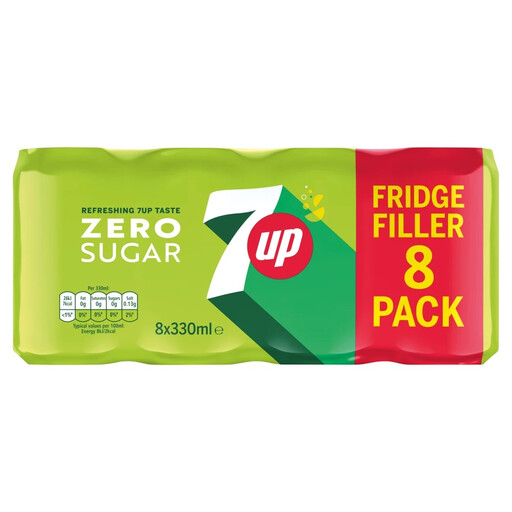 No image available
This eight-can lemon-lime pack offers separate servings when you want fewer cans than the 24-pack. It is a lemon-lime drink rather than traditional lemonade; check the current ingredients if aspartame matters to you.
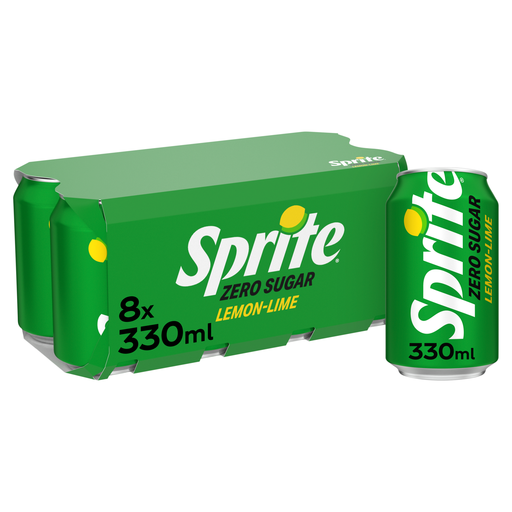 No image available
An eight-can lemon-lime option for individual breakfast servings rather than a plain lemonade. Check the current pack for its energy value, as well as its ingredients if aspartame matters to you.
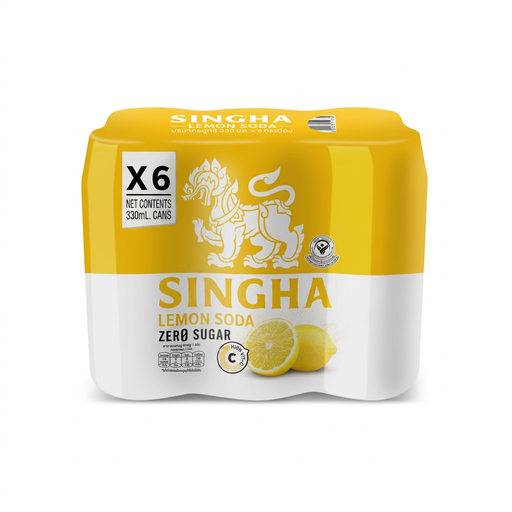 No image available
This six-can option is described as lemon soda, not lemonade, for those open to a different citrus fizz. Check the current pack nutrition panel for the energy value before comparing it with other drinks.
No. Read the sugars line on the exact product: Sainsbury’s lists less than 0.5 g sugars per 250 ml of its Diet Lemonade. Do not treat “diet”, “no added sugar” and “zero sugar” as interchangeable wording.
A bottle lets you pour different amounts at a shared table; cans give people separate portions. Sainsbury’s Diet Lemonade comes in a 2 L bottle, while ASDA Diet Lemonade is sold as six 330 ml cans.
No. Sainsbury’s lists acesulfame K and sucralose in its Diet Lemonade, while the cited Tesco listing for R. Whites Diet Lemonade lists aspartame, acesulfame K and saccharin. Check the current ingredients of the drink you choose.
Not necessarily. Norfolk & Suffolk Integrated Care Board advises that many fizzy drinks, including sugar-free ones, are acidic and can erode enamel; it identifies water and milk as the safest drinks for teeth.
Check the current physical pack when ingredients matter to you. Tesco notes that food products can be reformulated, so an earlier online listing may not describe the pack you are buying.