Shoppers cutting back on sugar
Compare sugars on the nutrition panel, not just the word ‘diet’ on the front of a lemonade bottle.


If cutting free sugars is your priority, compare the nutrition panels of diet, zero-sugar and no-added-sugar drinks rather than relying on those words alone; regular lemonade may suit a preference to avoid artificial sweeteners, but check its sugar content. For one desk lunch, a can or small bottle avoids opening a large bottle unless you can store and use the remainder as labelled. The NHS notes that carbonated drinks are associated with dental erosion regardless of whether they contain sugar.
The choice changes most when sugar, sweeteners or the amount left after lunch matters to you.
Compare sugars on the nutrition panel, not just the word ‘diet’ on the front of a lemonade bottle.
A 330ml can or 500ml bottle can be easier to use at one lunch than an opened bottle intended for several servings.
Check the exact ingredient list: diet and zero-sugar lemon drinks can use different sweeteners. Read any phenylalanine statement where it is relevant to you.
Choose it when: you want a lemon-and-lime drink rather than traditional lemonade and are looking for a zero-sugar option.
Trade-off: check the sweeteners and any phenylalanine statement on the particular drink.
Choose it when: a lemon-led lemonade matters more to you than a lemon-and-lime flavour.
Trade-off: the M&S Diet Lemonade example comes in a 2 litre bottle and uses sucralose.
Choose it when: avoiding artificial sweeteners takes priority over reducing sugar; M&S lists no artificial sweeteners in its regular Lemonade.
Trade-off: that M&S drink lists 4.4g sugars per 100g, so compare the amount you plan to drink.
Once you have chosen the type of drink, check the exact pack for these lunch-time details.
| Priority | What to check | Your needs |
|---|---|---|
| Sugars and energy | Read sugars and energy on the nutrition panel, noting whether figures are per 100ml, per 100g or per serving. Compare like-for-like amounts where possible. | I want a fizzy lunch drink while cutting back on free sugars. M&S lists less than 0.1g sugars per 100g for its Diet Lemonade, compared with 4.4g per 100g for its regular Lemonade. |
| Sweeteners | Read the ingredient list for the particular variant and check any phenylalanine statement. Sprite Zero lists aspartame, acesulfame-K and sucralose; M&S Diet Lemonade lists sucralose. | A particular sweetener matters to me, so I cannot treat every ‘diet’ or ‘zero-sugar’ drink as the same recipe. |
| Pack and storage | Check the serving size, total pack quantity and instructions after opening. Britvic described 330ml cans and 500ml bottles for 7UP Pink Lemonade in April 2025. | For a single lunch, I would rather open one portion than work out how to store a larger bottle. A multipack makes more sense if I will use the remaining cans. |
| Repeated sipping | Consider how often you will drink it through the working day. The NHS associates carbonated drinks with dental erosion due to their acid content, regardless of sugar or sweetener status. | If I tend to sip at my desk throughout the day, zero sugar alone does not settle my choice of drink. |
The drinks can differ in listed sugars and sweeteners: Coca-Cola Great Britain lists 0g sugars per 100ml for Sprite Zero, while M&S lists less than 0.1g per 100g for its sucralose-sweetened Diet Lemonade.
Read both the nutrition panel and ingredients on the exact variant you intend to buy.
A bottle intended for several servings leaves you with an opened drink to store or share.
Check the after-opening instructions before choosing a large bottle; consider a can or small bottle if you only want one serving.
The NHS associates carbonated drinks with dental erosion because of their acid content, whether or not they contain sugar.
If you regularly sip a fizzy drink at your desk, consider when and how often you drink it rather than judging it by the sugar line alone.
M&S lists no artificial sweeteners in its regular Lemonade, but its nutrition information also lists 4.4g sugars per 100g.
Decide which matters more for this purchase, then compare the ingredients and sugar content of the exact drinks available to you.
These examples illustrate differences in flavour, ingredients and format; a brand name alone does not establish the nutrition of every variant.
Sprite Zero is a lemon-and-lime alternative to traditional lemonade.
Britvic described 7UP Pink Lemonade as a zero-sugar, raspberry-flavoured lemon-and-lime variant in April 2025.
Tesco’s own-label lemonade range includes both portion-sized cans and larger bottles.
M&S provides a useful label comparison between diet and regular lemonade.
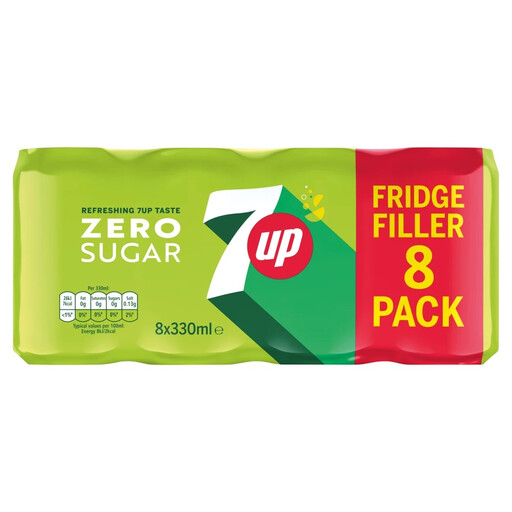
These options are zero-sugar lemon-and-lime drinks and lemon soda in cans sold as multipacks. Compare the number of cans if you are buying for one lunch rather than several.
 No image available
Separate 330ml cans suit individual lunches if you will use the rest of the eight-can pack. Check the ingredients and phenylalanine wording if the listed sweeteners matter to you.
 No image available
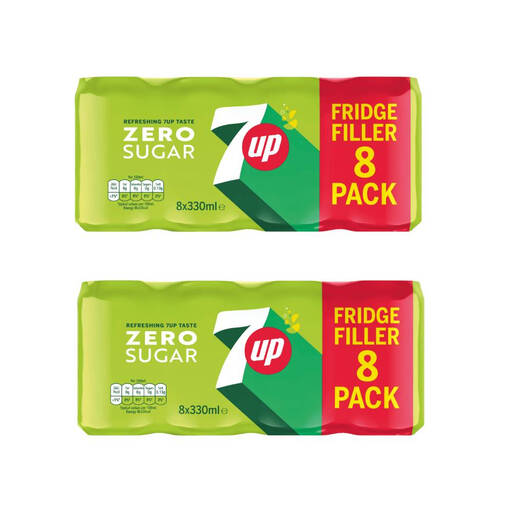
Each can is portion-sized for lunch, but the 24-can pack is a larger quantity to store and use. Check the sweeteners and phenylalanine wording on the exact pack.
 No image available
This bundle provides separate cans for repeated lunches rather than a single meal. Check the ingredient list and phenylalanine statement if relevant to your choice.
 No image available
The 330ml cans provide individual portions, while a 24-pack calls for space and a plan to use the remaining cans. Check the current ingredient list if a particular sweetener matters to you.
 No image available
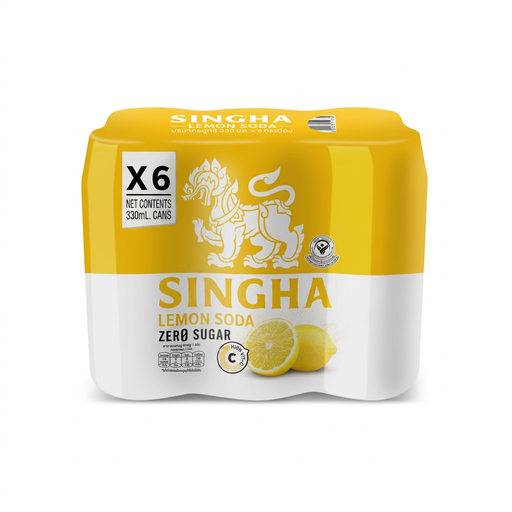
Six separate cans may suit several desk lunches if you prefer lemon soda to lemonade. Check the current pack’s nutrition panel if energy content matters to your comparison, and read its sweetener list.
No. It can suit a plan to cut back on free sugars, as the NHS advises choosing sugar-free, diet or no-added-sugar drinks instead of sugary fizzy drinks, but you still need to check the sweeteners, serving size and storage instructions. The NHS also associates carbonated drinks with dental erosion regardless of sugar content.
No. Read the sugars line on the exact product: M&S lists less than 0.1g sugars per 100g for its Diet Lemonade, which is labelled no added sugar.
No. Coca-Cola Great Britain lists aspartame, acesulfame-K and sucralose for Sprite Zero, while M&S lists sucralose for its Diet Lemonade. Check each pack’s ingredients and any phenylalanine statement if that information matters to you.
No. The NHS states that carbonated drinks are associated with dental erosion because of their acid content, regardless of whether they contain sugar or sweeteners.
A can or small bottle is simpler for one lunch; a large bottle makes more sense if you can store and use the remainder as its label directs. For example, M&S instructs buyers to refrigerate its Diet Lemonade after opening and consume it within three days.