Households comparing sugar declarations
Diet and zero-sugar wording is a starting point, not a substitute for checking sugars per can or serving. Tesco, Sainsbury's and Asda list different sugar amounts for their 330ml diet lemonade cans.


Diet or zero-sugar lemonade is an option when you want a fizzy drink with less declared sugar than a sugary lemonade, but it need not become the everyday school-day drink. Compare sugars for the amount likely to be drunk, check the sweeteners and choose a pack size that suits the occasion; NHS guidance also lists water as a drink choice in place of sugary fizzy drinks.
The useful choice depends on whether sugar declarations, individual portions or a particular ingredient matters most to the household.
Diet and zero-sugar wording is a starting point, not a substitute for checking sugars per can or serving. Tesco, Sainsbury's and Asda list different sugar amounts for their 330ml diet lemonade cans.
A six-pack of 330ml cans makes the quantity in each unopened can clear. A shared bottle offers a different way to serve the drink, so compare the amount actually poured rather than the bottle's total volume.
Ingredient lists differ between the drinks considered here. Read the current pack carefully when aspartame, a phenylalanine declaration or another particular sweetener affects the choice.
Start with the nutrition and ingredient panels, then decide whether the flavour, portion size and intended school setting fit.
| Priority | What to check | Your needs |
|---|---|---|
| Sugars | Read sugars for the labelled serving and note its size. The reviewed Tesco, Sainsbury's and Asda six-packs use 330ml cans, while other drinks may state values per 100ml or a different serving. | I want to compare the amount I would actually pour or open, rather than rely on 'diet' or 'zero' on the front of the pack. |
| Drinking occasion | Decide whether this is an occasional fizzy drink or something intended for frequent drinking. A 2021 leaflet from Wrightington, Wigan and Leigh Teaching Hospitals NHS Foundation Trust warns that frequent diet and other fizzy drinks can harm teeth. | For regular drinks between meals, I would choose water rather than make fizzy lemonade the default. |
| Ingredients | Check the exact sweeteners and any phenylalanine declaration. The Food Standards Agency identifies aspartame as a source of phenylalanine that matters for people with phenylketonuria (PKU). | Someone in my household needs to avoid a particular ingredient, so I need the current pack label rather than an assumption about all diet lemonades. |
| Portions and flavour | Compare can size and pack quantity, and distinguish lemon lemonade from lemon-lime drinks. For a shared bottle, check the serving used on its nutrition panel. | Individual cans may suit an occasional packed drink; at home, I might instead pour from a bottle. The flavour still needs to appeal to the person drinking it. |
| School rules | Check the individual school's drinks and packed-lunch policy before sending a fizzy drink. Guidance about drinks provided by a school does not, by itself, settle its rules for drinks brought from home. | I need to know whether this drink is permitted in the setting where it would be consumed. |
A 2021 child-dental leaflet from Wrightington, Wigan and Leigh Teaching Hospitals NHS Foundation Trust warns that diet and other fizzy drinks can harm teeth if given too often.
Keep the drinking occasion in mind as well as the sugar figure; choose water for routine drinks between meals.
A value per 100ml, per can or per stated serving does not describe the same quantity of drink. A shared bottle can also be poured into servings of different sizes.
Check both the nutrition value and the volume it refers to before comparing two labels.
Tesco's reviewed diet lemonade lists acesulfame-K and sucralose, while R. White's lists aspartame, acesulfame-K and saccharin. The Food Standards Agency notes the significance of aspartame as a source of phenylalanine for people with PKU.
Read the ingredient and warning panels on the exact pack, particularly when a specific ingredient must be avoided.
These specific listings illustrate differences in flavour, format and label wording; they do not describe every drink made by each brand.
Tesco lists R. White's Diet Lemonade as six 330ml cans with a lemon flavour.
The reviewed Sprite Zero Sugar is a lemon-lime drink in a 2L bottle, rather than a lemon-only lemonade in cans.
Tesco's own-label diet lemonade comes in the reviewed six-pack of 330ml cans.
The reviewed Sainsbury's Diet Lemonade is another six-pack of 330ml cans.
Asda's reviewed Diet Lemonade comes in six 330ml cans.
The reviewed M&S Diet Lemonade is a 1L bottle for pouring, rather than a pack of individual cans.
These are canned zero-labelled lemonade and lemon-lime options for households considering individual portions. Check each current pack for its nutrition, ingredients and suitability for the intended occasion.
 No image available
The 330ml can format suits individual portions, while 24 cans make this a larger multipack. Check the current nutrition and ingredient panels, particularly if sweetener declarations matter to your household.
 No image available
This 24-pack provides individual 330ml cans for shoppers considering a lemon-lime fizzy drink. Check the current sugar declaration and sweetener warnings before choosing it for a child or someone avoiding a particular ingredient.
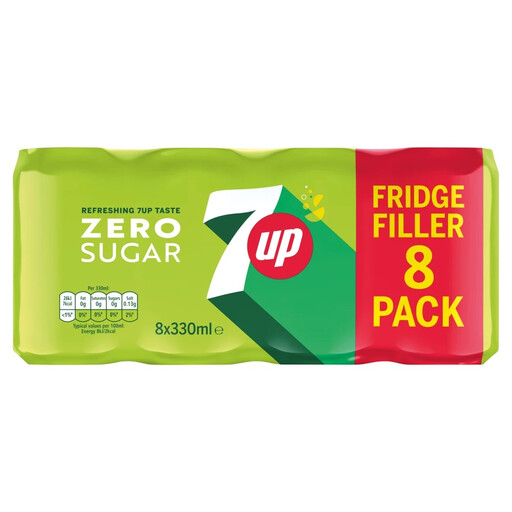 No image available
Eight individual 330ml cans offer a smaller pack than the listed 24-can 7UP Zero option. It is a lemon-lime choice; check the pack's nutrition and ingredients rather than assuming it matches a lemon-only lemonade.
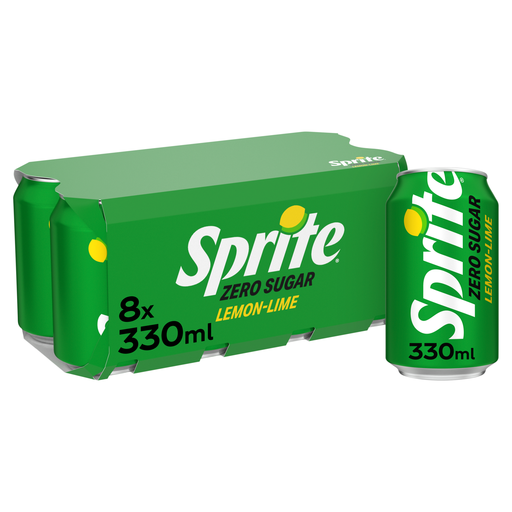 No image available
This eight-can, 330ml pack is a lemon-lime option for individual portions. Read its current ingredient panel and compare the nutrition figure on the basis stated on the label.
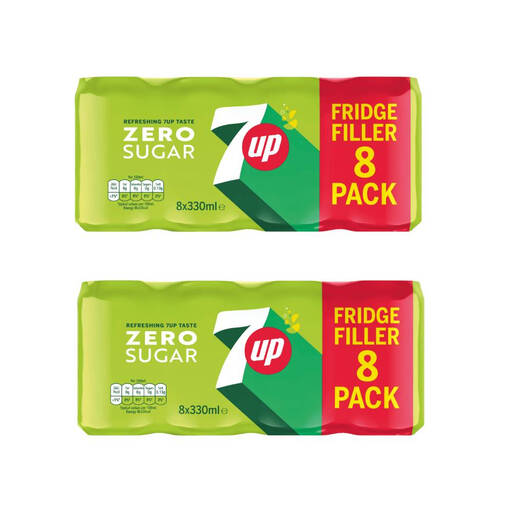 No image available
Consider this lemon-lime can bundle if individual portions suit the household. Its stated bundle and serving counts conflict, so confirm the quantity before buying; also check the current nutrition and ingredient panels.
It can be when the specific aim is to choose a drink with less declared sugar: the reviewed diet lemonade cans from Tesco, Sainsbury's and Asda declare between 0g and less than 0.5g sugars per can. That does not make a fizzy drink the routine choice; NHS guidance also suggests water in place of sugary drinks, and a 2021 NHS trust child-dental leaflet cautions against giving diet fizzy drinks too often.
No. Read the nutrition panel as well as the front-of-pack wording: Tesco's reviewed no-added-sugar diet lemonade declares less than 0.1g sugars per 330ml can, while the reviewed M&S Diet Lemonade lists less than 0.1g per 100g. Those figures use different quantities, so compare the amount likely to be drunk.
Aspartame is a source of phenylalanine, which is relevant to people with phenylketonuria (PKU), as the Food Standards Agency explains. The reviewed Sprite Zero Sugar listing includes aspartame and a phenylalanine declaration; check the current label of whichever drink you intend to buy.
Check the individual school's current drinks and packed-lunch policy before sending it. Department for Education guidance on school food concerns food and drink provided by state-funded schools in England; that scope does not, on its own, answer what a pupil may bring from home.
Follow the storage directions on that bottle. Marks & Spencer says its reviewed 1L Diet Lemonade should be refrigerated after opening and consumed within three days; check the instructions on a different product rather than applying that timeframe to every lemonade.