For a weekly shop focused on reducing sugar, start with a diet or zero-sugar lemonade and check the exact pack: Coca-Cola GB lists 0g sugars per 100ml for Sprite Zero, while M&S lists less than 0.1g per 100g for its Diet Lemonade. A fruit-led or regular drink may suit a different flavour preference, but it is not interchangeable with a sugar-free option; compare the sugar declaration, sweeteners and pack size. If someone in the household has phenylketonuria (PKU), check for aspartame or E951: the NHS says aspartame is unsuitable for people with PKU.
Who is this choice for?
The useful starting point depends on whether your household is changing its regular drink, choosing a pack for the week or checking a particular ingredient.
Households comparing sugar in regular drinks
Compare sugars on the nutrition panel for each exact variant, as well as how much the household is likely to drink. A diet, zero-sugar and regular version of a familiar flavour need not have the same sugar declaration.
Families buying cans or larger bottles
Choose a format that fits how the drink will be used during the week. Tesco Groceries lists lemonade in cans, larger bottles and multipacks; for an opened bottle, also check its storage instructions.
Shoppers checking for aspartame
Read the ingredients of the exact diet drink rather than assuming sweeteners are the same across brands. Coca-Cola GB lists aspartame in Sprite Zero, while M&S lists sucralose in its Diet Lemonade. The NHS says aspartame is unsuitable for people with PKU.
What should you check?
Decide whether sugar content, a particular flavour or the pack format matters most, then compare the exact variants on those points.
| Priority | What to check | Your needs |
|---|
| Sugar declaration |
Read sugars and energy on the exact nutrition panel. Keep the stated basis in view: Coca-Cola GB lists Sprite Zero at 0g sugars per 100ml and regular Sprite at 4.4g per 100ml; M&S lists its Diet Lemonade at less than 0.1g per 100g. |
I am choosing a drink for repeat purchases and want to know how much sugar the particular version contains, rather than relying on its name. |
| Sweeteners |
Check the ingredient list for the named sweeteners. Coca-Cola GB lists aspartame, acesulfame-K and sucralose in Sprite Zero; M&S lists sucralose in its Diet Lemonade. The NHS says to look for aspartame or E951 where PKU is relevant. |
A particular sweetener matters in our household, so I need to check the current can or bottle before putting it in the trolley. |
| Flavour and recipe |
Look beyond words such as “light” or “lemon”. M&S lists lemon ingredients alongside sugar and steviol glycosides in Sparkling Sicilian Lemon, with 4.4g sugars per 100g; it is not a sugar-free substitute for its Diet Lemonade. |
I may prefer a fruit-led lemon drink, provided I am comfortable choosing a recipe that contains sugar. |
| Pack format |
Compare the number and volume of cans with the volume of a bottle. For an opened bottle, follow its own storage directions; M&S says to refrigerate its Diet Lemonade after opening and consume it within three days. |
Cans may work for drinks spread across the week, while a larger bottle needs to fit how quickly we will use it once opened. |
What is easy to overlook?
-
Taking a fruit-led name to mean sugar-free
M&S lists 4.4g sugars per 100g in Sparkling Sicilian Lemon and includes sugar in its ingredients. A lemon-focused description does not answer the sugar question.
If zero sugar is your requirement, check the sugars line on the exact product rather than its flavour description.
-
Assuming every diet lemonade uses the same sweetener
Sprite Zero and M&S Diet Lemonade have different listed sweeteners. This distinction matters where an ingredient must be avoided; the NHS says aspartame is unsuitable for people with PKU.
Read the current ingredients each time you change products or buy a different variant, checking specifically for aspartame or E951 where relevant.
-
Choosing a large bottle without checking storage
A larger bottle may remain open between occasions. M&S instructs shoppers to refrigerate its Diet Lemonade after opening and consume it within three days.
Match the pack to when your household will drink it, and follow the instructions on the bottle you buy.
-
Relying on an older product listing
A previous ingredient list may not describe the pack in your trolley, which is particularly important when checking sugar or a named sweetener.
Use the current physical label as your final check for the exact variant.
Which brands and ranges are relevant?
These examples show why the exact recipe matters more than the brand name alone; a brand reference does not imply that every product in its range is included below.
Sprite
Coca-Cola GB publishes nutrition information for regular Sprite and Sprite Zero, making these two lemon-and-lime variants useful to compare by their stated serving basis.
- Coca-Cola GB lists 4.4g sugars and 19 kcal per 100ml for regular Sprite, against 0g sugars and 1 kcal per 100ml for Sprite Zero.
- Sprite Zero lists aspartame, acesulfame-K and sucralose; check the ingredients if a particular sweetener matters.
7UP
The 7UP range includes zero-sugar lemon-and-lime drinks. Carlsberg Britvic also described a zero-sugar Pink Lemonade variant at its April 2025 launch.
- Carlsberg Britvic described Pink Lemonade launch formats including cans, bottles and multipacks, offering different ways to plan a household shop.
- Check the current label and pack details for the particular 7UP variant; a launch description does not establish what is available in a given shop.
Tesco
Tesco Groceries lists own-label and branded lemonades, including diet, no-added-sugar, zero-sugar and regular options.
- The listed formats include cans and larger bottles, allowing shoppers to compare recipes alongside pack sizes.
- Use the label of the exact product you choose: the range contains differently named recipes, not one shared formulation.
M&S
M&S lists diet lemonade alongside other lemon drinks, providing an example of how similar-sounding choices can differ in ingredients and sugar.
- M&S lists less than 0.1g sugars per 100g for Diet Lemonade and 4.4g per 100g for Sparkling Sicilian Lemon.
- Its Diet Lemonade lists sucralose and carries instructions to refrigerate after opening and consume within three days.
Joybuy lemonade options
These Joybuy options are cans and multipacks described as zero-sugar or no-sugar lemon-and-lime drinks. Compare the pack details and check the current label, especially where a sweetener or sugar declaration matters to your household.
 No image available
7UP Zero 24 × 330ml cans
A 24-can format to consider when buying individual drinks for the week. The product information identifies aspartame; the NHS says aspartame is unsuitable for people with PKU. Check the current can for its full ingredients and nutrition declaration.
View on Joybuy
 No image available
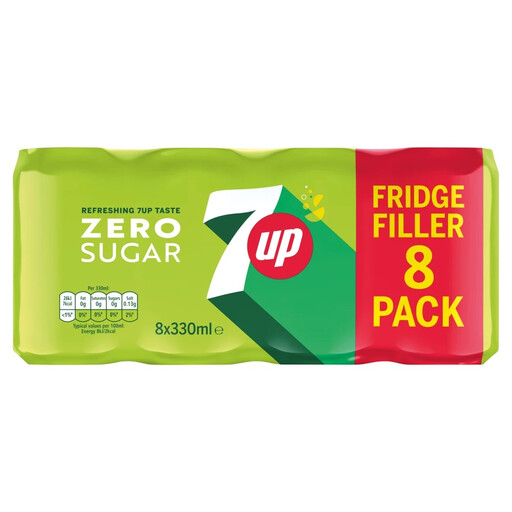
7UP Zero 8 × 330ml cans
An eight-can pack for a household choosing smaller portions over the week. Its product information identifies aspartame, which the NHS says is unsuitable for people with PKU; check the current ingredients and nutrition panel before buying.
View on Joybuy
 No image available
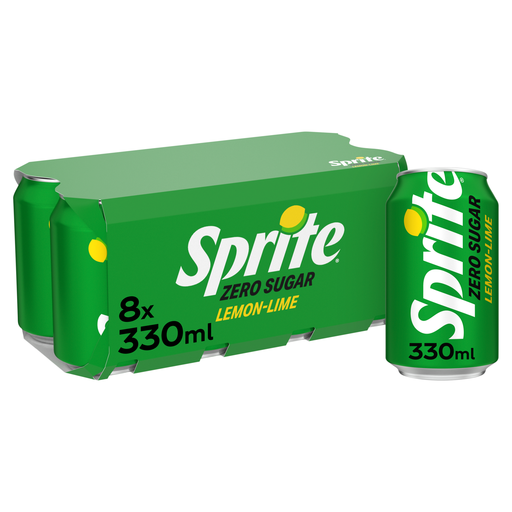
Sprite No Sugar 8 × 330ml cans
An eight-can no-sugar lemon-and-lime option for the weekly shop. Its product information identifies aspartame; the NHS says aspartame is unsuitable for people with PKU. Check the label of this exact pack rather than assuming every Sprite variant has the same recipe.
View on Joybuy
 No image available
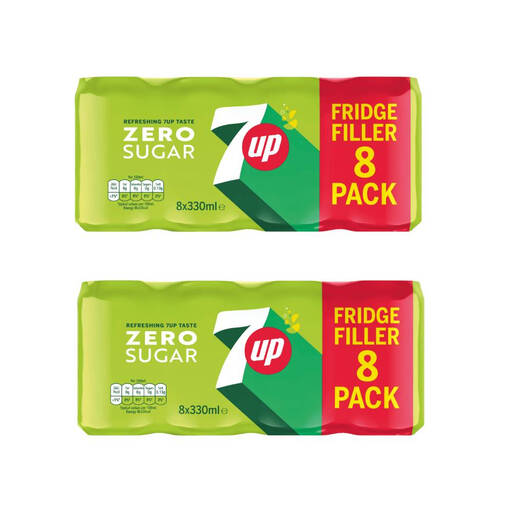
7UP Zero 330ml can multipack
A multipack to consider for drinks spread across the week. Check the can count before ordering: the supplied pack descriptions conflict between eight and 16 cans. Its product information identifies aspartame, which the NHS says is unsuitable for people with PKU.
View on Joybuy
 No image available
7UP Lemonade Zero 24 × 330ml cans
A 24-can lemonade multipack whose description identifies a pink-lemonade flavour. Check the current pack’s sugars and energy declarations when choosing a zero-sugar drink. Its product information identifies aspartame; the NHS says aspartame is unsuitable for people with PKU.
View on Joybuy
Common questions
Do “diet”, “zero sugar” and “no added sugar” tell me the same thing?
Do not treat the terms as a substitute for the nutrition panel. Coca-Cola GB lists 0g sugars per 100ml for Sprite Zero, while M&S lists less than 0.1g per 100g for its Diet Lemonade. Check the exact product’s sugars line and ingredients, particularly when comparing it with a fruit-led drink.
Where should I start if I want less sugar in our regular lemonade?
Start by comparing a diet or zero-sugar variant with the regular recipe you usually buy. Coca-Cola GB lists regular Sprite at 4.4g sugars per 100ml and Sprite Zero at 0g per 100ml; the NHS advises limiting drinks containing free sugars. Check the current label of the variant you choose.
Is every zero-sugar lemonade suitable for someone with PKU?
No: sugar content does not tell you whether a drink contains aspartame. The NHS says aspartame is unsuitable for people with PKU and may be listed as aspartame or E951. Coca-Cola GB lists it in Sprite Zero, so check the ingredients on each exact product and follow individual clinical dietary advice.
Should I buy cans or a larger bottle for the week?
Choose the format your household will use while following any post-opening instructions. Cans can be opened individually; for M&S Diet Lemonade, M&S instructs shoppers to refrigerate the bottle after opening and consume it within three days. Check the directions on the product you buy.
Can I rely on the ingredient list from a previous shop?
Check the current pack instead, especially if you need to avoid a named sweetener or want a particular sugar declaration. Compare the exact variant and pack size rather than assuming that another lemonade from the same brand has the same recipe.


