If you want to cut down on sugar in a routine packed lunch, choose a diet, no-added-sugar or zero-sugar drink instead of regular lemonade, and compare the exact product’s nutrition panel and ingredients. A zero-sugar label does not settle questions about sweeteners or acidity: the NHS says aspartame is unsuitable for people with phenylketonuria (PKU), and carbonated drinks can contribute to dental erosion regardless of their sugar content.
Who is this choice relevant to?
Office workers cutting down on sugar
If lemonade is a regular part of your packed lunch, compare its sugar content with diet or no-added-sugar alternatives. The NHS recommends switching from sugary fizzy drinks to water, lower-fat milk, or sugar-free, diet or no-added-sugar drinks when cutting down on free sugars.
People packing one drink for lunch
A 330 ml can gives you a defined portion without opening a large bottle at work. Sainsbury’s lists Sprite Zero Sugar in an 8 x 330 ml pack; check the format of the particular drink you plan to buy.
People checking specific sweeteners
Read the ingredients and warnings on each drink rather than relying on its zero-sugar wording. The NHS says aspartame is unsuitable for people with PKU, and Sainsbury’s lists aspartame and a phenylalanine warning for Sprite Zero Sugar.
What should you check before buying?
Decide whether reducing sugar, choosing a particular flavour or packing a single portion matters most, then check the exact can or bottle rather than treating diet, no-added-sugar and zero-sugar labels as interchangeable.
Regular lemonade
Choose it when: You prefer that particular drink and are willing to account for the sugar shown on its label.
Trade-off: The NHS advises cutting down on sugary fizzy drinks when reducing free sugars.
Diet or no-added-sugar lemonade
Choose it when: You want a lemonade-style drink while cutting down on added sugar.
Trade-off: No-added-sugar wording does not tell you the drink’s exact sugar, energy or sweetener content; read its label.
Zero-sugar lemon and lime
Choose it when: You prefer lemon-and-lime flavour and want a drink labelled zero sugar.
Trade-off: Check the sweeteners: Sainsbury’s lists aspartame and a phenylalanine warning for Sprite Zero Sugar.
| Priority |
What to check |
Your needs |
| Sugar |
Read sugars per 100 ml and for the amount you intend to drink. Check diet, zero-sugar and no-added-sugar wording against the nutrition panel. |
If lemonade is part of my usual lunch, I want to know how much sugar is in the portion I will actually drink. |
| Energy |
Compare energy values on the same stated basis. Marks & Spencer lists M&S Diet Lemonade at 2 kcal per 100 g, while Sainsbury’s lists Sprite Zero Sugar at 1 kcal per 100 ml; those figures use different units. |
I want to compare the stated energy values, not assume that every diet or zero-sugar drink has the same value. |
| Ingredients |
Read the sweetener list and any phenylalanine warning on the exact pack. The NHS says aspartame is unsuitable for people with PKU. |
If a particular sweetener matters to me, the ingredients are more useful than the wording on the front of the can. |
| Portion and storage |
Check can size or bottle volume and the instructions after opening. Marks & Spencer advises refrigerating its opened 2 L Diet Lemonade and using it within 3 days. |
For one lunch, I may prefer a can to opening a bottle that needs storing afterwards. |
| Frequent sipping |
Consider when you will drink it, not only its sugar content. The NHS says carbonated drinks are associated with dental erosion because of acidity, whether they contain sugar or sweeteners. |
I want a fizzy drink with lunch, but need another option for drinks throughout the working day. |
What is easy to overlook?
-
Assuming diet, zero sugar and no added sugar mean the same thing
Those words do not identify the exact nutrition or ingredients of every drink. Marks & Spencer describes its Diet Lemonade as having no added sugar and lists less than 0.1 g sugars per 100 g; another product needs checking on its own terms.
Compare the nutrition values on a consistent basis, then read the ingredients on the can or bottle you intend to buy.
-
Assuming zero sugar removes the dental consideration
The NHS says carbonated drinks can contribute to dental erosion because of their acidity, even when they contain sweeteners instead of sugar.
If you want lemonade with lunch, consider water rather than fizzy drinks for frequent sipping at your desk.
-
Overlooking aspartame and phenylalanine warnings
The NHS says aspartame is unsuitable for people with PKU. Sainsbury’s lists aspartame and a phenylalanine warning for Sprite Zero Sugar, but sweeteners differ between products.
Check the current ingredients and warnings whenever you change drinks or buy a reformulated pack.
-
Opening a large bottle for one lunch
A larger bottle needs a plan for what remains. Marks & Spencer instructs shoppers to refrigerate its opened 2 L Diet Lemonade and consume it within 3 days.
Consider a can for a single lunch, or follow the bottle’s portioning and opened-storage instructions.
Which brands illustrate the options?
These retailer listings show the range of labels and pack formats worth comparing; check nutrition and ingredients for the exact variant you choose.
R. White’s
A traditional lemonade name with a diet variant listed by Sainsbury’s.
- Sainsbury’s lists R. White’s Diet Lemonade in a 2 L bottle.
- Check that bottle’s nutrition and ingredients before comparing its sugar or sweeteners with another variant.
Sprite
Sprite Zero Sugar offers a lemon-and-lime option rather than traditional straight lemonade.
- Sainsbury’s lists an 8 x 330 ml pack and states 1 kcal and less than 0.1 g sugars per 100 ml.
- Its listed ingredients include aspartame, acesulfame-K and sucralose, with a phenylalanine warning. The NHS says aspartame is unsuitable for people with PKU.
Tesco
Its own-label listings include diet lemonade cans and no-added-sugar cloudy lemonade.
- Tesco Groceries lists Diet Lemonade Cans in a 6 x 330 ml pack and No Added Sugar Cloudy Lemonade in a 2 L bottle.
- Check the nutrition and ingredients of the selected variant rather than treating the two labels as equivalent.
Sainsbury’s
Its own-label range offers several diet lemonade pack sizes.
- Sainsbury’s lists Diet Lemonade in 1 L, 2 L and 6 x 330 ml formats, as well as Cloudy Lemonade No Added Sugar.
- Compare the exact item’s nutrition, ingredients and pack size before choosing between formats.
M&S
M&S Diet Lemonade provides product-level nutrition and ingredient information for a no-added-sugar option.
- Marks & Spencer lists 2 kcal and less than 0.1 g sugars per 100 g, and names sucralose as a sweetener.
- For its 2 L bottle, Marks & Spencer advises refrigeration after opening and consumption within 3 days. Check the current pack label for product details.
Joybuy drinks for a packed lunch
These canned lemonade and zero-sugar lemon-and-lime options suit the single-portion packed-lunch comparison. Check each pack’s nutrition and ingredients against your own priorities.
 No image available
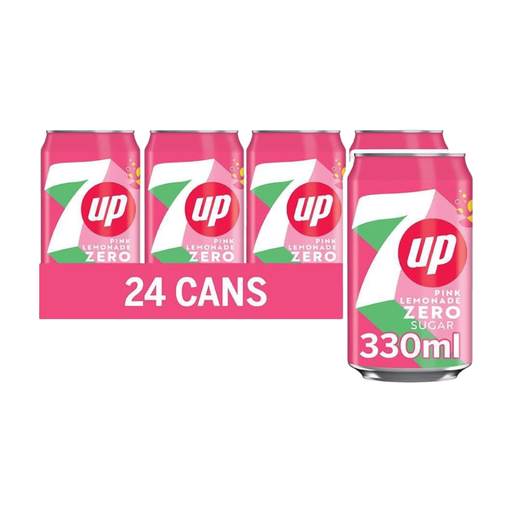
7 Up Lemonade Zero 24 x 330 ml
The 330 ml cans offer a single-can option for lunch, with 24 cans in the pack. Check the current can for nutrition, sweeteners and any phenylalanine warning, particularly if PKU is relevant.
View on Joybuy
 No image available
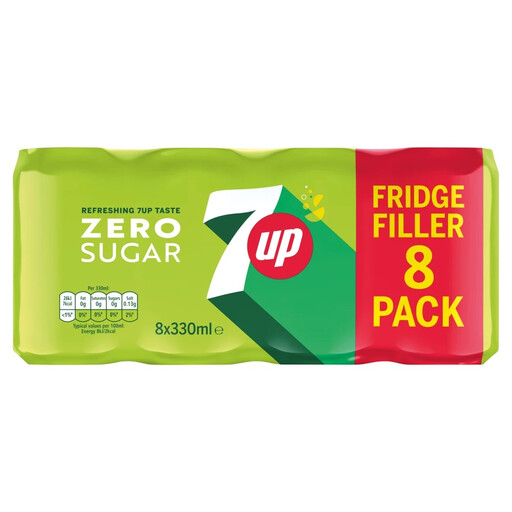
7UP Zero 8 x 330 ml
This eight-can lemon-and-lime pack lets you take one 330 ml can with lunch. Read the current can’s energy value and ingredients rather than assuming that zero sugar also means zero calories; check sweetener warnings if needed.
View on Joybuy
 No image available
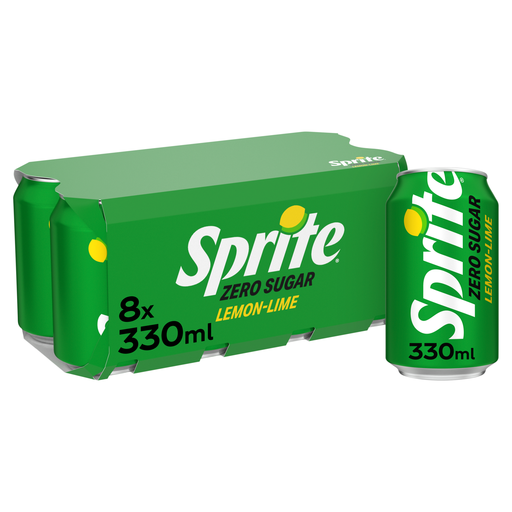
Sprite No Sugar 8 x 330 ml
The eight-pack provides 330 ml cans for individual lunches. Check the current can’s energy value, ingredients and any phenylalanine warning before deciding whether it meets your requirements.
View on Joybuy
Common questions
Should I choose diet lemonade instead of regular lemonade to cut down on sugar?
Choose a diet or no-added-sugar alternative if its label confirms it meets your sugar preference. The NHS recommends sugar-free, diet or no-added-sugar drinks in place of sugary fizzy drinks when cutting down on free sugars, but check the exact product’s sugars per 100 ml and per portion.
Does zero sugar remove the dental concern with fizzy drinks?
No. The NHS says carbonated drinks are associated with dental erosion because of their acidity, regardless of whether they contain sugar or sweeteners. For frequent drinks during the working day, consider water rather than continually sipping fizzy lemonade.
Do people with PKU need to avoid every zero-sugar lemonade?
Check each product for aspartame rather than assuming all zero-sugar drinks use the same sweetener. The NHS says aspartame is unsuitable for people with PKU. Sainsbury’s lists aspartame and a phenylalanine warning for Sprite Zero Sugar, while Marks & Spencer lists sucralose for its Diet Lemonade; read the current pack before choosing.


