Parents comparing lemonade labels
If a pupil asks for lemonade, compare sugars for the portion they would take to school. Check the ingredients too: diet, no-added-sugar and zero-sugar products can use different sweeteners.


If the school permits fizzy drinks and lemonade is an occasional lunch choice, a diet or zero-sugar version can reduce sugar compared with standard lemonade; compare the nutrition panels for the portion being packed. For most school days, water or plain milk is a more suitable choice: the NHS recommends them for children, while NHS dental guidance cautions that sugar-free lemonade can still damage teeth. Check the individual school’s packed-lunch policy before buying fizzy drinks for lunch.
The useful choice depends on whether the priority is less sugar in a requested fizzy drink, a routine school-day drink, or compliance with the school’s packed-lunch policy.
If a pupil asks for lemonade, compare sugars for the portion they would take to school. Check the ingredients too: diet, no-added-sugar and zero-sugar products can use different sweeteners.
Check the pupil’s own school policy before choosing a fizzy drink or buying a multipack. The Department for Education’s England school-food guidance addresses food and drink provided by schools; it does not establish what an individual school permits in a lunch brought from home.
Reducing sugar does not remove the concern associated with acidic lemonade. NHS dental guidance cautions that lemonade, including sugar-free varieties, can damage teeth; water or plain milk avoids making a fizzy drink the everyday default.
Check the school rule first, then compare the intended serving and ingredients. A zero-sugar lemon-and-lime drink is an alternative to lemonade, not the same flavour choice.
| Priority | What to check | When it matters to me |
|---|---|---|
| School rules | Read the current packed-lunch policy for fizzy drinks. Do not assume a zero-sugar label changes the rule. | I need a drink the pupil can actually take in their lunchbox. |
| Sugars and serving size | Compare sugars for the same serving size, preferably the can being packed. Tesco Groceries lists 0.1g sugars per 330ml can for its Diet Lemonade and 9.4g per 330ml can for its standard Lemonade. | If lemonade is the requested occasional drink, I want to see what the diet version changes rather than rely on its front-of-pack wording. |
| Everyday use | Consider how often the drink will be packed and whether it will be consumed with lunch or sipped between meals. NHS guidance recommends water and milk for children; NHS dental guidance cautions about sugar-free lemonade. | For a drink packed most school days, I would choose water or plain milk instead of treating diet lemonade as interchangeable with them. |
| Ingredients and flavour | Read the current pack for sweeteners, food acids and advisory statements. Check whether the product is lemonade or a lemon-and-lime alternative. | A particular sweetener or flavour may matter in our household, so I need the exact product label rather than the word “zero” alone. |
Diet lemonade can contain much less sugar than a standard version, but NHS dental guidance also cautions that sugar-free lemonade can damage teeth.
Pack water or plain milk as the routine drink. If choosing diet lemonade occasionally, serve it with lunch rather than as a drink to sip between meals.
On Tesco Groceries’ 330ml can labels, Diet Lemonade has 0.1g sugars and standard Lemonade has 9.4g. A per-100ml figure and a per-can figure cannot be read as though they describe the same quantity.
Use the same serving basis when comparing products, and check how much of the pack the pupil would drink.
A drink’s sugar content does not establish whether the pupil’s school permits fizzy drinks in packed lunches.
Read the current school policy or ask the school before buying drinks intended for several lunches.
Otherwise, the multipack may not be usable for the lunches you planned.
Diet fizzy drinks can use different sweeteners and food acids. Coca-Cola GB’s Sprite Zero information also includes a phenylalanine statement.
Check the current pack for ingredients and advisory statements, particularly if the pupil has a relevant dietary instruction.
These examples illustrate different labels and flavours; a brand name alone does not tell you the sugars, ingredients or serving size of every product in its range.
Tesco’s own-label Diet Lemonade and standard Lemonade provide a like-sized label comparison in 330ml cans.
R. White's Diet Lemonade is a named-brand lemonade option listed in a pack of six 330ml cans.
Sprite Zero offers a lemon-and-lime fizzy flavour for someone willing to choose an alternative to lemonade.
These are lemonade-style, lemon soda and lemon-and-lime fizzy options to consider if the school permits them. The multipacks differ, so check the exact flavour, current label and number of cans before choosing one for packed lunches.
 No image available
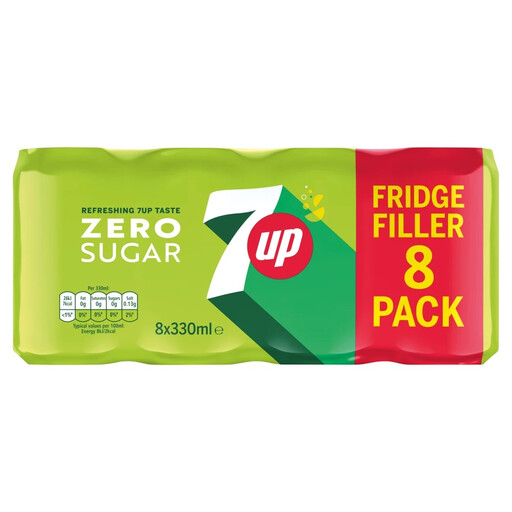
A 330ml can could be portioned for an occasional lunch where fizzy drinks are permitted. The listing title says Lemonade Zero, while its product descriptions refer to Pink Lemonade: confirm the flavour and pack identity before buying. Check the current ingredients and advisory statements if aspartame or phenylalanine is relevant.
 No image available
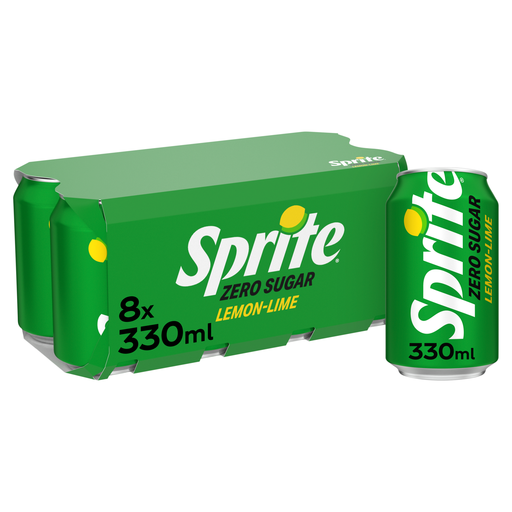
This lemon-and-lime fizzy drink is an alternative when the pupil does not specifically want lemonade. The pack contains eight 330ml cans. Check the school’s fizzy-drink rule and the current pack’s ingredients and advisory statements before putting a can in a lunchbox.
 No image available
The eight-can pack offers a lemon-and-lime option rather than lemonade, with a 330ml can for a single lunch. It remains an acidic fizzy drink; check the school policy and read the current pack for ingredients and advisory statements.
 No image available
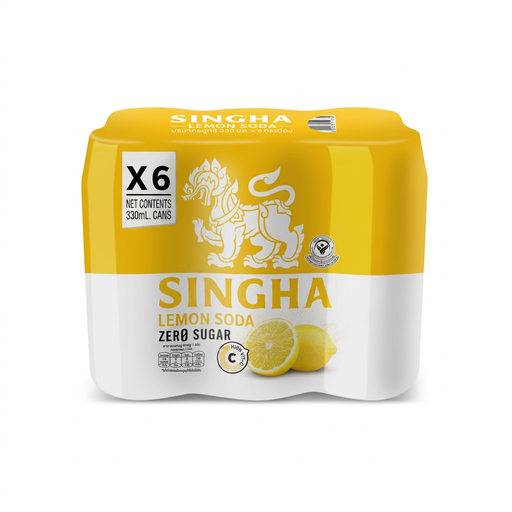
Choose this only if lemon soda, rather than lemonade, is the flavour wanted and the school permits fizzy drinks. The pack contains six 330ml cans. Read the current nutrition panel for the serving you intend to pack and check the ingredients before buying.
It can, but compare the specific products and the same serving size. Tesco Groceries lists 0.1g sugars per 330ml can for Tesco Diet Lemonade and 9.4g per 330ml can for its standard Lemonade. Less sugar does not remove the dental concern associated with acidic lemonade.
Check the individual school’s current packed-lunch policy before sending it. The Department for Education’s England guidance concerns food and drink provided by state-funded schools; it does not, by itself, answer whether that school permits a fizzy drink brought from home.
No. NHS dental guidance cautions that lemonade, including sugar-free varieties, can damage teeth. For a routine drink or one sipped between meals, choose water or plain milk instead.
Check sugars and energy for the portion being packed, then read the ingredients and advisory statements on the current pack. Formulations differ, and a lemon-and-lime drink such as Sprite Zero is a different flavour choice from lemonade.
Water or plain milk is a practical everyday choice. NHS guidance recommends water and milk as drinks for children, and NHS dental guidance identifies them as suitable between meals.