If reducing sugar is your priority at snack time, choose a diet or zero-sugar drink after checking the sugars declaration, not just the name on the front. Marks & Spencer’s lemonade labels show that sugar content varies between variants; a zero-sugar lemon-and-lime drink is another option if you prefer that flavour. Sugar-free fizzy drinks can still be acidic: the NHS associates carbonated drinks with dental erosion.
Who is each choice for?
The useful distinction is whether you want to reduce sugar, keep a particular lemonade flavour or consider how often you drink something fizzy between meals.
Snackers reducing sugar
If you want a sweet, fizzy drink with your afternoon snack while reducing sugar, compare the declared sugars on the exact diet or zero-sugar variant. Check the amount you expect to drink as well as the per-100 ml or per-100 g figure.
Shoppers who prefer traditional lemonade
A fruit-forward or sweeter lemonade may suit your flavour preference, but its sugar declaration can differ substantially from a diet variant. Marks & Spencer lists 9.5 g sugars per 100 g for its Freshly Squeezed Still Lemonade and 0.2 g per 100 g for its Diet Pink Lemonade.
People considering between-meal acidity
Removing sugar does not remove the acidity associated with fizzy drinks. The NHS links carbonated drinks with dental erosion, so check whether a fizzy drink is what you want for a regular between-meal occasion.
What should you check before choosing?
Decide whether lemonade or a lemon-and-lime drink matches the flavour you want, then compare the nutrition declaration and ingredients on the exact variant. Keep per-100 ml and per-100 g figures on their stated bases rather than treating them as interchangeable.
| Priority | What to check | Your needs |
|---|
| Sugar content |
Compare sugars on the same per-100 ml or per-100 g basis. Check the amount in the portion you plan to drink. Marks & Spencer lists 0.2 g per 100 g for Diet Pink Lemonade and 9.5 g per 100 g for Freshly Squeezed Still Lemonade. |
I would choose a diet or zero-sugar variant if reducing sugar matters more to me than a sweeter, fruit-forward flavour. |
| Drink style |
Check whether the pack describes lemonade, pink or cloudy lemonade, still lemonade, or a lemon-and-lime drink. Sainsbury’s describes Sprite Zero Sugar as a no-sugar lemon-and-lime option, not traditional lemonade. |
I want to know whether I am choosing lemonade flavour or a different fizzy citrus drink to go with my snack. |
| Ingredients |
Read the ingredients for sugar, fruit ingredients and named sweeteners; the product name alone does not identify the formulation. If phenylketonuria (PKU) is relevant, check the pack for aspartame and phenylalanine information. |
Sweet taste matters to me, but I also want to know what provides it in the particular drink I buy. |
| Acidity |
Check whether the drink is carbonated. The NHS associates carbonated drinks with dental erosion because of their acid content; a zero-sugar declaration does not address that issue. |
For a regular drink between meals, I do not want to mistake zero sugar for an absence of acidity. |
| Label and portion |
Use the nutrition declaration to compare like-for-like units, then check the can or bottle size. For a value stated per 100 ml, calculate the amount in the volume you expect to drink; use the stated serving information when a label is expressed per 100 g. |
I would rather check the label than rely on a name or promotion. In the Food Standards Agency and Ipsos Northern Ireland’s 2023 survey of 601 Northern Ireland adults interviewed between 4 September and 22 November, 43% actively used traffic-light labelling. That measures label use, not lemonade purchases. |
Common mistakes to avoid
-
Treating ‘diet’ or ‘no added sugar’ as the same as zero sugar
Those names do not replace the sugars declaration. Marks & Spencer’s Diet Pink Lemonade, for example, lists 0.2 g sugars per 100 g rather than zero.
Read the exact pack’s sugars figure and its stated unit, then check how much you intend to drink.
-
Assuming a sugar-free fizzy drink has no acidity concern
The NHS associates carbonated drinks with dental erosion because of their acid content, whether the drink contains sugar or sweeteners.
If that concern affects your between-meal choice, consider water instead of treating a zero-sugar fizzy drink as tooth-neutral.
-
Overlooking the sugars in fruit-forward lemonade
Marks & Spencer lists 9.5 g sugars per 100 g for Freshly Squeezed Still Lemonade and 3.4 g per 100 g for Sparkling Cloudy Lemonade. Neither figure describes every product sold as lemonade.
Compare the label on the variant you want, including its portion size, before choosing it for a snack.
Brands and ranges to recognise
These examples help distinguish drink styles and labels; a brand name by itself does not establish the nutrition of a particular variant.
M&S
The M&S range includes diet, cloudy, sparkling and still lemonade variants.
- Marks & Spencer lists 0.2 g sugars per 100 g for Diet Pink Lemonade and 9.5 g per 100 g for Freshly Squeezed Still Lemonade, illustrating why the exact variant matters.
- Check the current pack before comparing formulations, as product details can change.
Sprite
Sprite is a lemon-and-lime soft-drink option rather than conventional lemonade.
- Sainsbury’s describes its Sprite Zero Sugar listing as containing no sugar.
- It is still a fizzy drink; check the ingredients on the exact pack if its sweeteners matter to you.
R. Whites
The R. Whites Lemonade pack described by Joybuy contains both sugar and sweeteners.
- Joybuy lists 2.4 g sugars per 100 ml for its R. Whites Lemonade 24 × 330 ml pack.
- Sweeteners in that product do not make it a zero-sugar option.
Tesco
Tesco’s lemonade category includes diet cans and a no-added-sugar cloudy lemonade alongside other choices.
- The listed variants give shoppers different lemonade styles to compare.
- Use each product’s current nutrition declaration rather than its category or name to compare sugars.
Joybuy citrus-drink options
These options are zero-sugar lemonade, lemon-and-lime drinks and lemon soda in cans that may suit a fizzy afternoon-snack drink. Lemon-and-lime drinks and lemon soda are alternatives to, not examples of, traditional lemonade.
 No image available
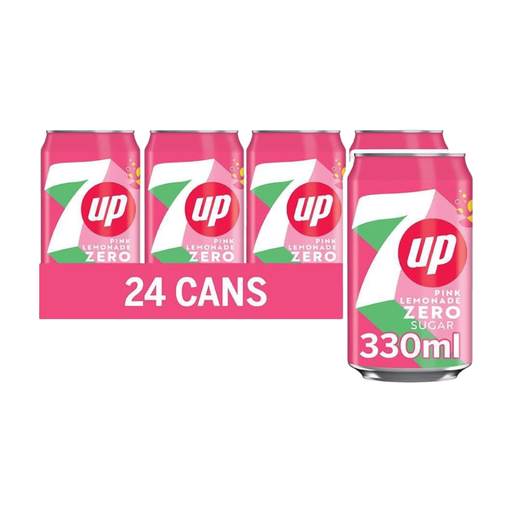
7 Up Lemonade Zero, 24 × 330 ml
A canned lemonade-style option for a fizzy snack drink. The product information reports 0 g sugars and 1.3 kcal per 100 ml and lists sweeteners, including aspartame. Confirm the flavour and pack variant before ordering; the product title and description identify different variants. Check the phenylalanine information if PKU is relevant.
View on Joybuy
 No image available
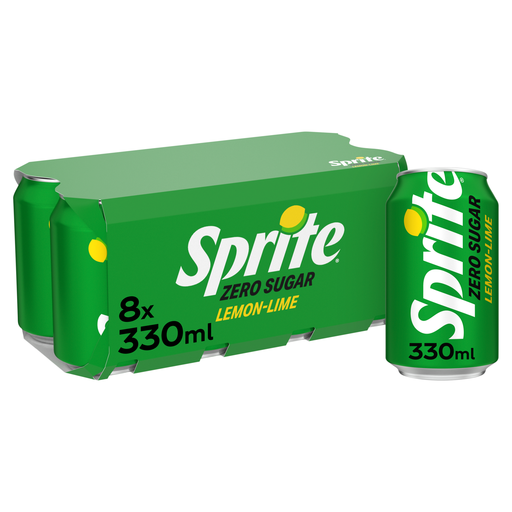
Sprite No Sugar, 8 × 330 ml
A lemon-and-lime fizzy drink rather than traditional lemonade, in individual cans. Its nutrition information reports 0 g sugars per 100 ml, and its ingredients list sweeteners including aspartame. The listing gives conflicting calorie information, so check the pack’s energy declaration if that matters to your choice; check its phenylalanine information if PKU is relevant.
View on Joybuy
 No image available
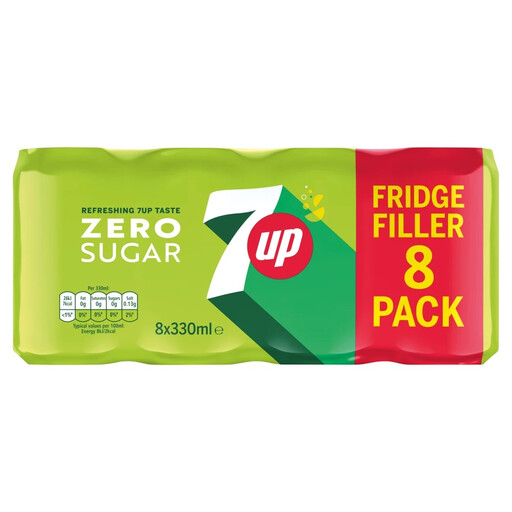
7UP Zero, 8 × 330 ml
This canned lemon-and-lime option suits someone seeking a fizzy citrus drink rather than a traditional lemonade flavour. Its nutrition information reports 0 g sugars per 100 ml, and the ingredients list sweeteners including aspartame. Check the pack’s energy declaration against the listing’s zero-calorie wording, and check the phenylalanine information if PKU is relevant.
View on Joybuy
 No image available
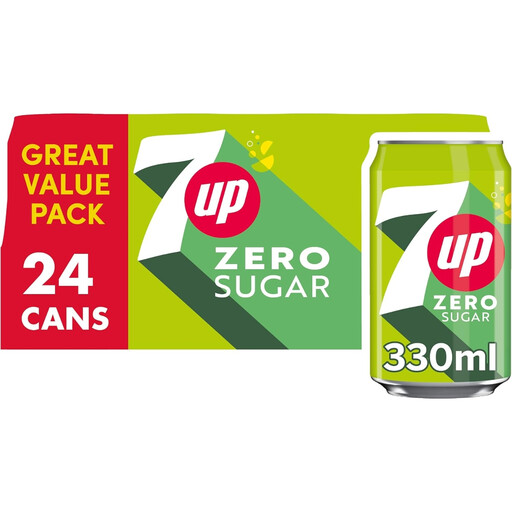
7UP Zero, 24 × 330 ml
A larger pack of individual lemon-and-lime cans for snack occasions. Its nutrition information reports 0 g sugars per 100 ml, and the ingredients list sweeteners including aspartame. Energy figures for a can conflict within the listing, so check the current pack if calories matter to you; check the phenylalanine information if PKU is relevant.
View on Joybuy
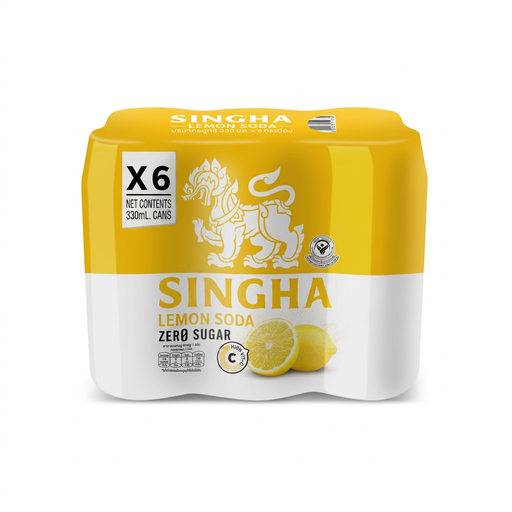 No image available
SINGHA Original Lemon Soda Zero Sugar, 6 × 330 ml
This is lemon soda rather than lemonade or a lemon-and-lime drink. Its product information reports 0 g sugars per 100 g and lists sucralose and acesulfame-K as sweeteners. Check the current pack’s energy declaration if calories matter to your choice.
View on Joybuy
Questions about choosing lemonade
Is diet lemonade always sugar free?
No. Check the exact product’s sugars declaration: Marks & Spencer lists 0.2 g sugars per 100 g for Diet Pink Lemonade. A name such as ‘diet’ does not establish a zero-sugar figure.
Does zero sugar remove the acidity concern with fizzy drinks?
No. The NHS associates carbonated drinks with dental erosion because of their acid content. If you are choosing a regular drink between meals with that concern in mind, water avoids the fizzy-drink acidity issue.
How do I compare a can with a larger bottle?
Start with sugars on the same per-100 ml basis, then calculate the amount in the volume you expect to drink. If a product declares nutrition per 100 g instead, keep that unit distinct and check its stated serving information.
Should I check the instructions after opening a bottle?
Yes. Check the storage and after-opening instructions on the exact bottle, particularly if you expect to drink it over more than one snack occasion.


