Hosts serving a food table
If you want a drink with little sugar, compare sugars per 100ml rather than relying on a diet or zero-sugar name. Decide whether guests will take individual cans or pour from a shared bottle.


Choose a diet or zero-sugar drink if reducing sugar is the priority: Tesco lists 0g sugars per 100ml for R. Whites Diet Lemonade, while Sainsbury’s lists less than 0.1g per 100ml for Sprite Zero Sugar. If avoiding artificial sweeteners matters more, look for that claim on the exact lemonade, then check its sugars separately. Choose cans for individual servings or a large bottle for shared pouring, and check ingredients and phenylalanine warnings where relevant.
If you want a drink with little sugar, compare sugars per 100ml rather than relying on a diet or zero-sugar name. Decide whether guests will take individual cans or pour from a shared bottle.
Read the ingredients on the exact drink, particularly if aspartame or a source-of-phenylalanine warning affects who can have it.
Choose a lemonade that explicitly makes this ingredient claim, then check its nutrition panel separately if sugar content also matters.
Start with the nutrition panel and ingredients, then choose a pack format that works for serving the food.
| Priority | What to check | Your needs |
|---|---|---|
| Sugars and energy | Compare sugars and energy per 100ml on the exact product. Tesco lists 0g sugars and 2kcal per 100ml for R. Whites Diet Lemonade; Sainsbury’s lists less than 0.1g sugars per 100ml for Sprite Zero Sugar 2L. | I want to keep sugar down without assuming that every drink labelled diet or zero sugar has the same nutrition values. |
| Sweeteners | Read the ingredients and any phenylalanine warning. Tesco lists aspartame, acesulfame K and saccharin in R. Whites Diet Lemonade; Sainsbury’s lists aspartame, acesulfame K and sucralose in Sprite Zero Sugar. | Someone drinking it may need to avoid aspartame or account for phenylalanine, so the exact ingredients matter more than the front-of-pack name. |
| Serving format | Check the number of cans and their size, or the bottle volume. Tesco lists R. Whites Diet Lemonade as six 330ml cans; Sainsbury’s lists Sprite Zero Sugar in a 2L bottle. | For guests taking their own drinks, I would choose cans; for a table with cups and shared pouring, I would consider a bottle. |
| Artificial-sweetener preference | Look for an explicit ingredient claim and check sugars separately. M&S describes its 1L Lemonade as containing no artificial sweeteners, colours or flavourings. | My ingredient preference comes first, but I would not assume that a lemonade without artificial sweeteners is lower in sugar. |
Drinks with little sugar can use different sweetener combinations. Tesco lists aspartame, acesulfame K and saccharin in R. Whites Diet Lemonade, while Sainsbury’s lists aspartame, acesulfame K and sucralose in Sprite Zero Sugar.
Check both sugars per 100ml and the current ingredients list for the drink you plan to serve.
The Food Standards Agency identifies aspartame, a source of phenylalanine, as a possible risk for people with phenylketonuria (PKU). Sainsbury’s Sprite Zero Sugar listing includes aspartame.
If PKU or a phenylalanine restriction is relevant, check the exact pack and follow the person’s clinical advice rather than choosing by the diet or zero-sugar name.
Six 330ml cans offer separate portions; a 2L bottle needs a way to pour and share. Sugar content alone does not settle which format works at a food table.
Choose cans for individual distribution, or plan for cups if you choose a sharing bottle.
M&S describes its 1L Lemonade as having no artificial sweeteners, but that ingredient claim does not establish its sugar content.
If reducing sugar is also a priority, compare the current sugars-per-100ml figure before buying.
R. Whites Diet Lemonade offers individual servings in a six-pack of 330ml cans.
Sprite Zero Sugar 2L is a lemon-and-lime drink in a bottle suited to shared pouring, rather than traditional lemonade.
Tesco Diet Lemonade is an own-label option in a 330ml can.
Sainsbury’s lists its own Diet Lemonade in 1L, 2L and six-pack 330ml formats.
M&S describes its 1L Lemonade as made with real lemon juice and without artificial sweeteners, colours or flavourings.
These options are canned zero-sugar lemonade and lemon-and-lime soft drinks for individual servings. The lemon-and-lime drinks are alternatives to, not the same style as, traditional lemonade.
 No image available
The 24-can pack provides individual servings. Its listing identifies aspartame and a source of phenylalanine; check the current pack if either affects your choice.
 No image available
This lemon-and-lime drink comes in individual cans rather than a sharing bottle. The listing identifies aspartame and a source of phenylalanine; check the current pack, including its energy value, if these details matter.
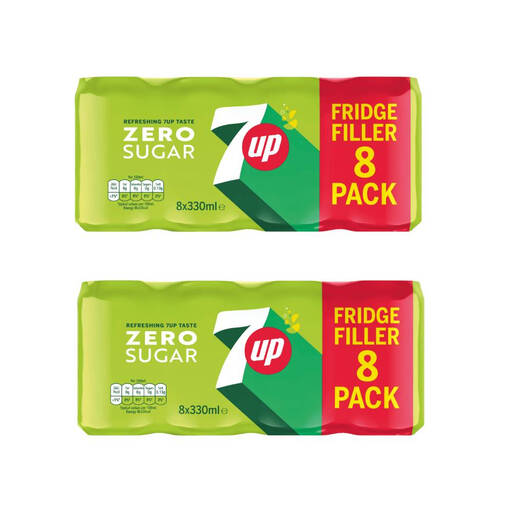 No image available
The two eight-can packs offer 16 individual servings of this lemon-and-lime drink. Its listing identifies aspartame and a source of phenylalanine; check the current pack and its energy value before choosing.
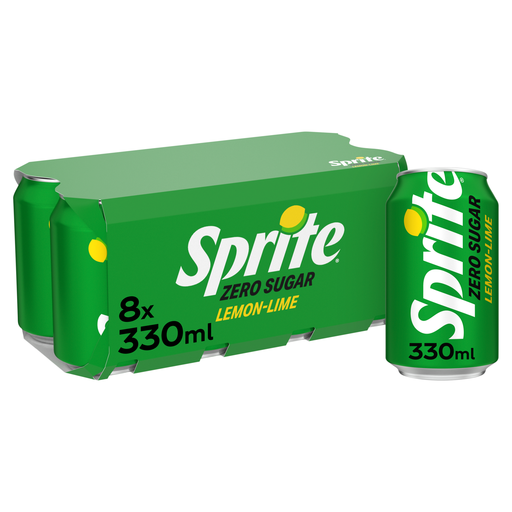 No image available
Eight individual cans suit a serving plan that does not rely on shared pouring. This is a lemon-and-lime drink; its listing identifies a source of phenylalanine, and the current energy value is worth checking on the pack.
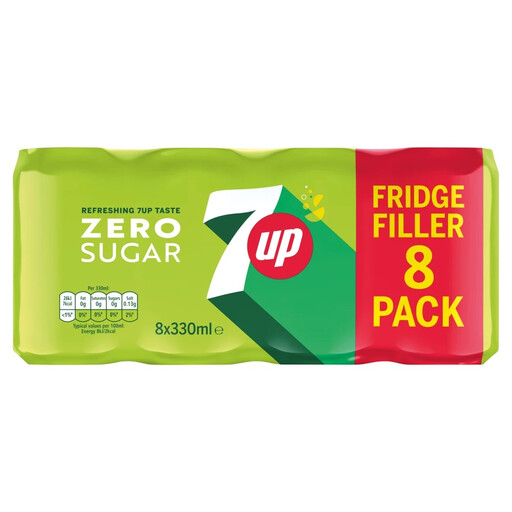 No image available
This eight-can lemon-and-lime pack offers individual servings. Its listing identifies a source of phenylalanine; check the current ingredients and energy value on the pack if either affects your decision.
No: use the nutrition panel rather than treating either name as a precise sugar figure. Tesco lists 0g sugars per 100ml for R. Whites Diet Lemonade, while Sainsbury’s lists less than 0.1g per 100ml for Sprite Zero Sugar; check the exact drink you buy.
Check the exact ingredients and phenylalanine warning before choosing. Tesco’s R. Whites Diet Lemonade and Sainsbury’s Sprite Zero Sugar listings both include aspartame; the Food Standards Agency identifies aspartame as a possible risk for people with phenylketonuria (PKU). Follow the person’s clinical advice.
Choose cans when guests need individual portions; Tesco lists R. Whites Diet Lemonade in six 330ml cans. A 2L bottle, such as the Sprite Zero Sugar format listed by Sainsbury’s, fits a setup with cups and shared pouring. The format alone says nothing about its nutrition values.
Not necessarily. M&S describes its 1L Lemonade as having no artificial sweeteners, colours or flavourings, but that ingredient claim does not establish its sugar content. Check sugars per 100ml on the current nutrition panel if reducing sugar matters to you.