People checking sugar in their dinner drink
A lower-calorie tonic can still contain sugar. Check the nutrition table if avoiding sugar matters more to you than choosing a lighter version of a familiar tonic.


If your main aim is to avoid sugar in a TV-dinner mixer, check the sugar figure on the exact can or bottle rather than treating “light”, “slimline” and “zero sugar” as interchangeable. A light tonic may suit you if its flavour matters more than eliminating sugar; for several drinks, choose a pack size that fits the number of serves you expect to make.
A lower-calorie tonic can still contain sugar. Check the nutrition table if avoiding sugar matters more to you than choosing a lighter version of a familiar tonic.
A classic Indian tonic and a botanical tonic bring different citrus, herbal or bitter notes to a mixed drink. Match the tonic to the drink you plan to serve, including an alcohol-free one.
A larger bottle can cover several serves, while individual cans let people open a portion at a time. The useful format depends on how many drinks you expect to make.
Decide whether sugar, tonic flavour or serving format matters most, then check the exact variant rather than relying on the front-of-pack name.
| Priority | What to check | Your needs |
|---|---|---|
| Sugar and calories | Compare sugars and energy per 100ml, then consider the amount you will pour. Read the ingredients as well as the words “diet”, “slimline” or “light”. | I want to know whether this drink has no sugar or simply less sugar or fewer calories than another tonic. Fentimans lists 3.4g sugar per 100ml for Naturally Light Tonic Water. |
| Flavour | Check whether the variant is a classic Indian tonic or names particular citrus and botanicals. Manufacturer flavour descriptions are a starting point, not a guarantee of how the finished drink will taste. | A familiar tonic profile suits my planned drink; if I choose a botanical variant, I want its stated flavours to work with the spirit or alcohol-free serve. |
| Serving format | Check the volume of each can or bottle and the number in a multipack. Consider whether one container will be shared or opened for an individual drink. | For one drink, I would rather open a single portion. If several people are having a mixer with dinner, a larger bottle may fit the occasion. |
“Light” may describe a calorie comparison rather than an absence of sugar. Fentimans lists 3.4g sugar per 100ml for Naturally Light Tonic Water, and Fever-Tree lists fructose among the ingredients of Refreshingly Light Indian Tonic Water.
If you need a zero-sugar mixer, check sugars per 100ml and the ingredients on the exact pack you are buying.
Citrus, herbal and juniper notes can change the flavour of a mixed drink. A tonic chosen for its “light” name may not have the profile you expected from a classic Indian tonic.
Read the variant’s flavour description and choose those notes only if they suit the spirit or alcohol-free drink you plan to make.
These ranges illustrate different label and flavour choices; a brand name alone does not establish the sugar content of a particular mixer.
Its Refreshingly Light range includes Indian and Mediterranean tonic variants.
Its tonic range offers citrus and botanical flavour routes for mixed drinks.
Slimline Tonic Water is a named tonic option in Tesco’s mixer listings.
Its own-label range includes Low Calorie Indian Tonic Water in a 1-litre bottle.
Britvic describes low- and no-calorie drinks as part of its Great Britain and Ireland portfolio.
These tonic formats cover slimline and light choices for individual TV-dinner drinks or several serves. Their sugar figures differ, so choose by the exact variant as well as the pack size.
 No image available
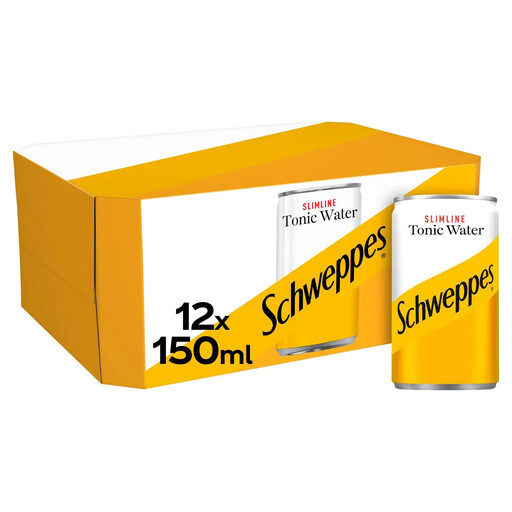
The individual cans offer portioned tonic serves for one drink at a time or several drinks at home. The product description lists 0g sugars and 2kcal per 100ml, and names aspartame as a sweetener and a source of phenylalanine. Check the current pack if either ingredient information or the sugar figure is important to your choice.
 No image available
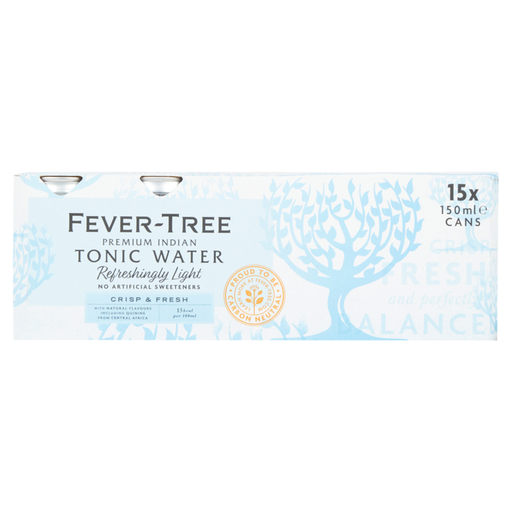
This Indian tonic comes in individual cans for several dinner-time serves. Its product description lists 15kcal and 3.8g sugars per 100ml and identifies fruit sugar in the ingredients. Choose it for the stated Indian-tonic profile rather than as a sugar-free mixer.
 No image available
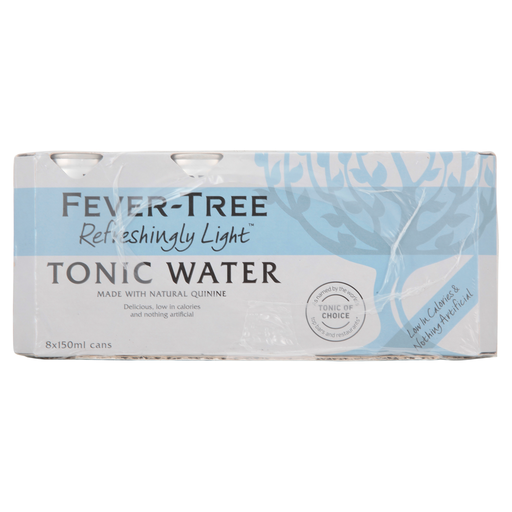
The eight individual cans suit portioned home serves. The product description lists 15kcal and 3.8g sugars per 100ml, so this light tonic is not a sugar-free choice. Check the current pack when comparing it with other Fever-Tree variants.
 No image available
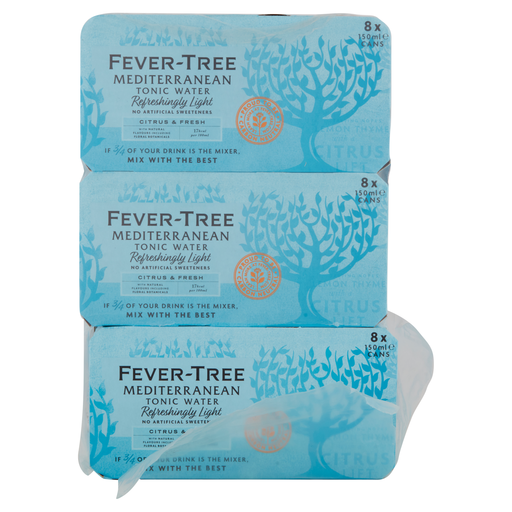
Consider this variant when you want the stated Mediterranean botanical profile rather than a classic Indian tonic. The eight-can pack provides 150ml portions; its product description lists 17kcal and 4.2g sugars per 100ml and identifies fructose. It is not a sugar-free mixer.
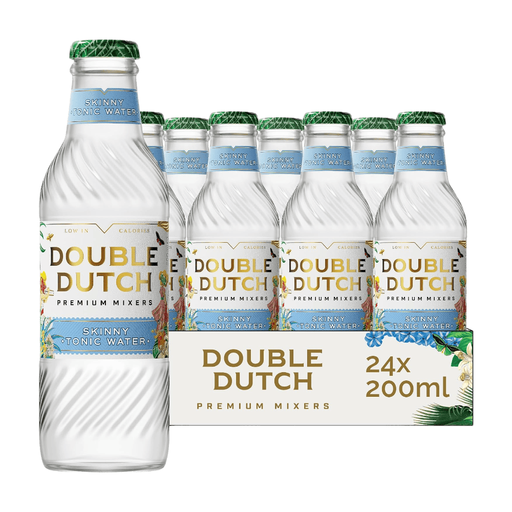 No image available
The 24 individual bottles offer separate serves for a larger gathering. The product description names pink grapefruit and juniper and lists 4.4g sugars per 100ml, so “Skinny” should not be read as sugar free. Check the current nutrition panel before comparing its calorie figure with other tonics.
No. A light tonic can still contain sugar: Fentimans lists 3.4g sugar per 100ml for Naturally Light Tonic Water, while Fever-Tree lists fructose in Refreshingly Light Indian Tonic Water. Check sugars per 100ml and the ingredients on the exact pack if zero sugar is your requirement.
The NHS says adults should have no more than 30g of free sugars a day. For a mixer, the nutrition table’s sugar figure per 100ml and the amount you pour help you understand what that drink contributes; “light” alone does not give you that figure.
A large bottle fits an evening when several drinks will be made from it; individual cans let you open one portion at a time. Check the volume per container and how many serves you expect before choosing a format.
Many do; Fever-Tree and Fentimans identify quinine in the tonic products described here. Check the ingredients of the exact variant if you need to avoid quinine, and ask a pharmacist or clinician about a previous reaction or medicine-related concern.