Shoppers comparing sugar
If you want a bitter, fizzy drink alongside a snack but prefer less sugar, compare the “of which sugars” figure per 100ml and for the amount you expect to pour. A “light” name alone does not establish the sugar content.


If minimising sugar matters most, start with a tonic whose nutrition panel lists 0g sugars on a comparable serving; if you are happy with some sugar, a lighter tonic may offer the flavour you prefer. Tesco lists 0g sugars per 250ml for its Low Calorie Indian Tonic and the Schweppes Slimline tonic it sells, while Fentimans lists 3.4g per 100ml for Naturally Light. Check the sweeteners and choose a pack size that fits how often you will drink it.
The useful distinction for an afternoon drink is whether you are limiting sugar, choosing a particular tonic flavour or buying for occasional use.
If you want a bitter, fizzy drink alongside a snack but prefer less sugar, compare the “of which sugars” figure per 100ml and for the amount you expect to pour. A “light” name alone does not establish the sugar content.
If botanical or citrus notes matter more to you than avoiding sugar altogether, a reduced-calorie tonic may be worth considering. Read its sugar figure as well as its flavour description: Fentimans lists 3.4g sugars per 100ml for Naturally Light.
If you only make one small afternoon drink at a time, cans can avoid leaving a large bottle open. Tesco and Sainsbury’s instruct buyers to refrigerate their listed 1L tonics after opening and use them within three days.
Start with the sugar figure, then check the sweetener, flavour and pack instructions for the drink you will actually serve.
| Priority | What to check | Your needs |
|---|---|---|
| Sugars and calories | Compare “of which sugars” and energy per 100ml, then check both for your serving size. Do not treat a reduced-calorie claim as a zero-sugar claim: Fentimans lists 3.4g sugars and 18kcal per 100ml for Naturally Light. | I would choose by the sugar figure if limiting sugar matters most, rather than relying on “diet” or “light” on the front of the pack. |
| Sweeteners | Read the ingredients and any relevant pack warnings. Tesco and Sainsbury’s list acesulfame K and sucralose in their own-label tonics; Tesco’s Schweppes Slimline listing names aspartame. | If I avoid a particular sweetener, I need to check the ingredients on the exact tonic I buy. |
| Tonic flavour | Check the named flavourings and quinine ingredients alongside the nutrition panel. Fever-Tree and Fentimans describe lighter tonics with botanical character, but their light positioning does not establish zero sugar. | For a drink over ice with a snack, I care about the tonic’s bitterness and flavour as well as its sugar content. |
| Pack and storage | Check the can or bottle volume, the label’s serving size and directions after opening. Tesco and Sainsbury’s say to refrigerate their listed 1L tonics and use them within three days of opening. | A smaller can suits me if I only want an occasional serve and would not finish an opened bottle promptly. |
Fentimans lists 3.4g sugars per 100ml for Naturally Light, and Fever-Tree lists fructose among the ingredients of Refreshingly Light Indian Tonic Water.
For a sugar-focused choice, compare the “of which sugars” line and ingredients rather than the product name alone.
A figure per 100ml and a figure per 250ml serving describe different amounts of tonic, so reading them side by side can obscure the difference between products.
Use the same volume for your first comparison, then consider how much you normally pour.
Tesco’s Schweppes Slimline listing names aspartame, whereas its own-label tonic and Sainsbury’s Diet Indian Tonic list acesulfame K and sucralose.
Read the ingredients and warnings on the exact pack, particularly if you need to avoid a specific ingredient.
Tesco and Sainsbury’s instruct buyers to refrigerate their listed 1L tonics after opening and use them within three days.
Check the storage directions before choosing a large bottle for an occasional afternoon drink.
A bottle left unfinished beyond its stated opened-life period may go to waste.
These brand examples illustrate different light, slimline and diet tonic labels; compare the particular product rather than treating every drink from a brand alike.
Refreshingly Light Indian Tonic Water is a reduced-calorie option for shoppers interested in the brand’s tonic flavour.
Slimline Tonic Water is an option for shoppers comparing the sugar figures on tonic labels.
Naturally Light Tonic Water is a botanical-style, reduced-calorie tonic rather than a sugar-free equivalent.
Britvic announced classic and zero-sugar Indian Tonic Water in 330ml cans for UK grocery retail in September 2023.
Tesco Low Calorie Indian Tonic Water is a 1L own-label option with a stated serving size of 250ml.
Sainsbury’s Diet Indian Tonic Water is a 1L own-label option for comparing sugar and sweetener labels.
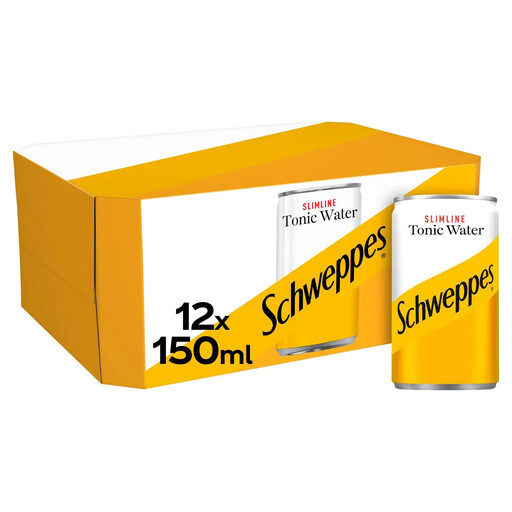
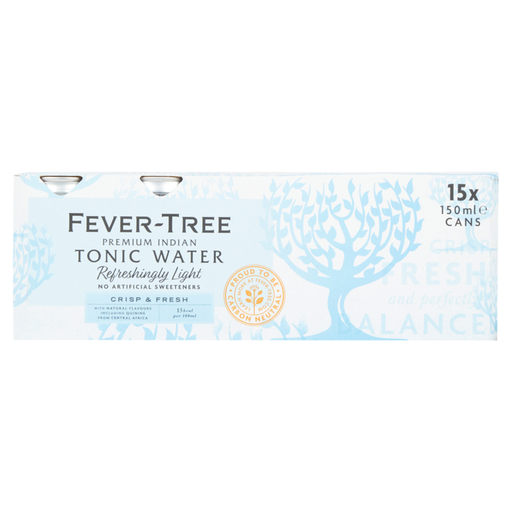
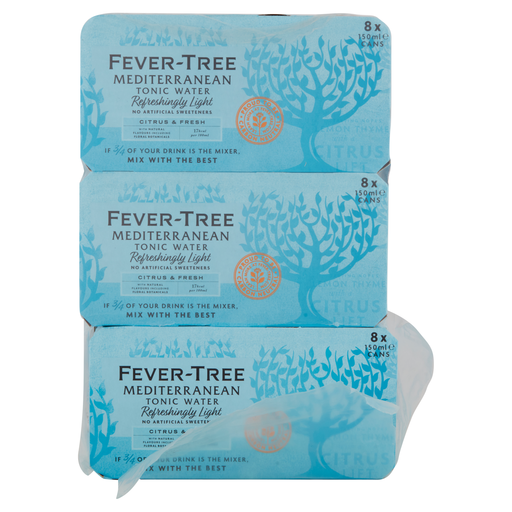
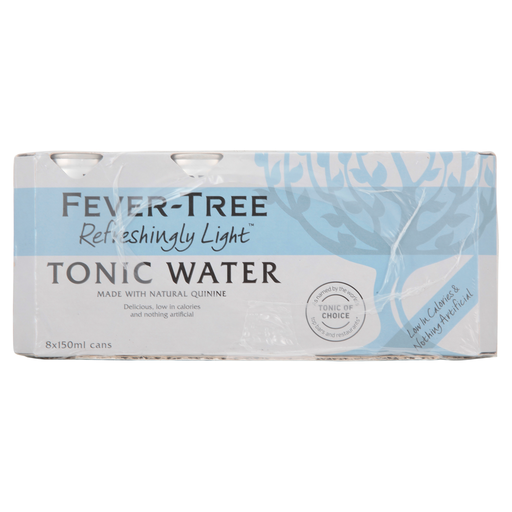
These smaller-can tonic options include Slimline and light-labelled varieties for an afternoon serve. Check each pack’s sugar figure separately: a light tonic is not necessarily sugar-free.
 No image available
The 150ml cans offer a smaller pour for an occasional afternoon drink. Compare the sugar figure and aspartame information on this pack before choosing it for a particular dietary need.
 No image available
These 150ml cans suit a smaller tonic serve when you are considering a light recipe rather than insisting on zero sugar. Fever-Tree lists fructose in Refreshingly Light Indian Tonic Water, so check the pack’s sugar figure.
 No image available
The 8 × 150ml format is worth considering if you want smaller serves and are interested in the Mediterranean variant. Read its own nutrition panel before deciding whether its sugar content fits your needs.
 No image available
The 150ml cans offer smaller serves for occasional use. Confirm that the pack is the Naturally Light variant before using its nutrition panel to compare sugar and calories with other Fever-Tree tonics.
No. Fentimans says Naturally Light has fewer calories than its regular tonic but lists 3.4g sugars per 100ml; Fever-Tree lists fructose in Refreshingly Light Indian Tonic Water. Check “of which sugars” and the ingredients on the product you choose.
Compare energy and “of which sugars” for the same volume, then check the amount you expect to drink. Tesco lists 0g sugars and 4kcal per 250ml for its Low Calorie Indian Tonic; Sainsbury’s lists less than 0.5g sugars and 4kcal per 250ml for its Diet Indian Tonic.
Some do, and the ingredients differ. Tesco and Sainsbury’s list acesulfame K and sucralose in their own-label tonics, while Tesco’s Schweppes Slimline listing names aspartame. Check the exact pack if you avoid a particular sweetener.
Tesco and Sainsbury’s instruct buyers to refrigerate their listed 1L diet tonics after opening and use them within three days. Follow the storage directions on your particular bottle.
Check the ingredients, sweetener information, nutrition figures, serving size and storage directions. GOV.UK’s food-labelling guidance also identifies warnings as important pack information; its guidance specifies a phenylalanine warning when aspartame is named in the ingredients.