Hosts looking for lower-sugar options
If you want lemonade on a shared drinks table without assuming every bottle has the same sugar content, compare the exact products you plan to serve.


Choose a diet or zero-sugar lemonade if you want to offer guests a fizzy drink with little or no listed sugar, but check each product’s nutrition panel and ingredients: the recipes differ. For a street party with varied preferences, you can offer a clearly labelled standard lemonade as well, with water available and the original packaging kept where guests can inspect it.
The useful choice depends on whether you are planning around sugar content, ingredient information or a range of guest preferences.
If you want lemonade on a shared drinks table without assuming every bottle has the same sugar content, compare the exact products you plan to serve.
Keep bottles and cans identifiable so guests can read the ingredients and any phenylalanine statement, particularly on drinks containing aspartame.
When preferences are uncertain, consider clearly separated diet or zero-sugar and standard choices, alongside water, rather than relying on one lemonade recipe.
Decide which drink styles to offer, then compare the exact labels and pack formats. A standard lemonade may contain sweeteners too, so its name alone does not settle the ingredient choice.
| Priority | What to check | Your needs |
|---|---|---|
| Sugar content | Compare sugars per 100ml where the labels use that measure, and check the labelled serving size. Tesco lists 0g per 100ml for R. White’s Diet Lemonade and 2.4g per 100ml for its reviewed standard R. White’s bottle; Sainsbury’s lists less than 0.1g per 100ml for its reviewed Sprite Zero Sugar. | I’d like a lower-sugar fizzy choice, but may also want a standard lemonade for guests who prefer it. |
| Ingredients | Read the sweetener list and any phenylalanine statement on each pack. Tesco’s reviewed R. White’s Diet and Sainsbury’s reviewed Sprite Zero Sugar both list aspartame; their other sweeteners differ. | Guests need to be able to check the actual drink before choosing a can or pouring a glass. |
| Drink style | Check whether you are buying lemon lemonade, cloudy lemonade or a lemon-and-lime fizzy drink. Compare the nutrition panel rather than treating “diet”, “no added sugar” and “zero sugar” as interchangeable descriptions. | I want to put out flavours people can distinguish without guessing from the colour of the drink. |
| Pack format | Check the number and size of cans or bottles against how you plan to serve drinks. If choosing bottles, read their instructions for storage after opening. | Individual cans could make the drinks easier to identify; bottles may suit a table where guests pour their own. |
| Self-service | Keep original packaging accessible and identify standard and lower-sugar drinks separately. For community events in England, Northern Ireland and Wales, the Food Standards Agency recommends retaining packaging so people with food hypersensitivities can check ingredients. | Someone arriving later should still be able to tell what is in a cup or bottle without relying on the host’s memory. |
Nutrition figures vary between the reviewed drinks. Tesco lists 0g sugars per 100ml for R. White’s Diet Lemonade, while M&S lists 0.2g per 100g for its Diet Cloudy Lemonade; those labels also use different measurement bases.
Check the nutrition panel and ingredients on each product, rather than choosing by the word “diet” or “zero” alone.
The reviewed R. White’s Diet Lemonade and Sprite Zero Sugar contain aspartame and carry a phenylalanine statement. Sweetener combinations differ between the drinks.
Keep the packs available for guests to inspect, and offer water as another choice.
Guests cannot check a drink’s ingredients from an unmarked cup. For community events in England, Northern Ireland and Wales, Food Standards Agency guidance recommends keeping packaging for prepacked products so people with food hypersensitivities can inspect it.
Leave identifiable bottles or cans by the drinks table and mark standard and lower-sugar choices separately.
Opened-drink instructions are product-specific. M&S says its reviewed Diet Cloudy Lemonade should be refrigerated after opening and consumed within 3 days.
Choose sizes you can handle at the event and follow the storage directions on each pack.
These examples show why the brand name is only a starting point: compare the particular lemonade and its current label.
Tesco lists both a diet lemon lemonade in a 6 × 330ml can pack and a standard lemonade in a 1.5L bottle.
The reviewed Sprite Zero Sugar at Sainsbury’s is a 2L lemon-and-lime drink, rather than a lemon-only lemonade.
Its lemonade category lists standard, diet, no-added-sugar and lemon-and-lime options.
M&S lists several diet and no-added-sugar lemonades, including a reviewed Diet Cloudy Lemonade.
These are zero-sugar lemon or lemon-and-lime fizzy drinks in multipack cans. The lemon-and-lime drinks and lemon soda are alternatives to traditional lemonade, not examples of standard lemonade; check each pack’s ingredients before putting it out for guests.
 No image available
A pink lemonade option in individual cans for a shared drinks table. The product information lists 0g sugars per 100ml and sweeteners including aspartame, sucralose and acesulfame K. It also carries a phenylalanine statement; keep the pack available for guests checking ingredients.
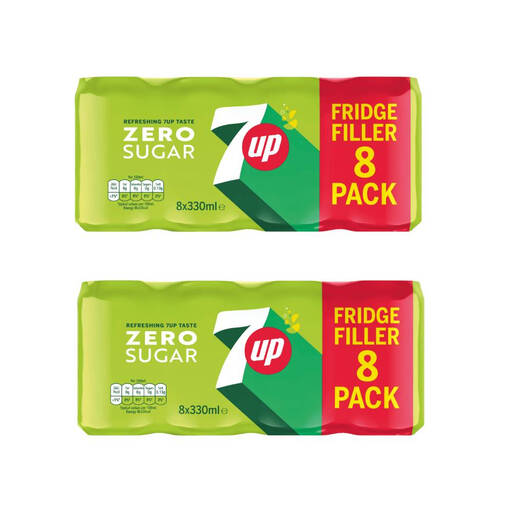 No image available
This 16-can lemon-and-lime option offers individual drinks rather than a traditional lemon lemonade. Its product information lists 0g sugars per 100ml, aspartame and acesulfame K, with a phenylalanine statement. Check the pack if guests need to avoid particular ingredients.
 No image available
A 24-can lemon-and-lime fizzy drink for serving individually. The product information lists 0g sugars per 100ml, aspartame and acesulfame K, and states that it contains a source of phenylalanine. Retain the packaging so guests can check the recipe.
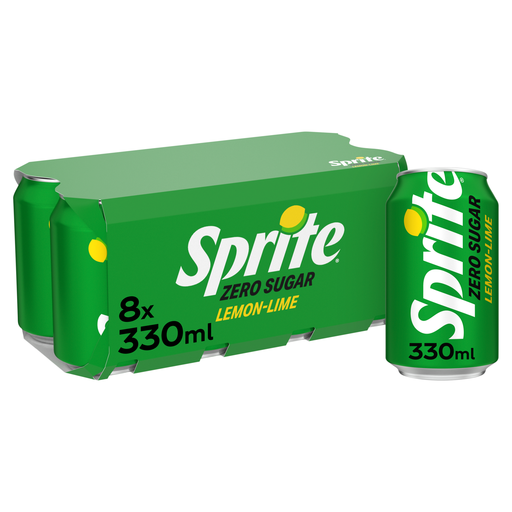 No image available
This smaller can pack is a lemon-and-lime alternative to traditional lemonade. The product information lists 0g sugars per 100ml, aspartame, acesulfame K and sucralose, together with a phenylalanine statement. Check the current pack for ingredients and storage directions.
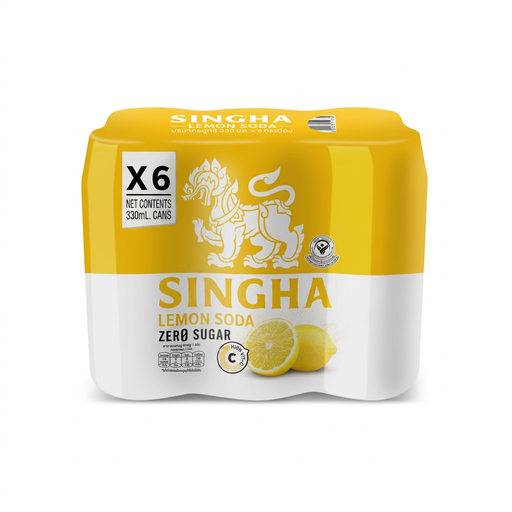 No image available
A six-can lemon soda option for guests who want a lemon-flavoured fizzy drink rather than lemonade. Its product information lists 0g sugars per 100g and the sweeteners sucralose and acesulfame-K. Check the physical label for the current energy value and any ingredient warnings relevant to guests.
Check the exact nutrition panel rather than assuming the names describe a fixed sugar difference. Tesco lists 0g sugars per 100ml for its reviewed R. White’s Diet Lemonade and 2.4g per 100ml for its reviewed standard R. White’s lemonade; Sainsbury’s lists less than 0.1g per 100ml for its reviewed Sprite Zero Sugar.
The reviewed products do: Tesco lists aspartame, acesulfame K and saccharin in R. White’s Diet Lemonade, while Sainsbury’s lists aspartame, acesulfame-K and sucralose in Sprite Zero Sugar. Check the current ingredients on the drink you serve because recipes differ.
The reviewed R. White’s Diet Lemonade and Sprite Zero Sugar contain aspartame and carry a statement that they contain a source of phenylalanine. Keep the label available so guests who need to avoid phenylalanine can check the drink before choosing it.
Keep original bottles, cans or other packaging accessible and make each drink identifiable. For community events in England, Northern Ireland and Wales, Food Standards Agency guidance recommends retaining packaging for prepacked products so people with food hypersensitivities can inspect ingredients; this guidance does not establish the position for Scotland.
Follow the instructions on its own pack. For the reviewed M&S Diet Cloudy Lemonade, M&S says to refrigerate after opening and consume within 3 days; do not assume that timing applies to another drink.