Shoppers switching from regular cola
If your top-up needs to be a no-sugar cola, compare the sugars figure per 100ml on the exact can or bottle. A familiar diet or zero-sugar name does not tell you whether that variant contains caffeine.


For a cola top-up, check the exact nutrition and ingredients panels rather than choosing by the words “diet” or “zero”: Coca-Cola GB and Pepsi UK list 0g sugars per 100ml for several variants, but their caffeine status differs. If you need to avoid caffeine, choose an explicitly caffeine-free variant; whichever pack you choose, check its sweeteners, phenylalanine statement and quantity against your needs.
If your top-up needs to be a no-sugar cola, compare the sugars figure per 100ml on the exact can or bottle. A familiar diet or zero-sugar name does not tell you whether that variant contains caffeine.
Look for an explicitly caffeine-free cola rather than assuming that no sugar also means no caffeine. Check the variant name and ingredients, particularly if you are keeping track of caffeine from other drinks and foods.
If you are buying for someone with phenylketonuria (PKU), check the current pack for a statement that it contains a source of phenylalanine. The verified Coca-Cola and Pepsi variants discussed here contain aspartame; follow the person’s clinical dietary plan when choosing a drink.
Start with sugar and caffeine, then check the ingredients and the amount you will take home.
| Priority | What to check | Your needs |
|---|---|---|
| Sugars | Compare sugars per 100ml on the exact variant. Coca-Cola GB lists 0g per 100ml for Coca-Cola Zero Sugar; Pepsi UK lists the same figure for Pepsi Max and Diet Pepsi. Check serving size separately when comparing can information. | I’m replacing my usual cola with one whose label lists no sugar, rather than relying on “diet” or “zero” in the name. |
| Caffeine | Check both the variant name and ingredients. Coca-Cola GB identifies a caffeine-free Zero Sugar variant; Pepsi UK identifies Pepsi Max No Caffeine. Their standard Zero Sugar or Max variants, and Diet Pepsi, list caffeine. | If I’m avoiding caffeine, I need the caffeine-free version—not just a cola labelled zero sugar. During pregnancy, NHS guidance sets a limit of 200mg of caffeine a day from all sources. |
| Sweeteners | Read the sweetener list and any “contains a source of phenylalanine” statement. The Coca-Cola GB and Pepsi UK variants described here list aspartame and acesulfame K; check the current pack for the exact recipe. | I need to know what is in this particular drink. If I’m buying for someone with PKU, its phenylalanine statement matters to their existing dietary plan. |
| Pack quantity | Compare the number of cans and the volume of each, not the can count alone. Confirm the variant and best-before information on the pack you intend to buy. | For a quick top-up, I want an amount I can store and use, with the caffeine status and flavour I meant to pick up. |
Standard Coca-Cola Zero Sugar, Pepsi Max and Diet Pepsi list caffeine, while Coca-Cola GB and Pepsi UK also identify separate caffeine-free variants.
If caffeine avoidance decides your choice, check for the explicitly caffeine-free variant and read its current ingredients.
The verified Coca-Cola and Pepsi examples contain aspartame and carry a statement that they contain a source of phenylalanine. This is decision-relevant when buying for someone with PKU.
Read the statement on the exact pack and follow that person’s clinical dietary guidance.
A shared 0g sugars per 100ml figure does not establish identical ingredients or caffeine status. Pepsi UK, for example, lists 1 kcal per 330ml can for Pepsi Max and 2 kcal per 330ml can for Diet Pepsi.
Compare the nutrition panel, serving size, caffeine and sweetener list for the specific variant, rather than its front-of-pack name alone.
Use brand names to find the variant you want, then let its current pack label settle the sugar, caffeine and ingredient details.
Coca-Cola GB describes both standard Coca-Cola Zero Sugar and an explicitly caffeine-free Zero Sugar variant.
Pepsi UK provides separate product information for Pepsi Max, Diet Pepsi and Pepsi Max No Caffeine.
If considering an RC Cola diet or zero-sugar variant, compare the exact product rather than the brand name alone.
For a Tesco own-label cola, make the comparison using the label of the exact variant on offer.
The same label-by-label approach applies if you are considering a Sainsbury's own-label cola.
Compare any Asda own-label diet or zero-sugar cola by its own pack details.
These packs cover caffeinated diet or zero-sugar cola and explicitly caffeine-free variants. Check the quantity as well as the exact drink: an eight-can pack and a 24-can pack serve different top-up needs.
 No image available
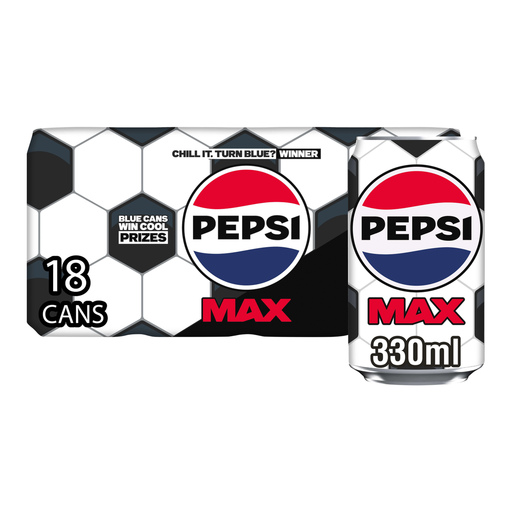
An 18-can option if you want the standard caffeinated Pepsi Max variant for a top-up.
The product information lists 0g sugars per 100ml, caffeine, aspartame and a statement that it contains a source of phenylalanine. Check the pack if the ingredients matter to your choice.
 No image available
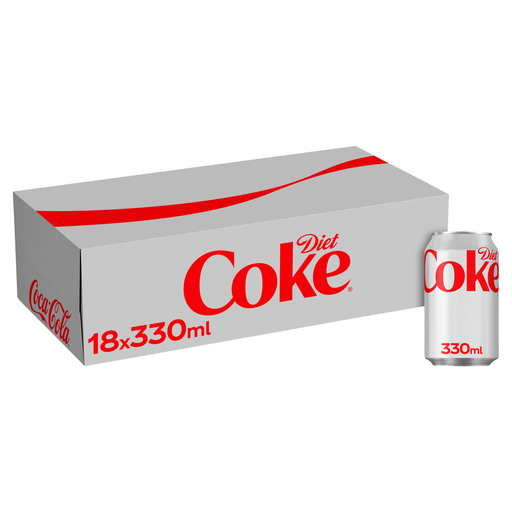
This 18-can pack is a diet-labelled choice if caffeine is acceptable to you.
The product information lists 0g sugars per 100ml and caffeine-containing flavourings. It also lists aspartame and a source-of-phenylalanine statement; check the current pack for your dietary requirements.
 No image available
This explicitly caffeine-free variant suits a top-up only if a 24-can quantity fits your intended use and storage.
The product information lists 0g sugars per 100ml, aspartame and a source-of-phenylalanine statement. Check the current pack if buying for someone with PKU.
 No image available
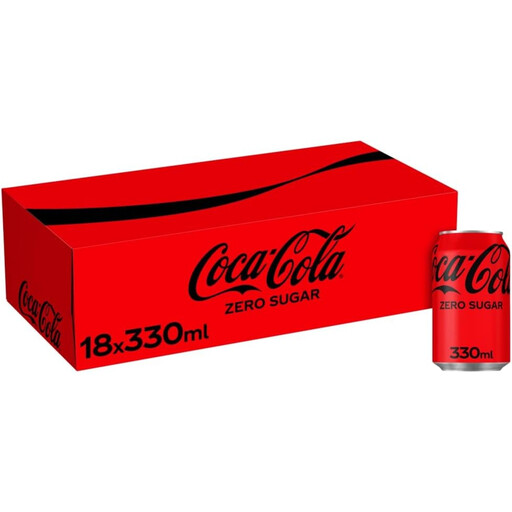
This 18-can pack is the standard caffeinated Coca-Cola Zero Sugar variant, not its caffeine-free counterpart.
The product information lists 0g sugars per 100ml and caffeine. Check the current pack’s sweeteners and phenylalanine statement rather than assuming the ingredients from another format.
 No image available
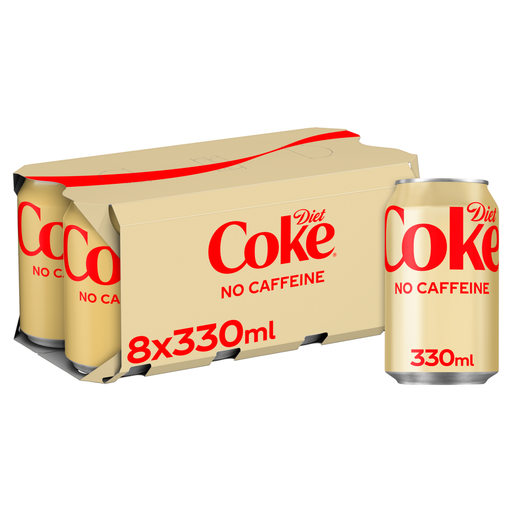
This explicitly caffeine-free, eight-can variant offers a different top-up quantity from the larger multipacks above.
It is described as zero sugar; check the current pack for its sugars figure per 100ml. The product information lists aspartame and a source-of-phenylalanine statement.
No. “Diet” and “zero sugar” do not identify a universal recipe. Coca-Cola GB and Pepsi UK list 0g sugars per 100ml for the named variants discussed here, but you still need the exact product’s ingredients and caffeine status to compare them.
Choose an explicitly caffeine-free variant and check its current ingredients. Coca-Cola GB identifies Coca-Cola Zero Sugar Caffeine Free, while Pepsi UK identifies Pepsi Max No Caffeine; standard Coca-Cola Zero Sugar, Pepsi Max and Diet Pepsi list caffeine.
The verified Coca-Cola and Pepsi variants contain aspartame and carry a statement that they contain a source of phenylalanine. That statement matters for someone with PKU; check the exact pack and follow their clinical dietary plan.
Pick the quantity you expect to use and can store, rather than judging by can count alone. Compare the number and volume of cans, then confirm the exact variant and best-before information on the pack.