
24/7 全天候客户支持

免费退货

当日/次日达

品质保障

开启新人专享福利: 全场免邮 | 低至 2 折 | 免费试用 30 天 JoyPlus 会员
下载 Joybuy
Navigating the world of diet whey protein can feel like a workout in itself. Shelves are packed with tubs promising rapid fat loss and lean muscle, but the reality is often a mix of confusing labels and underwhelming results. As the Joybuy Product Recommendation Officer, my role is to help you see past the marketing jargon and focus on what truly matters for your weight management goals. This guide will break down the common pitfalls to avoid and the key factors to check, ensuring your next purchase genuinely supports your fitness journey.
Many well-intentioned buyers in the UK find themselves with a product that hinders, rather than helps, their progress. Before you spend your money, be aware of these common traps:
lean protein powder are loaded with sugar and carbohydrates to improve their taste. A single serving can contain enough sugar to disrupt a carefully planned, calorie-controlled diet. Always check the "carbohydrates of which sugars" value per serving, not just per 100g.To make an informed choice, focus on these three non-negotiable factors. They are the true indicators of a quality whey protein for weight management.
The primary purpose of a diet whey protein is to deliver a high dose of protein with minimal associated calories from fats and carbohydrates. A solid formula should provide:
low calorie protein shake with less than 2g of fat per serving.Unlike standard whey, diet formulas are enhanced with ingredients to support metabolism. A trustworthy product will clearly state the dosage of these additions per serving. Key ingredients to look for include:
If a brand lists these ingredients without specific quantities, it's a red flag. A protein powder with CLA and L-carnitine should be transparent about its contents.
Most diet whey products use a blend of different protein types, and for good reason. The most common are:
A blend of both provides a balanced release of amino acids, helping to keep you feeling full while also delivering protein to your muscles quickly after exercise.
Based on the criteria above, here are some recommendations tailored to different user needs and preferences.
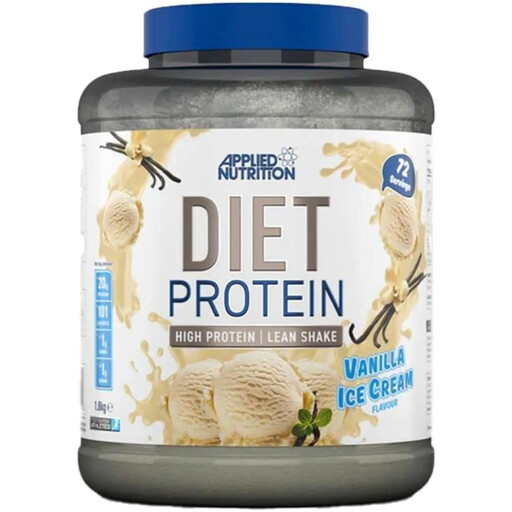
Why This Fits Their Persona: This user is a dedicated gym-goer who tracks their macros meticulously. They want a single, effective product that provides high-quality protein and proven weight management ingredients without guesswork. The large 1.8kg tub offers great value for their consistent, long-term use.
It explicitly lists the dosages of its active ingredients per serving (300mg Acetyl L-Carnitine, 200mg Green Tea, 100mg CLA), avoiding the "proprietary blend" trap. It also contains less than 1g of sugar per serving.
Delivers a solid 20g of protein per 100-calorie serving. The whey blend supports both immediate post-workout needs and sustained satiety.
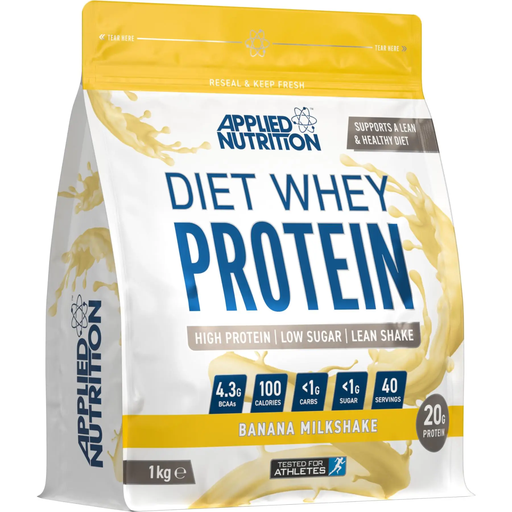
Why This Fits Their Persona: For this user, taste is paramount. If a shake isn't enjoyable, they won't stick to their plan. They need a product that feels like a treat but still aligns with their fitness goals. This banana milkshake flavour offers a delicious alternative to standard vanilla or chocolate.
It achieves a great taste without falling into the high-sugar trap. With only 1g of sugar per serving, it uses sweeteners to deliver flavour, proving that a diet-friendly shake doesn't have to be bland.
It contains the same core `Applied Nutrition diet whey` formula, including 20g of protein and the weight management blend, ensuring no compromise on performance for the sake of flavour.
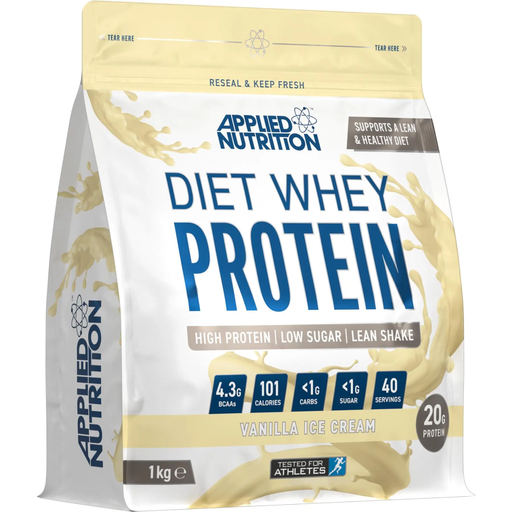
Why This Fits Their Persona: This individual is new to diet protein powders and wants to try an effective product without committing to a large, expensive tub. The 1kg size is a perfect entry point, offering enough servings to see how it fits into their routine and supports their goals.
It provides access to a high-specification formula in a smaller package. This avoids the trap of buying a cheap, low-quality "starter" product that is high in sugar and ultimately ineffective, which could discourage a beginner.
Offers the exact same transparent, low-sugar, high-protein formula as the larger version. The classic Vanilla Cream flavour is versatile and mixes well with water, milk or in recipes like porridge.
We have compiled a complete, real-time list of products that fully satisfy these strict selection criteria and UK safety regulations.
While a low calorie protein shake is great for increasing satiety and supporting a calorie-controlled diet, it should not be used as a complete meal replacement. These powders are designed as supplements and lack the full range of fibre, vitamins and minerals found in a balanced meal of whole foods. They are best used between meals or after a workout.
Their versatility is a key benefit. For post-workout recovery, consume a shake within 30-60 minutes of finishing your session. To manage hunger, it can be taken between meals. You can also add a scoop to your morning porridge or a smoothie to increase your protein intake early in the day and help set you up for success.
This is a common concern, but it is largely a myth. Gaining significant muscle mass ("bulk") requires a sustained calorie surplus (eating more calories than you burn) combined with heavy resistance training. Diet whey protein is formulated to be used as part of a calorie-controlled or deficit diet. Its purpose is to provide the protein needed to preserve lean muscle while you lose body fat, which contributes to a more toned and defined physique, not a bulky one.