Taking a snack out
An individually wrapped bar lets you carry one portion without taking an opened packet. Check whether the product is sold as one bar or as a pack of wrapped bars.


Choose an individually wrapped digestive bar if you want to carry one portion for an afternoon break. M&S lists its chocolate-coated bars as a 182 g pack, however, not as a confirmed single-bar purchase. If you eat biscuits at home, a packet lets you choose how many to serve; compare the exact pack’s ingredients and nutrition, and follow its storage directions after opening.
An individually wrapped bar lets you carry one portion without taking an opened packet. Check whether the product is sold as one bar or as a pack of wrapped bars.
A conventional packet lets you choose how many digestives to serve with a drink. You will also need to follow the pack’s directions for storing what remains.
If you need to avoid an ingredient or compare nutrition, read the label for the exact variant. A coated bar, a chocolate-topped digestive and a chocolate-chip biscuit have different recipes and serving formats.
Start with where you will eat the biscuit, then compare the chocolate format and the information on the pack.
| Priority | What to check | Your needs |
|---|---|---|
| Portion and packaging | Check whether each bar has its own wrapper and how many bars the offered pack contains. M&S lists individually wrapped bars in a 182 g pack; that does not establish a single-bar purchase. | I want to take one digestive treat on a break without carrying an opened packet. |
| Chocolate format | M&S describes a fully milk-chocolate-coated bar. Sainsbury’s lists McVitie’s 266 g milk chocolate digestives with 30% milk chocolate and its own 400 g digestives with 12% dark chocolate chips. | Would I prefer a coated bar, a chocolate-topped biscuit or chips within the biscuit? |
| Nutrition per portion | Compare figures on the same serving basis. M&S gives values per 100 g for its bars; Sainsbury’s gives 83 kcal and 4.8 g sugars per McVitie’s biscuit, and 66 kcal and 3.1 g sugars per own-label chocolate-chip biscuit. Check the exact pack for a bar’s serving information. | I want to understand the portion I plan to eat, rather than compare a bar’s per-100 g figures directly with a biscuit’s per-biscuit figures. |
| Ingredients and storage | Read the exact variant’s ingredient and allergen label. Check its best-before date and storage directions; the researched McVitie’s and Sainsbury’s packet listings call for an airtight container after opening. | If I am keeping a packet for several breaks, I need somewhere to store it. Ingredients also matter when I am avoiding a particular allergen. |
M&S describes individual wrappers around bars in a 182 g pack. The wrapper tells you how each bar is packed, not the quantity you buy.
Check the offered pack size and bar count before ordering.
A figure per 100 g of bars cannot be compared directly with a figure per biscuit without accounting for the portions.
Use the exact packs’ serving weights and compare both products on the same basis.
For food provision covered by England’s school-food rules, the Requirements for School Food Regulations 2014 prohibit biscuits outside a school lunch. Individual wrapping does not change that rule.
If a school is providing the afternoon snack, check whether the setting and provision are covered by those rules.
M&S lists a 182 g pack of individually wrapped milk chocolate digestive biscuit bars.
The McVitie’s 266 g milk chocolate digestives listed by Sainsbury’s are packet biscuits to portion yourself.
Sainsbury’s lists a 400 g packet of digestives containing dark chocolate chips.
Iceland Foods’ 400 g Crawford’s listing identifies a plain digestive rather than a chocolate-coated bar.
These options include chocolate digestives to portion from a packet and an individually wrapped Penguin biscuit bar. The Penguin bar offers a wrapped-biscuit format but is not a digestive.
 No image available
The 14-pack contains individually wrapped biscuit bars, so you can take one from the pack for an afternoon break. Penguin is not a digestive, and this is a multipack rather than a single-bar purchase.
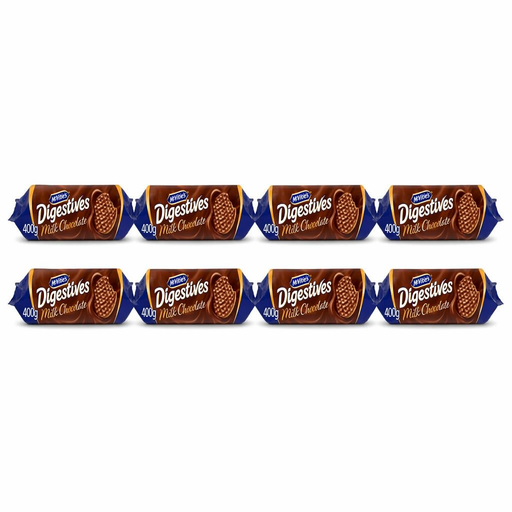 No image available
A 400 g packet of milk chocolate digestives for choosing how many biscuits to serve at home, rather than individually wrapped bars. Its product information advises using an airtight container after opening.
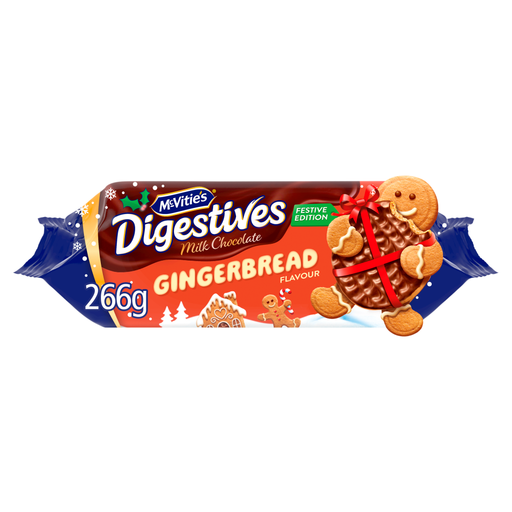 No image available
The 266 g packet offers a gingerbread-flavoured chocolate digestive for portioning at home. These are packet biscuits, not individually wrapped bars; the product information advises airtight storage after opening.
 No image available
Two packets of dark chocolate digestives suit someone choosing biscuits to serve at home. A twin pack is not a pack of individually wrapped bars; keep an opened packet sealed as its product information directs.
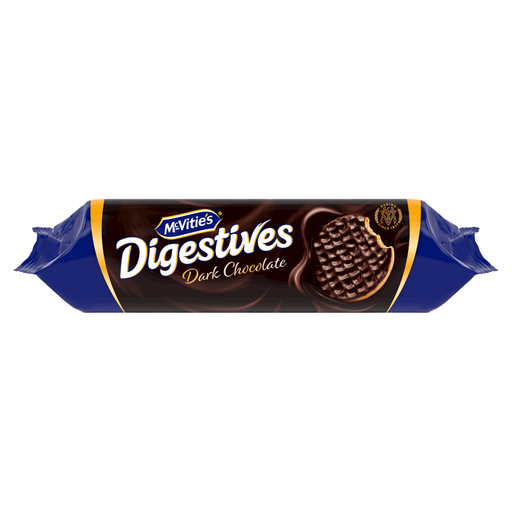 No image available
This 400 g packet provides dark chocolate digestives to portion at home, rather than wrapped bars to carry individually. Its product information specifies an airtight container after opening.
Not necessarily. M&S describes individually wrapped bars within a 182 g product, not a confirmed one-bar retail pack. Check the quantity offered before ordering.
Follow the directions on your exact pack. The McVitie’s and Sainsbury’s packet listings advise an airtight container after opening; M&S says to keep its wrapped-bar pack cool, dry and away from sunlight.
Read the delivered pack’s ingredient and allergen label before eating. Recipes and online descriptions can change, so check the exact variant rather than relying on another digestive’s ingredient list.
For provision covered by England’s school-food rules, the Requirements for School Food Regulations 2014 prohibit biscuits otherwise than as part of a school lunch. Department for Education guidance identifies these requirements as applying to food provided in state-funded schools in England. Check whether the particular setting and provision are covered; an individual wrapper does not create an exception.
No purchasing prohibition follows from the Department of Health and Social Care’s guidance on UK less-healthy-food advertising restrictions. That guidance addresses specified TV and paid-for online advertising, not whether an adult may buy a biscuit. Whether a particular product falls within those advertising restrictions requires a product-specific assessment; England’s school-food rules are separate.