Runners buying for a household
A sharing pack and a snack around a run are separate decisions. Compare pack quantities for the household, then use the biscuit’s own nutrition information to judge a portion.


Choose a digestive biscuit pack by how much the household will use, the nutrition for the portion you intend to eat and the exact packet’s allergen information—not by an assumed benefit for a 5k run. McVitie’s Original comes in a 2 × 315 g format that lets you open one packet at a time; a single 400 g pack is another option if that quantity suits your household.
A sharing pack and a snack around a run are separate decisions. Compare pack quantities for the household, then use the biscuit’s own nutrition information to judge a portion.
Ingredients and precautionary allergen statements vary between the products shown here. Check the current packet for the exact biscuit and the people who will eat it, rather than relying on the name or a dietary label alone.
Start with the quantity your household expects to use, then compare portions and ingredients for the particular biscuits you are considering.
| Priority | What to check | Your needs |
|---|---|---|
| Pack quantity | Compare McVitie’s Original 2 × 315 g format with a single 400 g pack. Check the opened pack’s storage instructions; two packets do not establish a longer shelf life after opening. | I want enough biscuits to share without opening more than the household expects to use. |
| Portion information | Compare figures on the same basis. The examined listings give carbohydrate per biscuit as 9.3 g for McVitie’s Original, 9.0 g for Tesco, 11 g for ASDA and 9.9 g for Sainsbury’s. M&S gives 65.0 g per 100 g, not a per-biscuit figure. | If I’m considering a biscuit around a run, I want to assess the portion I might actually eat rather than compare one biscuit with 100 g of another product. |
| Ingredients and allergens | Read the exact variant’s ingredients and precautionary statements. The examined McVitie’s Original lists wheat and may contain milk; Tesco lists dried skimmed milk and may contain peanuts and nuts. ASDA lists wheat and may contain milk. | Someone in my household needs the packet’s allergen wording checked before the biscuits are served. |
| Snack occasion | Decide whether you want a snack at all, and read the intended portion’s nutrition. A digestive’s name does not establish an effect on 5k performance or digestive health. | I don’t want the family-pack size to dictate whether, when or how many biscuits I eat around a run. |
The examined plain digestives contain fat as well as carbohydrate, and their labels do not establish a 5k performance or digestive-health effect.
Choose a pack for the household and judge any snack portion from its label, rather than buying more biscuits for an assumed effect.
A per-100 g figure describes a different quantity from one biscuit. The examined products also have different stated carbohydrate amounts per biscuit.
Compare per 100 g with per 100 g, or use each product’s stated serving figures when considering a portion.
ASDA’s examined digestives are labelled suitable for vegans, but the same listing identifies wheat and says they may contain milk.
Read the current packet’s ingredients and precautionary statements for the exact variant before serving it.
These details concern the specified digestive biscuits, not every product made by each brand.
Original Digestives are listed in a 2 × 315 g format, with two packets that can be opened separately.
The examined plain Digestives come in a single 400 g pack with approximately 27 servings.
The examined plain Digestives are a 400 g pack with a stated suggestion of 25 servings.
The examined plain Digestives are a single 400 g pack with per-biscuit nutrition.
The examined plain Digestive Biscuits come in a 400 g pack.
Iceland Foods identifies the examined Crawford’s Digestives as a 400 g pack.
These options include a plain Original twin pack, chocolate-coated digestives in twin and 400 g packs, and a 400 g Gullon variant. Check the variant as well as the quantity: they are not the same biscuit.
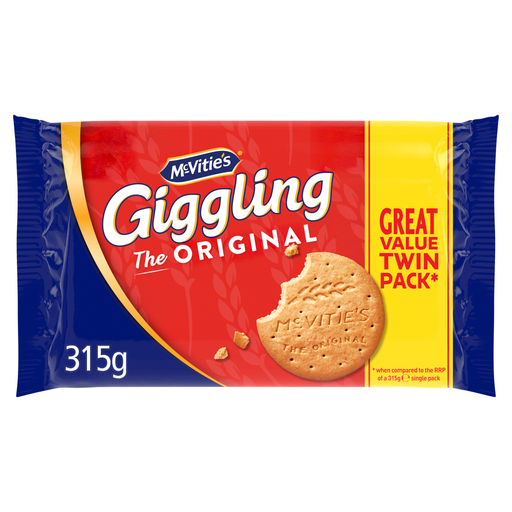 Image unavailable
The two-packet format lets a household open one 315 g packet at a time. McVitie’s lists 9.3 g carbohydrate per biscuit for the examined Original; it contains wheat and may contain milk.
 Image unavailable
This twin pack offers two 266 g quantities for sharing, but contains dark chocolate digestives rather than the plain Original. Check the packet’s serving basis and allergen information when judging a portion.
 Image unavailable
This is a single 400 g pack of milk chocolate digestives, not plain biscuits. If the intended portion matters, check the nutrition basis and serving size on this variant’s packet.
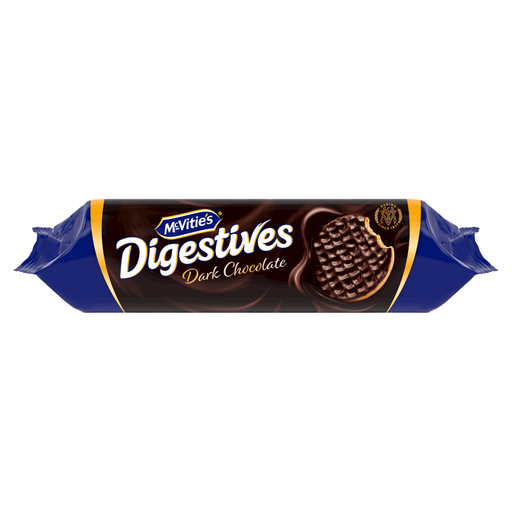 Image unavailable
This single 400 g pack contains dark chocolate digestives rather than plain Original biscuits. Read its own nutrition and allergen label instead of applying figures from another McVitie’s variant.
 Image unavailable
This 400 g Gullon variant is a different choice from the standard plain digestives discussed above. Check its nutrition basis, ingredients, sweetener warnings and allergens on the packet before selecting it for a particular eater.
A 5k distance alone does not establish a need to eat biscuits during the run. University College London Hospitals NHS Foundation Trust discusses exercise snacks in guidance for people managing diabetes, where choices depend on the activity and glucose-management circumstances; that guidance should not be applied to every runner.
Follow the instructions on the packet you buy. The examined Sainsbury’s and M&S listings advise an airtight container after opening; check the packet’s best-before date as well.
No. The examined ASDA Digestives listing says the product is suitable for vegans but separately warns that it may contain milk. Check the exact packet’s allergen wording for the person who will eat it.
Look for the net weight, ingredients and allergens, nutrition basis and date marking when comparing packs. UK government food-labelling guidance identifies the food name, ingredients including allergens, net quantity and an applicable date mark among the required particulars for prepacked food; its September 2026 guidance distinguishes the food-information rules applying in Great Britain and Northern Ireland.