Parents choosing an occasional biscuit
A digestive may be a treat after school, rather than the routine snack. The NHS suggests alternatives including fruit and vegetables for everyday after-school snacks.


For an occasional after-school biscuit, choose by the child’s allergens and the portion you intend to serve. McVitie’s lists 1.3 g sugar per biscuit for The Light One, 2.2 g for Original and 4.8 g for Milk Chocolate, although per-biscuit figures do not account for differences in biscuit size. These wheat-based examples are unsuitable when gluten must be avoided; for routine after-school snacks, the NHS suggests options including fruit and vegetables instead of biscuits.
A digestive may be a treat after school, rather than the routine snack. The NHS suggests alternatives including fruit and vegetables for everyday after-school snacks.
Compare the actual nutrition panels rather than relying on words such as “digestive” or “light”. McVitie’s lists different sugar amounts for its Original, The Light One and Milk Chocolate biscuits.
Check the specific pack before serving it. The examined McVitie’s plain and lower-sugar recipes contain wheat; its Milk Chocolate recipe also declares milk and soya ingredients. Food taken to school calls for a separate check of the school’s arrangements.
Start with allergens and where the snack will be eaten, then compare nutrition on the same basis and choose a pack size you can use.
| Priority | What to check | Your needs |
|---|---|---|
| Sugar and portion | Use sugar per 100 g to compare recipes on the same basis, then per biscuit for the portion served. McVitie’s lists 1.3 g for The Light One, 2.2 g for Original and 4.8 g for Milk Chocolate per biscuit. | I’m choosing an occasional biscuit, not assuming that a plain or lower-sugar label makes it an everyday snack. For routine after-school snacks, the NHS suggests options including fruit and vegetables instead. |
| Allergens | Read the current pack’s full ingredients, allergen information and precautionary statements. The examined McVitie’s plain and lower-sugar recipes contain wheat; its Milk Chocolate recipe also declares milk and soya ingredients. | If my child must avoid gluten or another ingredient, I need a suitable snack rather than relying on the variety name or another pack’s recipe. |
| Pack and storage | Check pack weight and the directions for keeping biscuits after opening. The M&S digestive listing advises an airtight container once opened. | A pack should suit how many biscuits we expect to eat and how we can store the rest. |
| Where it is eaten | Distinguish a snack eaten at home from food provided at school. England’s school food standards cover food provided to pupils on school premises; check the school’s food and allergy arrangements for anything taken in. | If the biscuit is going to school, I need to check that school’s arrangements rather than apply a rule about school-provided food to our snack at home. |
The name does not establish a digestive-health benefit or make a biscuit the routine choice. The NHS suggests swapping biscuits for after-school options including fruit and vegetables.
Choose a biscuit as an occasional treat and consider the portion alongside the child’s other snacks.
The examined McVitie’s plain and lower-sugar recipes contain wheat, while its Milk Chocolate recipe also declares milk and soya ingredients.
Read the current pack’s complete allergen information for the child who will eat it.
Per-biscuit figures describe a serving unit, but different-sized biscuits are not a like-for-like comparison of recipe composition.
Compare per 100 g first, then use the per-biscuit figure to assess the portion you plan to serve.
Its Original, The Light One and Milk Chocolate digestives provide named recipes to compare.
Its own-label plain digestive is another recipe to consider alongside branded plain biscuits.
Its plain digestive listing describes a recipe made with demerara sugar.
Its 400 g digestives offer another named plain recipe to check against a child’s requirements.
These options cover a milk-chocolate digestive and a Gullon sugar-free-labelled digestive. Compare each current pack’s nutrition and allergens before deciding whether either suits an occasional after-school snack.
 No image available
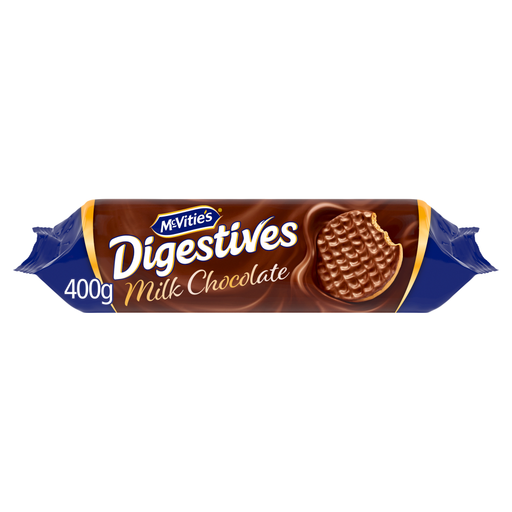
A chocolate-coated option for an occasional biscuit. McVitie’s lists 4.8 g sugar per biscuit for its Milk Chocolate recipe, which declares wheat, milk and soya ingredients; check the current pack before serving.
 No image available
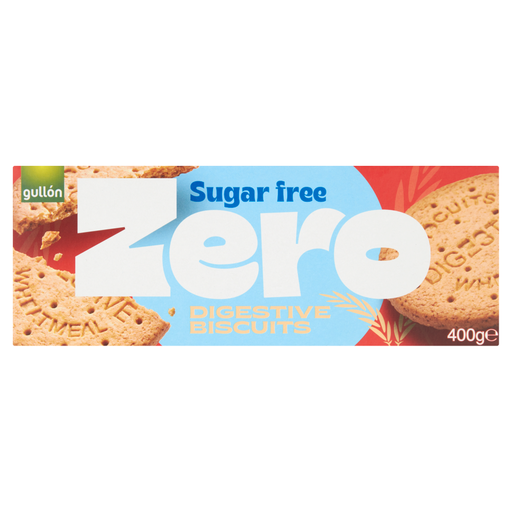
A sugar-free-labelled digestive to compare with other recipes using the current pack’s per-100 g nutrition panel. Check its wheat ingredients, any precautionary milk or soya statement, and the pack’s advice about sweeteners before serving.
Do not infer a digestive-health benefit from the name. Choose using the ingredients, allergen information and nutrition panel; for routine after-school snacks, the NHS suggests alternatives including fruit and vegetables.
Check the school’s food and allergy arrangements for food brought in by families. England’s Requirements for School Food Regulations 2014 say cakes and biscuits must not be provided as food outside a school lunch under the applicable school-food provisions; that rule concerns school-provided food, not an ordinary snack eaten at home, and does not itself establish a universal ban on parents’ packed food.
The examined standard wheat-based digestives are unsuitable when gluten must be avoided. Read the particular pack’s current ingredients, allergen information and precautionary statements; if the food is going to school, check the child’s arrangements and the school’s allergy safety policy.
Follow the directions on the pack you buy. The Tesco and M&S digestive listings advise using an airtight container after opening.
No; the name alone does not establish a product’s regulatory classification. The Department of Health and Social Care describes England’s retail-promotion restrictions as applying to qualifying less-healthy food and drink products. Those restrictions are separate from England’s standards for food provided at school.