People buying for a group workout
Work out how many biscuits the group expects to eat and whether the gathering calls for one open packet or separately wrapped packets for different occasions.


Choose the pack around how many people will share it and whether you expect to open it all at once: a single packet suits one gathering, while a twin pack lets you open the packets separately. Compare the label’s per-biscuit nutrition and allergens before deciding how many to serve. If the time before exercise or someone’s individual dietary needs call for a different snack, a digestive need not be the group’s default.
Work out how many biscuits the group expects to eat and whether the gathering calls for one open packet or separately wrapped packets for different occasions.
Consider the time until activity and the intended portion, rather than assuming the word “digestive” makes a biscuit suitable for every session.
Ask about allergies before serving. Ingredients and precautionary allergen statements vary between plain and chocolate-coated digestives, so check the packet everyone will share.
Decide when the biscuits will be eaten and how many packets to open, then compare portions and ingredients on the packs under consideration.
| Priority | What to check | Your needs |
|---|---|---|
| Timing and portion | Check the time until activity and the labelled carbohydrate and fat per biscuit. Biscuit labels describe a serving, not how an individual will respond to exercise. | “I want to decide what to eat before this session, not assume any digestive will do.” If exercise-related blood glucose management is involved, a shared packet cannot replace an individual plan. |
| Sharing format | Compare the number of packets, total weight and labelled biscuit or serving count. Sainsbury’s lists 42 biscuits across McVitie’s 2 × 315g twin pack, while Asda and Sainsbury’s list approximately 25 and 27 servings respectively for their separate 400g packs. | “Will we open one packet today, or would two packets suit separate gatherings?” The listed serving counts help plan quantities; they are not suggested pre-workout portions. |
| Allergens | Read the exact packet’s ingredients and precautionary allergen statement before serving. The checked plain and milk-chocolate products carry different ingredient and allergen information. | “Everyone needs to know whether they can eat what I’m putting out.” A vegan description does not establish that a biscuit is free from allergen cross-contact. |
| Plain or coated | Compare the coating and per-biscuit label values on the particular packs. Asda lists milk, wheat and soya in its McVitie’s Milk Chocolate Digestives 400g; do not apply that recipe to a different variant. | “If the group wants chocolate biscuits, I’ll check that specific packet rather than treating its ingredients or portion as identical to a plain digestive.” |
McVitie’s 2 × 315g pack totals 630g, but it contains two packets, not one large sharing bag. The checked Asda and Sainsbury’s 400g packs each come as a single packet.
Estimate how many biscuits the group will serve and whether the remainder needs to stay unopened for another occasion.
Carbohydrate and fat values differ between the checked biscuits. The NHS North East and North Cumbria Prehab Hub describes a low-fat, carbohydrate-focused snack before exercise in its patient guidance; that does not make every biscuit an equivalent choice.
Consider the time until activity and the person eating the snack before choosing a biscuit and portion.
The checked products include wheat and, depending on the recipe, milk or soya; precautionary statements also differ.
Ask recipients about allergens and read the physical packet before opening it for the group.
These examples help distinguish pack formats and label information; they do not imply that every product from a brand has the same recipe or is available on Joybuy.
Original plain digestives come in several formats, including a 2 × 315g twin pack.
A plain 400g digestive in one packet.
A plain 400g digestive with a listed count of approximately 27 servings.
A plain 400g digestive for comparison with other single packets.
A plain 400g digestive with per-biscuit nutrition on Tesco’s listing.
A plain 400g digestive listed by Iceland Foods.
These options include a plain twin pack and chocolate-coated single and twin packs. Use their pack formats to narrow the choice, then check the particular packet’s nutrition and allergens for the people sharing it.
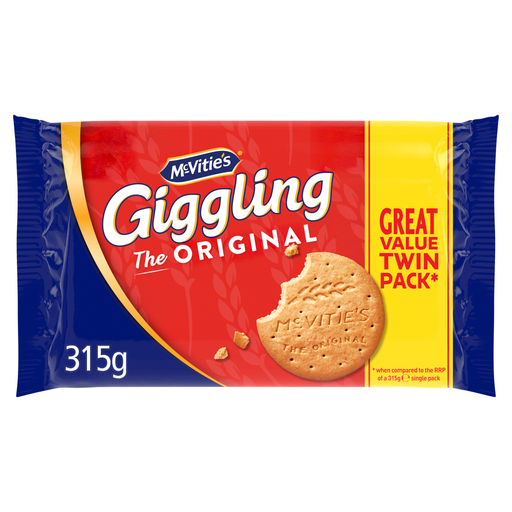 No image available
Two packets allow you to open the biscuits on separate occasions. Sainsbury’s listing for this matching twin-pack format gives 42 biscuits in total, with 9.3g carbohydrate and 3.1g fat per biscuit. Check the physical pack for wheat and possible milk before sharing.
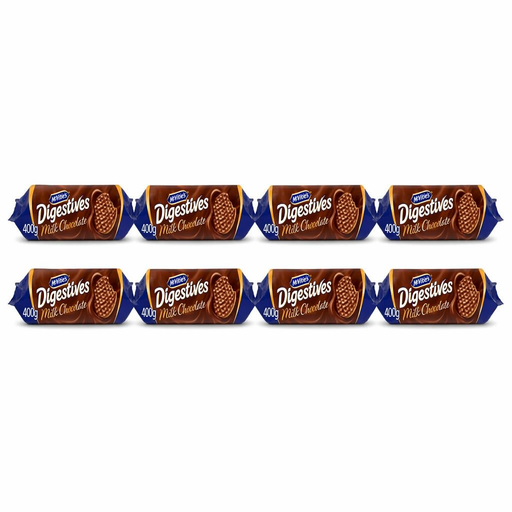 No image available
A single 400g packet for a group choosing milk-chocolate digestives. Check its per-biscuit label values when deciding how many to serve, and check the physical pack for milk, wheat and soya before sharing.
 No image available
The two-packet format allows separate opening occasions when the group wants dark-chocolate digestives. Check the physical pack’s per-biscuit values for portion planning and its wheat, milk and soya information before serving.
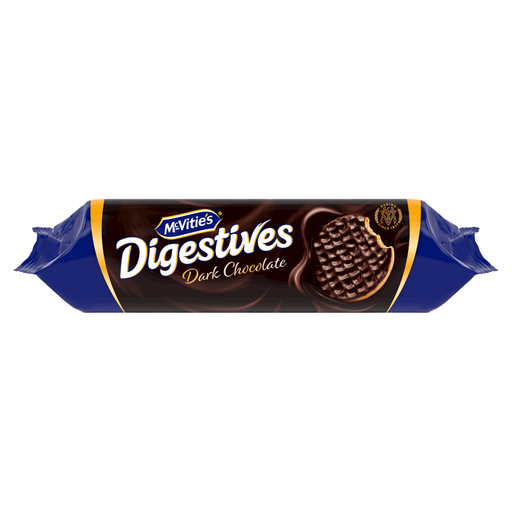 No image available
A single 400g packet for sharing dark-chocolate digestives at one gathering. Use the physical pack to check the intended portion’s nutrition and its wheat, milk and soya information before serving.
No. The checked listings give 9.3g per biscuit for McVitie’s 2 × 315g twin pack, 11g for Asda’s 400g digestives and 9.9g for Sainsbury’s 400g digestives. Use the label on the packet being served, since biscuit sizes and recipes differ.
Follow the packet’s storage directions. The checked Asda and Sainsbury’s plain 400g listings advise keeping opened biscuits in an airtight container.
Ask recipients about allergens and read the physical packet’s ingredients and allergen statement before serving. A plain appearance or a vegan description is not an allergen guarantee.
Use the physical packet’s ingredients and allergen statement when deciding whether to serve it, and contact the seller or manufacturer about a discrepancy. Do not rely on an earlier listing to settle an allergy question.