People considering a biscuit before training
Compare a biscuit portion with when you last ate and what activity you have planned. A snack is not automatically necessary for a general fitness session.


If you want a digestive biscuit before exercise, start by comparing the labelled portion of a plain biscuit with a chocolate-coated one; neither is needed for every workout or shown to improve performance. Choose chocolate digestives if you want a chocolate biscuit, while a box of assorted chocolates is a separate gift choice, not a box of digestives. Consider the timing of your meals and the demands of your activity rather than relying on a biscuit alone.
Compare a biscuit portion with when you last ate and what activity you have planned. A snack is not automatically necessary for a general fitness session.
Check the exact pack’s ingredients and precautionary statements. Plain biscuits, chocolate-coated biscuits and chocolate assortments can have different allergen information.
Decide whether the recipient would prefer digestive biscuits or assorted chocolates. A chocolate selection box is not necessarily a biscuit box.
For a pre-workout snack, decide whether you want food at all, then compare the portion, timing and ingredients of the exact biscuit. Keep a chocolate gift separate from that snack decision.
Consider when: You want to compare a straightforward biscuit portion with your other meals before exercise.
Bear in mind: Plain digestives still contain fat, and serving weights differ between products.
Consider when: You want a chocolate biscuit and can check its portion and ingredients against your plans.
Bear in mind: A chocolate coating does not establish an exercise benefit; compare fat figures using each product’s stated biscuit weight.
Consider when: You are choosing a separate present rather than a pack of digestive biscuits.
Bear in mind: Assorted chocolates have different contents and ingredients, so they cannot stand in for biscuit portions.
| Priority | What to check | Your needs |
|---|---|---|
| Meal timing | Consider your planned activity, when you last ate and the labelled carbohydrate and fat per serving. The British Dietetic Association describes a low-fat, carbohydrate-rich snack or light meal two to three hours before exercise as an option, not a requirement to eat biscuits. | Do I want a small snack before this session, or does my usual meal pattern already cover it? |
| Biscuit portion | Read the biscuit weight as well as the per-biscuit figures. Tesco lists 9.0 g carbohydrate and 2.9 g fat per 14 g plain digestive; ASDA lists 10.4 g carbohydrate and 3.9 g fat per 16.7 g McVitie’s milk-chocolate digestive. These are different serving weights, not a like-for-like performance comparison. | I want to know what is in the number of biscuits I actually plan to eat. |
| Ingredients | Check ingredients, emphasised allergens and precautionary wording on the exact pack. Do not use a vegan label as a substitute for an allergy check. | If I am buying for someone else, their ingredient and allergy requirements matter more than the biscuit’s description. |
| Pack purpose | Check whether the pack contains digestives, individually wrapped biscuits or assorted chocolates. Ocado describes the M&S coated-digestive pack as six individually wrapped biscuits and its M&S selection box as assorted chocolates. | For a present, I want the contents to match what the recipient expects; for snacking, separate wrapping may matter more. |
A biscuit name and its nutrient label do not show that eating it will improve a workout. The British Dietetic Association’s advice addresses overall eating patterns and meal timing.
Use the serving information to assess a possible snack alongside your planned activity, not as a performance promise.
A chocolate selection box can contain assorted chocolates with centres rather than digestive biscuits.
Read the pack description before choosing a snack or gift, and check the recipient’s ingredient requirements.
Tesco’s cited plain digestives carry a peanuts-and-nuts precautionary statement; ASDA’s cited plain digestives say they may contain milk despite their vegan suitability description.
Read the ingredients and precautionary wording on the physical pack before it is eaten.
These examples help distinguish biscuit types and pack formats; a brand name alone does not establish the ingredients of every product it makes.
ASDA lists a 400 g McVitie’s milk-chocolate digestive pack with per-biscuit nutrition.
Tesco lists both plain 400 g digestives and milk-chocolate 300 g digestives.
ASDA lists plain and milk-chocolate own-label digestives with different ingredients and serving figures.
Sainsbury’s lists a 300 g milk-chocolate digestive pack.
Ocado lists both M&S individually wrapped coated digestives and a separate milk-chocolate selection box.
A United Biscuits specification dated December 2014 described a Crawford’s plain-digestive mini-pack containing three biscuits in 29 g.
These packs provide plain, gluten-free and chocolate digestive options for comparing biscuit portions and ingredients before a possible snack. A chocolate selection box is a different kind of purchase.
 No image available
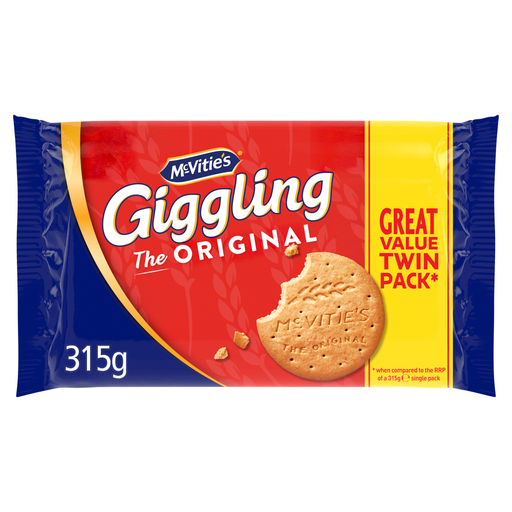
A plain digestive option if you want to compare biscuits without a chocolate coating. The twin pack contains two 315 g packs; check the serving label and ingredients for the portion you intend to eat.
 No image available
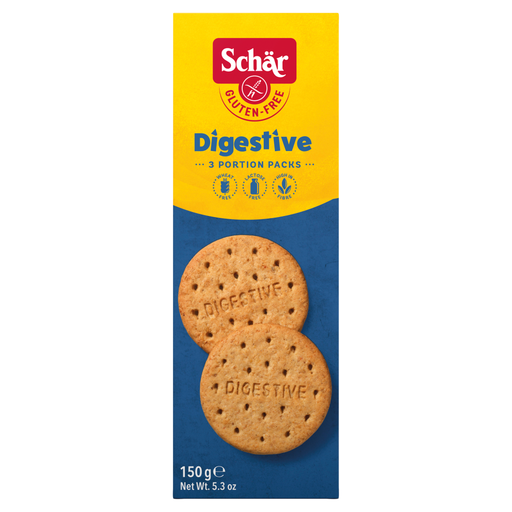
A gluten-free digestive option in a 150 g pack. Check the full ingredient and precautionary wording for any other allergy requirements, as well as the labelled serving before comparing it with wheat-based digestives.
 No image available
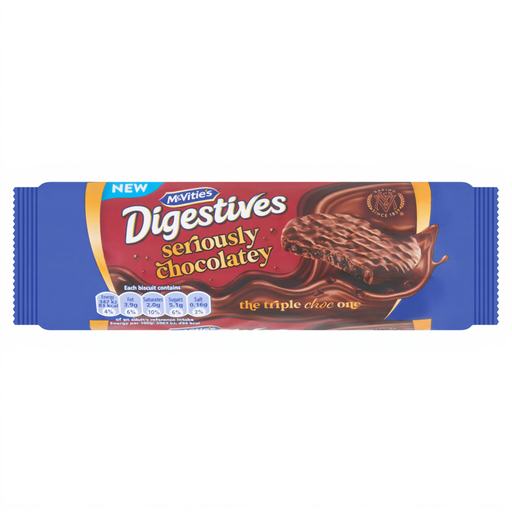
A chocolate-coated digestive for comparing with a plain biscuit, rather than an exercise-performance product. ASDA’s listing for this 400 g variant gives 10.4 g carbohydrate and 3.9 g fat per 16.7 g biscuit and identifies milk, soya and wheat allergens.
 No image available
A 250 g chocolate-digestive variant if the type of chocolate biscuit matters to your choice. Check the pack’s biscuit weight and per-serving nutrition before comparing a portion with other variants; read its allergen wording separately.
 No image available
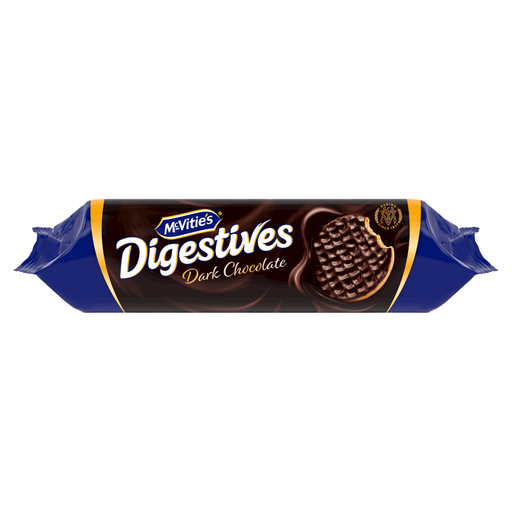
A 400 g dark-chocolate digestive option for shoppers choosing by chocolate type. Use the pack’s serving weight and nutrition to assess your portion, and check its ingredients rather than assuming they match the milk-chocolate variant.
No. The British Dietetic Association says an ordinary eating pattern can meet carbohydrate needs for a general fitness programme. It describes a low-fat, carbohydrate-rich snack or light meal two to three hours before exercise as an option, not a requirement to eat biscuits.
Follow the instructions on the exact pack. Tesco’s plain-digestive listing says to store the biscuits in a cool, dry place and use an airtight container once opened.
Check the physical pack’s ingredients, emphasised allergens and precautionary statements before the biscuits are eaten. For example, Tesco’s cited plain digestives have a peanuts-and-nuts precautionary statement, while the cited McVitie’s milk-chocolate digestives contain milk, soya and wheat.
For food provided to pupils under England’s current school-food standards, the Department for Education’s standards document says no confectionery, chocolate or chocolate-coated products across the school day. It allows biscuits at lunchtime subject to its conditions. The Department for Education says updated standards are subject to Parliamentary approval and expected from September 2027; these school-provision rules do not themselves prohibit an ordinary retail purchase.