Coeliac shoppers comparing sugars
Start with the exact biscuit’s gluten-free label, then compare sugars on a common per-100 g basis. A sugar claim on a wheat biscuit does not establish that it is gluten-free.


For coeliac shopping, choose a digestive labelled gluten-free on the exact pack before comparing sugars per 100 g: a lower-sugar biscuit made with wheat does not meet that need. Schär lists 18 g sugars per 100 g for its gluten-free digestive, compared with 19.7 g for Sainsbury’s, 20 g for Asda and 24.8 g for Tesco on their named free-from packs; check oats, other allergens and the current pack before choosing.
Start with the exact biscuit’s gluten-free label, then compare sugars on a common per-100 g basis. A sugar claim on a wheat biscuit does not establish that it is gluten-free.
Check the ingredient list rather than assuming every gluten-free digestive uses the same flour. Coeliac UK says a small number of people with coeliac disease remain sensitive to gluten-free oats.
Check whether the biscuit meets the gluten-free requirement first. Then compare sugar figures and ingredients on the packs that remain.
| Priority | What to check | Your needs |
|---|---|---|
| Gluten-free status | Look for a gluten-free statement on the exact pack and read the highlighted cereal ingredients. The Food Standards Agency defines gluten-free as no more than 20 mg/kg of gluten in food as sold. | I’m shopping for someone with coeliac disease, so a reduced-sugar claim cannot take the place of the gluten-free check. |
| Sugars | Compare sugars in g per 100 g across eligible biscuits; use the current pack’s per-biscuit figure when considering a portion. Schär, Sainsbury’s, Asda and Tesco list 18, 19.7, 20 and 24.8 g per 100 g respectively for the named gluten-free digestives. | I want to compare the listed sugar amounts without treating differently sized biscuits as equal portions. |
| Oats and allergens | Check whether the ingredients include gluten-free oats, then read separate allergen and ‘may contain’ statements. Coeliac UK notes that some people with coeliac disease remain sensitive to gluten-free oats. | If I avoid gluten-free oats or have another relevant allergy, I need the ingredients and warnings for this particular pack. |
| Current pack details | Check the product offered at purchase and read its delivered pack before eating. Tesco cautions that ingredients and nutrition information can change. | An online listing helps me compare options, but I need the current pack information for the biscuit I receive. |
McVitie’s lists wheat flour in The Light One, despite its 30%-less-sugar claim against the average digestive biscuit. Gullón describes its Zero sugar-free digestive as a wheat biscuit.
For coeliac shopping, establish the exact product’s gluten-free status before comparing its sugar information.
A per-biscuit figure describes that biscuit’s portion, so it is not a common-weight comparison when biscuit sizes differ.
Compare g sugars per 100 g first, then read the pack’s per-biscuit figure for the portion you intend to serve.
Coeliac UK says most people with coeliac disease can eat gluten-free oats, but a small number remain sensitive to them.
If you avoid gluten-free oats or have been advised to do so, check the ingredients and discuss their use with your healthcare professional.
These details concern the named biscuits, not every product made by each brand.
Its UK Digestive Biscuits provide a gluten-free option with a listed sugars figure.
Its Free From 188 g digestives are an oat-based option.
Its Free From 188 g digestives offer another gluten-free oat-based comparison.
Its Free From 160 g digestives use gluten-free oat flour.
The Light One shows why a sugar comparison is separate from coeliac suitability.
Its standard Digestive Biscuits and Made Without biscuits need to be assessed as separate products.
A documented catering digestive provides an example of a wheat-based product.
The Joybuy option here is a gluten-free digestive for shoppers comparing sugar figures after checking gluten-free status.
 No image available
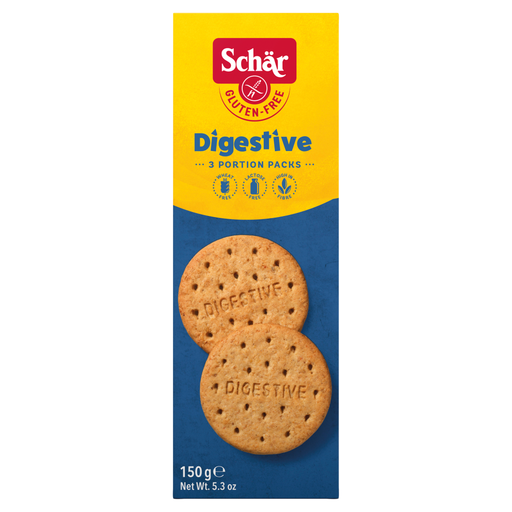
For a gluten-free digestive comparison, Schär UK lists 18 g sugars per 100 g for this 150 g product. Its ingredients include soya, and its listing says it may contain lupin and eggs; check the current pack if those allergens matter to you.
No. The claim compares sugar, not gluten. McVitie’s says The Light One has 30% less sugar than the average digestive biscuit, but lists wheat flour and cereals containing gluten for that product.
Yes. Check that the exact biscuit is labelled gluten-free and read its ingredients for gluten-free oats. Coeliac UK says most people with coeliac disease can eat gluten-free oats, while a small number remain sensitive to them.
The Food Standards Agency defines gluten-free as no more than 20 mg/kg of gluten in the food as sold. Check the exact pack’s label rather than inferring gluten-free status from ‘digestive’, ‘sugar-free’ or ‘wheat-free’.
Read the delivered pack’s ingredients and allergen information before serving. In a shared kitchen, Coeliac UK advises cleaning utensils and surfaces and avoiding breadcrumbs in shared spreads.