Hosts putting together a breakfast spread
A plain digestive gives guests an uncoated option alongside hot drinks, fruit, yoghurt or cheese. A chocolate-coated variety can be offered separately for those who want something sweeter.


For a continental breakfast, start with plain digestives if you want an uncoated wheatmeal biscuit alongside hot drinks; add chocolate-coated biscuits if you want a sweeter option. A reduced-sugar label addresses sugar rather than every nutritional consideration, while guests who need to avoid gluten or milk require a biscuit explicitly labelled for those requirements. Check the current pack before serving, particularly where allergies matter.
A plain digestive gives guests an uncoated option alongside hot drinks, fruit, yoghurt or cheese. A chocolate-coated variety can be offered separately for those who want something sweeter.
If sugar per biscuit is the deciding detail, look at the stated serving size as well as the front-of-pack claim. A reduced-sugar wheatmeal digestive still needs a separate allergen check.
Someone who needs to avoid gluten or milk needs a biscuit labelled for that requirement, not an ordinary wheatmeal digestive. Read the current pack’s full allergy advice before serving.
Choose the biscuit style for the breakfast table first, then compare the exact packs for ingredients, per-biscuit nutrition and storage instructions.
| Priority | What to check | Your needs |
|---|---|---|
| Biscuit style | Check whether the pack is plain wheatmeal, reduced-sugar or chocolate-coated. For chocolate varieties, distinguish milk from dark chocolate rather than assuming identical ingredients. | I want an uncoated biscuit with tea or coffee, with a sweeter coated option only if it suits the spread. |
| Allergens and dietary labels | Read the current ingredients, allergen statement and any free-from claim. Sainsbury’s Free From Digestives are labelled gluten and milk free, but contain oats and carry a nut-allergy manufacturing warning. | If a guest must avoid gluten or milk, I need a biscuit explicitly labelled for that exclusion and must check the pack before serving. |
| Nutrition per biscuit | Compare the serving basis as well as sugars, energy and saturates. Tesco lists McVitie’s The Light One at 1.3 g sugars and 70 kcal per biscuit; Sainsbury’s lists McVitie’s Original at 2.2 g sugars and 71 kcal per biscuit. | A lower-sugar claim matters to me, but I do not want to mistake it for a large difference in listed energy per biscuit. |
| Chocolate coating | Check the coating and allergens. Tesco lists McVitie’s Milk Chocolate Digestives at 4.8 g sugars and 2.1 g saturates per biscuit, compared with Sainsbury’s listing of 2.2 g and 1.5 g respectively for McVitie’s Original. | For a sweeter choice, I would serve chocolate digestives separately rather than assume they have the same ingredients or per-biscuit nutrition as plain ones. |
| Storage after opening | Check pack size and the printed storage instructions. Sainsbury’s advises keeping its plain digestives in an airtight container after opening for quality. | If I am serving biscuits over several mornings, I need a way to keep the opened pack closed between breakfasts. |
Standard wheatmeal examples from McVitie’s and Sainsbury’s contain wheat and gluten. A free-from biscuit can have different ingredients and its own allergy warnings.
For a guest who needs an exclusion, choose a product explicitly labelled for it and read the physical pack’s ingredients and allergy statement before serving.
Tesco’s listing for McVitie’s Milk Chocolate Digestives includes milk and soya and gives different per-biscuit sugar and saturates values from Sainsbury’s listing for McVitie’s Original.
Keep the coated variety as a distinct choice and compare the exact packs if ingredients or portion nutrition matter.
Tesco describes McVitie’s The Light One as having 30% less sugar than the average digestive biscuit. It is still a wheatmeal biscuit and is listed at 70 kcal per biscuit.
Use the claim for its stated sugar comparison; check energy, serving size and allergens separately.
Retailers warn that product information can change, so an earlier listing may differ from the pack being served.
Make the final ingredient and allergen check on the pack in hand, especially for gluten, milk and nut exclusions.
These product lines illustrate different biscuit styles and label checks; a brand name alone does not establish the ingredients of every variety.
Retailer listings cover Original, The Light One reduced-sugar wheatmeal biscuits and Milk Chocolate Digestives.
Its listed digestives include a 400 g plain wheatmeal pack and a separate 188 g Free From pack.
M&S describes its plain digestive biscuits as made with demerara sugar for a crisper texture, and lists plain, milk-chocolate and dark-chocolate varieties.
Sainsbury’s lists Rakusen’s wholemeal digestives with Kosher KLBD and Vegetarian Society approval for that product.
These options cover plain digestives, chocolate-coated varieties and a sugar-free-labelled biscuit for different continental-breakfast spreads. Check each product’s current pack where ingredients or allergens affect your choice.
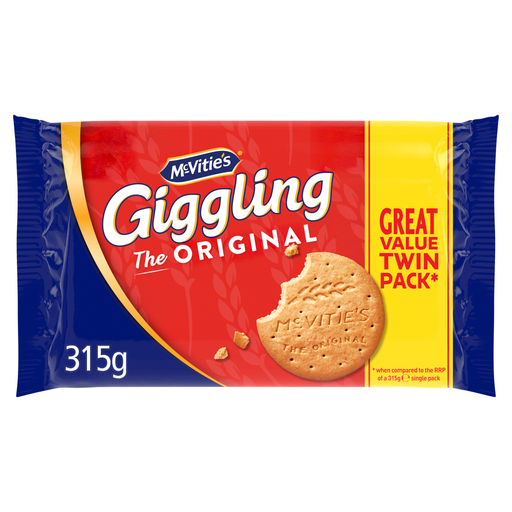 No image available
An uncoated Original option for a breakfast table where a plain digestive is wanted. This is a twin pack; check the physical pack’s dietary and allergen information before serving guests with restrictions.
 No image available
A dark-chocolate-coated option to offer separately from plain biscuits. The twin pack contains two 266 g packs; its product information flags wheat, milk and soya, so check the current pack if serving guests with allergies.
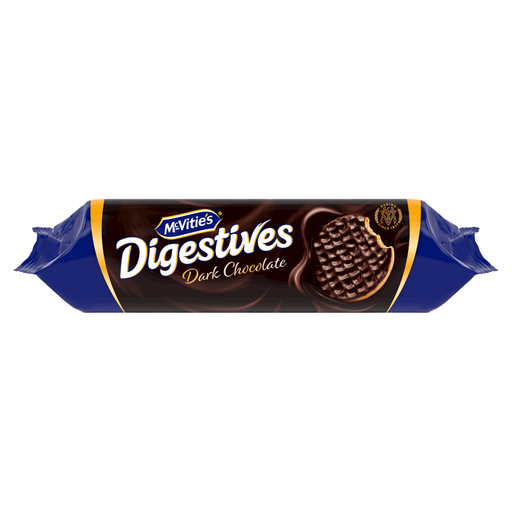 No image available
A 400 g dark-chocolate digestive pack for a spread that includes a coated biscuit. Its product information flags wheat, milk and soya; do not treat it as interchangeable with a biscuit labelled for those exclusions.
 No image available
A 400 g milk-chocolate-coated option for guests who want a sweeter biscuit. The product information flags wheat, milk and soya; compare its current per-biscuit nutrition and allergen label with a plain variety before serving.
 No image available
A 400 g digestive labelled sugar free; check its nutrition panel rather than treating that wording as a claim about energy or other nutrients. Its product information flags wheat and possible milk and soya, and warns that excessive consumption may produce a laxative effect.
Do not assume they are: the plain McVitie’s and Sainsbury’s examples list wheat or gluten. If gluten avoidance is required, choose a biscuit explicitly labelled gluten free and read the current pack’s full allergy advice.
Not necessarily. Tesco lists McVitie’s The Light One at 70 kcal per biscuit despite its 30%-less-sugar claim versus the average digestive biscuit; Sainsbury’s lists McVitie’s Original at 71 kcal per biscuit. Compare the stated serving size and nutrition values of the packs you are considering.
No. Tesco’s listed McVitie’s Milk Chocolate Digestives contain milk and soya as well as wheat or gluten, and have different per-biscuit nutrition from Sainsbury’s listed McVitie’s Original. Offer them as a separate coated option and check each pack’s allergens.
Read the ingredients, emphasised allergens and any manufacturing warnings on the physical pack before serving. This matters even for a free-from variety: Sainsbury’s Free From Digestives contain oats and carry a warning for customers with a nut allergy.
Follow the chosen pack’s storage instructions and close it between servings. Sainsbury’s advises keeping its plain digestives in an airtight container after opening for quality.