Long-run portion planners
Sealed, countable packets may help you decide what to carry. Relate the carbohydrate in each actual packet to your training plan, and try eating it on a run before relying on it.


Choose separately sealed biscuit portions if you need a countable amount to carry on a run; a twin pack of two large sleeves does not serve the same purpose. Check carbohydrate for the portion you will actually eat and try it during training to see whether chewing and eating it while running work for you. Ordinary sleeves can suit pre-run snacks or portions you package yourself.
Sealed, countable packets may help you decide what to carry. Relate the carbohydrate in each actual packet to your training plan, and try eating it on a run before relying on it.
If you eat a biscuit before training or at a break, an ordinary sleeve may work when you can portion and protect the biscuits yourself.
An assorted box offers individually portioned biscuits, but only some packets may contain digestives. It suits a plan that does not require every packet to be the same variety.
Start with the inner packaging, then use the exact biscuit label to work out what a portion contains and whether it suits the point in your run when you plan to eat it.
| Priority | What to check | Your needs |
|---|---|---|
| Portable portions | Check the number of sealed inner packets, biscuits per packet and packet weight. Nisbets lists McVitie's catering boxes with 24 two-biscuit packets; the Tesco-listed 2 × 315 g twin pack contains two large sleeves. | I want to put a counted portion in my bag without opening a whole sleeve. If I portion biscuits myself, I need to protect them while carrying them. |
| Biscuit variety | Confirm whether packets contain plain or chocolate digestives. Nisbets' descriptions of its plain-listed McVitie's catering item conflict, while its chocolate catering item is separately identified. Its Crawford's box is assorted. | Every packet needs to be a digestive if I am planning around one variety; an assortment works only if I can use the other biscuits too. |
| Carbohydrate per portion | Read total carbohydrate per biscuit or per packet on the exact product label; packet weight is not carbohydrate weight. Sainsbury's lists 9.9 g per biscuit for its 400 g digestives, a figure that should not be applied to a different catering product. | I want to count what I will actually eat, whether that is one biscuit or a sealed packet, rather than use the weight of its wrapper-sized portion as my carbohydrate figure. |
| Eating during a run | Try the particular biscuit and quantity during training. The Australian Institute of Sport notes that excessive carbohydrate intake can cause gut discomfort and that tolerance can be practised. | Chewing a biscuit may not suit the pace or point in my run when I intend to take on carbohydrate, even if the packet is easy to carry. |
| Allergens and storage | Read the delivered pack's ingredients, allergen statements and storage directions. Asda identifies wheat and a precautionary milk statement for its 400 g digestives; Asda and Sainsbury's advise airtight storage once their sleeves are opened. | I need to check the formulation I am buying and keep any self-portioned biscuits according to that pack's instructions. |
The Tesco-listed McVitie's twin pack is 2 × 315 g, whereas Nisbets lists a catering box of 24 separately wrapped two-biscuit packets.
Read the inner-pack count and weight before choosing a pack to carry on runs.
With large sleeves, portioning and protecting the biscuits becomes a separate task.
A 29.4 g or 33 g catering packet is not made up entirely of carbohydrate. Per-biscuit figures for retail sleeves also cannot be transferred to a different formulation.
Use the nutrition declaration for the exact product and the number of biscuits you intend to eat.
Nisbets lists 100 three-biscuit packets in its Crawford's assortment, which includes other varieties without specifying how many packets are digestives.
Choose a digestive-specific box if your plan depends on every carried packet containing digestives.
A familiar snack may still be awkward to chew or eat during a harder run. The Australian Institute of Sport also notes that excessive carbohydrate intake can cause gut discomfort.
Try the particular biscuit and quantity during training, and use another practised format when eating a biscuit is impractical.
Nisbets lists two-biscuit catering portions, while the Tesco-listed 2 × 315 g retail twin pack is a different, large-sleeve product.
Nisbets lists an assorted catering box that includes a digestive variety.
Its listed 400 g digestives suit shoppers prepared to make their own portions.
Its listed 400 g digestives are another option for self-portioned biscuits.
Its listed 400 g digestives are an ordinary-pack option rather than a confirmed portable multipack.
This chocolate biscuit multipack is an alternative snack option, not a digestive. Check its inner packaging before choosing it for individually carried portions.
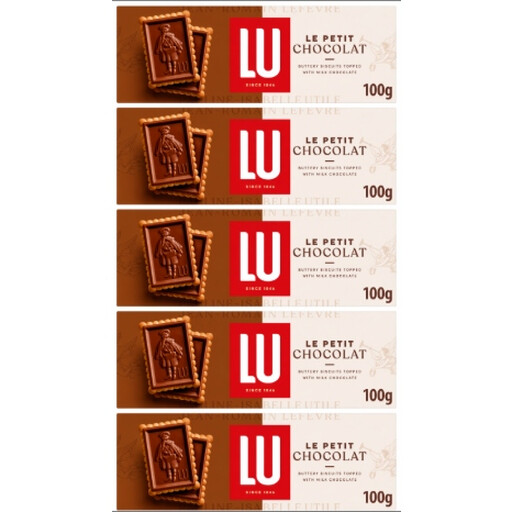 No image available
For a biscuit snack before or during training, check whether the inner packs are suitable to carry separately; these are chocolate biscuits, not digestives.
Pack description: 100g x 6pcs. Read the exact pack for carbohydrate per portion and allergen information.
Not necessarily. The Tesco-listed McVitie's 2 × 315 g twin pack contains two large sleeves; Nisbets' catering listing instead specifies 24 individually wrapped two-biscuit packets. Check the inner-pack count.
Use the exact biscuit's total-carbohydrate label to work out the portion you plan to eat, then try it during training. The Australian Institute of Sport notes that excessive carbohydrate intake can cause gut discomfort, so packet weight alone is not a useful intake measure.
Compare the number of inner packets, biscuits and weight per packet, and whether every packet contains the variety you want. Nisbets' Crawford's assortment includes digestives alongside other biscuits, without stating a digestive-packet count.
Follow the exact pack's storage directions. Sainsbury's and Asda advise keeping their listed digestives in an airtight container once opened.
Read the ingredients, allergen statements, date and storage directions on the exact pack, as well as its nutrition information for the portion you will eat. GOV.UK identifies ingredients, necessary warnings and applicable date information among food-labelling details; an online description should not replace a check of the pack.