Gamers comparing everyday snacks
Plain and chocolate-coated digestives offer different flavours and labelled nutrition. Check the serving size alongside sugar and saturates if a pack will last through more than one gaming break.


For a gaming snack, choose a digestive biscuit by its ingredients and the portion you expect to eat, not by the word ‘digestive’. McVitie's lists less sugar per biscuit for its Original than for its Milk Chocolate version; its The Light One lists less again, but the comparison changes if biscuit sizes or portions differ. If you need to avoid gluten because of coeliac disease, look for a product explicitly labelled suitable and check the current pack for other allergens.
The useful distinction is whether you are choosing for flavour, comparing labelled nutrition or accommodating a dietary restriction.
Plain and chocolate-coated digestives offer different flavours and labelled nutrition. Check the serving size alongside sugar and saturates if a pack will last through more than one gaming break.
Look at the amount per biscuit for the portion you might eat, then compare per 100g when biscuits differ in size. A ‘light’ product name does not tell you which nutrient has changed or what it is being compared with.
The cited ordinary McVitie's digestives contain wheat. If you have coeliac disease, choose a biscuit explicitly labelled suitable for your restriction and check the current pack for any other relevant allergen warnings.
Decide whether flavour or a dietary requirement narrows your options first; then compare the exact packs using the same nutrition measure.
| Priority | What to check | Your needs |
|---|---|---|
| Sugar and portion | Check sugar per biscuit and the stated biscuit size; use per 100g when sizes differ. McVitie's lists 1.3g for The Light One, 2.2g for Original and 4.8g for Milk Chocolate per biscuit. | I want to know what my usual number of biscuits adds up to, rather than assuming every digestive has the same recipe. If I prefer a chocolate coating, I can compare that pack on the same basis. |
| Ingredients and fibre | Read the ingredients and labelled fibre rather than treating ‘digestive’ as an effect. McVitie's lists 0.5g fibre per Original biscuit and 1.2g per The Light One biscuit; neither figure establishes relief from symptoms. | Some foods may not agree with me, so I need the ingredient list rather than a promise based on the biscuit's name. NHS guidance notes that cereals and grains trigger symptoms for some people. |
| Gluten and allergens | For coeliac disease, check explicit gluten-free suitability and the current pack. Check other allergens separately: Sainsbury's labels its Free From Digestives suitable for coeliacs but warns that they are unsuitable for customers with a nut allergy because of manufacturing methods. | My dietary restriction determines which pack I can choose. ‘Gluten-free’ does not answer a separate question about nuts, milk or soya. |
| Keeping an open pack | Check the pack size and storage instructions if you will eat it over several sessions. Tesco and Asda instruct shoppers to keep their cited digestives in an airtight container after opening. | A pack may stay open between gaming breaks, so I want a size and storage routine that work for how I use it. |
For the listed McVitie's biscuits, the lower per-biscuit sugar figure for The Light One is a specific label comparison, not a general claim about every lighter-sugar digestive. McVitie's ‘30% less sugar’ statement compares The Light One with the average digestive biscuit, rather than with every alternative on this page.
A biscuit name does not establish a digestive effect. NHS guidance notes that some people find cereals or grains trigger symptoms.
Use the ingredients and nutrition label to compare biscuits. If symptoms are a concern, follow advice appropriate to your circumstances rather than choosing by the product name.
McVitie's The Light One contains wheat. The brand's lower-sugar claim also has a specified comparator: the average digestive biscuit.
Check the nutrient you want to compare and its per-biscuit or per-100g value. Check gluten suitability as a separate question.
Ingredients and precautionary warnings matter separately from a product's name or its vegan or gluten-free description. The cited Sainsbury's Free From biscuit, for example, carries a nut-allergy warning.
Read the packaging supplied before eating, including any ‘may contain’ statements relevant to your restriction.
These product lines illustrate different label checks; a brand name alone does not establish the properties of every biscuit it sells.
Its listed Original, Milk Chocolate and The Light One digestives allow a per-biscuit comparison within the range.
Tesco Digestives 400g provide a plain own-label pack for comparison.
Asda Digestive Biscuits 400g offer another plain own-label pack.
Its Free From Digestives 160g illustrate the specifically labelled gluten-free route.
The cited plain digestive provides a demerara-sugar variation to consider.
These Joybuy options cover a gluten-free-labelled biscuit, a Zero Sugar-named digestive and a milk-chocolate digestive. Choose between them using the current pack details for the restriction, flavour and portion that matter to you.
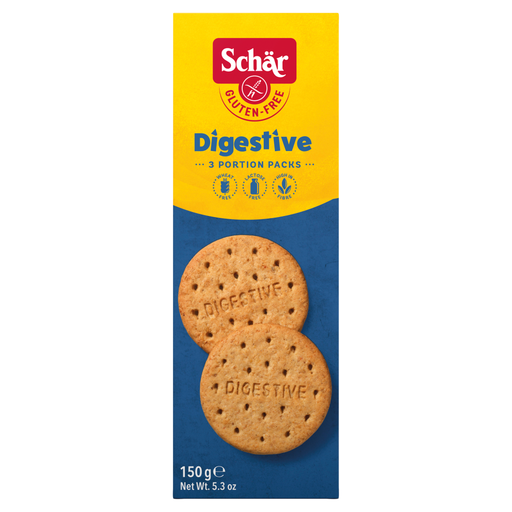 No image available
A gluten-free-labelled digestive to consider when ordinary wheat digestives do not meet your requirements. Check the pack's full suitability and allergen advice for your particular restriction.
 No image available
A 400g digestive for a sugar-focused comparison. Read the current nutrition label and ingredients rather than using the Zero Sugar name to judge the portion or its suitability for other dietary restrictions.
 No image available
A milk-chocolate-coated option when that flavour is the reason for choosing a digestive. McVitie's lists 4.8g sugar and 2.1g saturates per biscuit for its Milk Chocolate Digestives; check the pack for its stated serving and allergen information.
The name is not evidence that a biscuit will ease digestive symptoms. Compare its ingredients and labelled fibre; NHS guidance also notes that cereals and grains can trigger symptoms for some people.
The cited ordinary McVitie's digestives contain wheat, so they are not gluten-free substitutes. The NHS says coeliac disease requires a gluten-free diet; look for an explicitly suitable biscuit and check its current pack for other allergen warnings.
Follow the instructions on the pack you buy. Tesco and Asda instruct shoppers to store their cited digestives in an airtight container after opening.