Households stocking a biscuit tin
A standard packet or twin pack can make sense when several people will eat digestives during the week. Check the net weight and consider when each packet will be opened.


For a shared biscuit tin, choose a plain packet or twin pack according to how many digestives your household will use. If the aim is an occasional chocolate treat rather than an everyday plain biscuit, compare the nutrition and allergen labels; a smaller foiled format may suit a household that wants separate portions. Ordinary digestive packets are not single biscuit bars.
A standard packet or twin pack can make sense when several people will eat digestives during the week. Check the net weight and consider when each packet will be opened.
Chocolate-coated digestives offer a different flavour and ingredient list from plain ones. If portions matter, a smaller foiled format is another option to consider.
Standard digestives in the cited retailer listings contain wheat, and some plain products carry a may-contain-milk statement. Check the current pack for the particular variety you plan to buy.
Choose the format you will use, then compare the labels of the exact plain or chocolate varieties you are considering.
| Priority | What to check | Your needs |
|---|---|---|
| Pack format | Compare net weights and packet counts: the listed options include 400g packets, a 2 x 315g twin pack and a 2 x 400g twin pack. Check how you will store an opened packet. | We share digestives throughout the week, so I want enough biscuits without opening more than we will use. |
| Plain or chocolate | Compare ingredients and sugars and saturates per 100g, rather than treating all digestives as nutritionally alike. Joybuy lists 28.5g sugars and 12.4g saturates per 100g for McVitie's Milk Chocolate 400g. | I want to decide whether this packet is for everyday sharing or for a chocolate treat. |
| Allergens | Read the current ingredients and precautionary statements for the exact variety. ASDA's plain 400g digestives contain wheat and carry a may-contain-milk statement; its vegan suitability label does not remove that warning. | If someone needs to avoid an ingredient, I cannot rely on the word 'digestive' or a vegan label alone. |
| Separate portions | Distinguish a multi-biscuit packet from M&S's 190g product containing six foiled milk-chocolate digestives. Check the format as well as the total weight. | Biscuits are an occasional treat here, so individually foiled pieces may suit us better than an open shared packet. |
Chocolate coating changes the ingredients and the figures on the nutrition panel. Joybuy lists 28.5g sugars and 12.4g saturates per 100g for McVitie's Milk Chocolate 400g.
Compare the per-100g panels of the particular plain and chocolate packets you are choosing between.
ASDA's plain 400g digestives are labelled suitable for vegans but also carry a may-contain-milk statement. Standard digestives in the cited listings contain wheat.
For an allergy or a gluten-free requirement, read the current pack's ingredients and precautionary statements. Choose a product explicitly labelled gluten-free if gluten-free status is required.
A brand can offer several digestive formats; check the label of the specific variety rather than applying one packet's details to the whole range.
The cited listings include Original plain digestives in single and twin packs, alongside a milk-chocolate variety.
Its own-label plain digestives are listed in a 400g packet.
Tesco's cited grocery results include a 400g plain digestive packet.
The cited range includes a 400g plain packet and a 190g product containing six foiled milk-chocolate digestives.
A cited product listing describes a 500g dark-chocolate-chip digestive packet.
These McVitie's options cover a plain twin pack and several chocolate digestive formats for a weekly shop. Check the exact packet quantity, particularly where a listing uses the term 'Case SKU'.
 No image available
A milk-chocolate digestive option for the treat part of a weekly shop. Confirm whether 'Case SKU' refers to one 400g packet or a larger bundle before ordering.
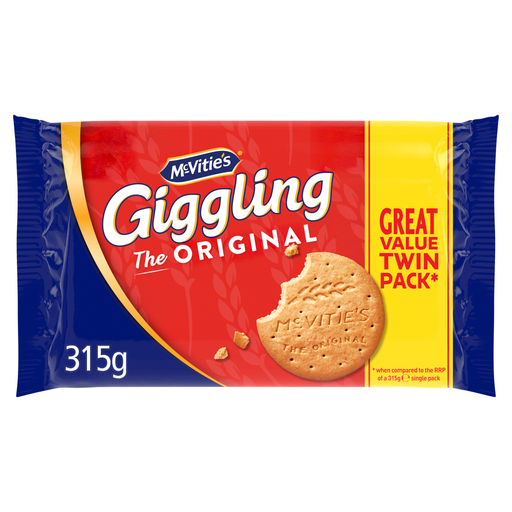 No image available
A plain digestive twin pack for a household planning to use two packets. The stated format is 2 x 315g; check the current pack label for ingredients and allergen statements.
 No image available
A dark-chocolate digestive in two 266g packets. Consider when the second packet will be opened, and check its current ingredient and nutrition panels alongside any other chocolate variety you are considering.
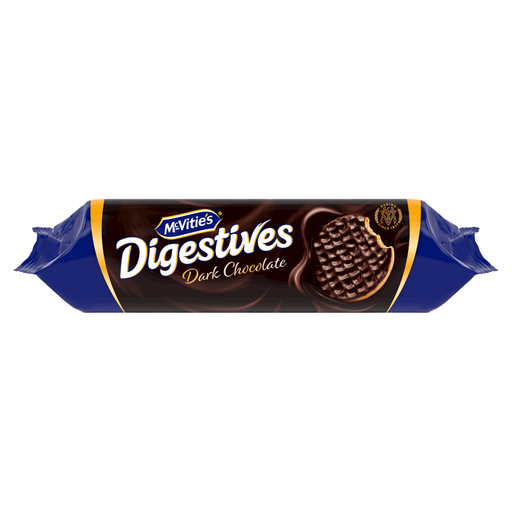 No image available
A single 400g dark-chocolate digestive packet for households that do not want a twin pack. Check the exact variety's ingredients, allergens and per-100g nutrition panel.
 No image available
A single 400g milk-chocolate digestive packet for a chocolate-treat choice. Joybuy lists milk, soya and wheat as allergens, with 28.5g sugars and 12.4g saturates per 100g; check the current pack before use.
Start with how many biscuits the household is likely to use and whether a single packet, twin pack or separately foiled format fits that plan. Then compare the exact varieties' ingredients, allergens and nutrition panels; follow the pack's storage instructions after opening.
Do not assume they are: the cited standard plain digestive listings include wheat-containing products. If gluten-free status is required, choose a product explicitly labelled gluten-free and check its current pack.
Not automatically. ASDA labels its plain 400g digestives suitable for vegans, but the listing also says they may contain milk. Read the current ingredients and precautionary-allergen statement for the exact product rather than relying on the vegan claim.
The cited ordinary plain digestives are multi-biscuit packets, not single bars. For separate portions, M&S lists a 190g product containing six foiled milk-chocolate digestives; check that its ingredients and format suit what you want.
Check the variety, net weight, ingredients and allergens when selecting a packet. UK government food-labelling guidance identifies ingredients including allergens, net quantity and date marking as information for prepacked food; read the physical pack before eating, particularly when managing an allergy or intolerance.