Shared-buffet organisers
If biscuits will sit on a shared table, the count on each exact pack helps you plan portions. Twin packs also let you open one packet while holding the other back.


Choose the pack format by how guests will take the biscuits: twin packs or ordinary packets suit a shared table, while individually wrapped digestive bars suit portions set aside to take away. Use the count on each exact pack to plan quantities, and check the delivered labels for ingredients; a twin pack does not mean individually wrapped biscuits.
If biscuits will sit on a shared table, the count on each exact pack helps you plan portions. Twin packs also let you open one packet while holding the other back.
If guests need a biscuit in its own wrapper, look for packaging that explicitly says the portions are individually wrapped. Two packets inside a twin pack are a different format.
Keep the current ingredient information for each variety accessible and identify the biscuits separately when serving them. If a food business supplies the buffet, its allergen-information duties also need to be addressed with the caterer.
Decide whether guests will use a shared plate or take away wrapped portions, then plan quantities using the exact varieties you intend to serve.
| Priority | What to check | Your needs |
|---|---|---|
| Serving format | Check whether the product contains separate inner packets or individually wrapped portions. M&S describes its 182 g milk-chocolate digestive bars as individually wrapped; a twin pack contains two packets. | I can serve biscuits from a shared plate, or I need each take-away portion to have its own wrapper. |
| Portion count | Use the count for the exact variant, allowing for an approximate figure. Tesco lists about 42 biscuits for McVitie’s plain 2 × 315 g twin pack and about 32 for its milk-chocolate 2 × 266 g twin pack; Sainsbury’s lists about 27 servings for its plain 400 g packet. Check the quantity on a wrapped-bar pack before relying on it for portion planning. | I want to work out how many guests the biscuits are intended to serve without treating pack weight as a biscuit count. |
| Ingredients | Read the delivered label for every variety. The specified McVitie’s plain and milk-chocolate twin packs list wheat ingredients; the milk-chocolate variant also lists milk and soya-derived ingredients. Keep each variety identifiable when serving. | Guests need accurate information about the particular biscuits on the table, especially if different varieties are served together. |
| Opening packets | Check the number of inner packets and the storage directions on the chosen product. Sainsbury’s advises an airtight container after opening its plain 400 g digestives for best quality. | I would rather replenish the table as needed than open every packet at once. |
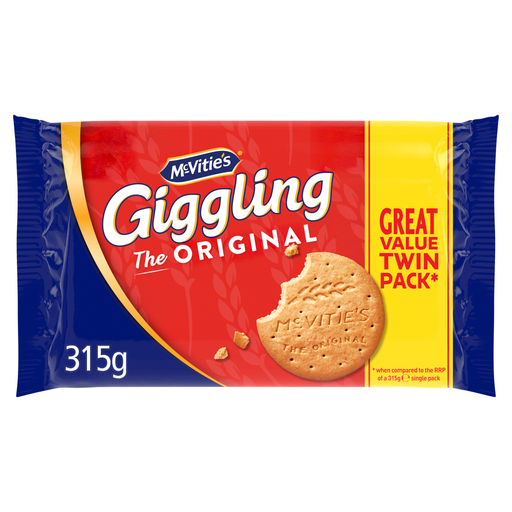
The specified McVitie’s plain twin pack contains two 315 g packets. M&S’s individually wrapped digestive bars offer a different take-away format.
Choose the serving arrangement before ordering, then check the inner packaging and the portion count on the exact product.
The specified plain and milk-chocolate McVitie’s twin packs both list wheat ingredients, while the milk-chocolate version also lists milk and soya-derived ingredients.
Keep the varieties identifiable, check their current physical-pack labels and discuss allergen arrangements with the caterer if a food business is supplying the buffet.
Tesco lists plain 2 × 315 g and milk-chocolate 2 × 266 g digestive twin packs for shared-table serving.
Tesco also lists an own-label milk-chocolate digestive twin pack of 2 × 300 g.
Its plain 400 g digestives provide an ordinary-packet option when buying packets separately suits the buffet plan.
Its 182 g pack of individually wrapped milk-chocolate digestive biscuit bars addresses take-away portions rather than a shared packet of round biscuits.
Good Housekeeping’s June 2026 milk-chocolate digestive taste test included Asda’s 300 g packet.
These options include a plain twin pack, a dark-chocolate twin pack and a 400 g milk-chocolate packet for a shared biscuit table. Check the inner packaging if guests need individually wrapped portions instead.
 No image available
The two-packet format lets you open biscuits for a shared table in stages. Joybuy’s listing states approximately 42 biscuits across the twin pack; these are not individually wrapped portions. Check the delivered ingredient label before serving.
 No image available
This dark-chocolate twin pack offers another variety for a shared biscuit table. Check the biscuit count on the pack when planning portions, and use its physical label for current ingredient and allergen information.
 No image available
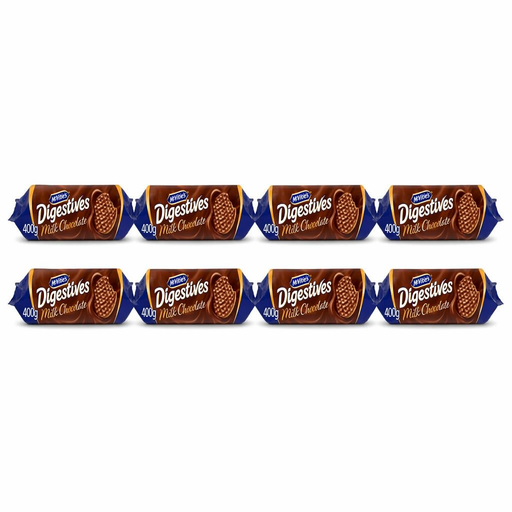
This is a single packet for a shared table, rather than a twin pack or individually wrapped portions. Check its biscuit count before deciding how many packets to order, and read the delivered label for current ingredients.
Start with the number of biscuit portions you intend to offer, then use the count for each exact product. Tesco lists approximately 42 biscuits for McVitie’s plain 2 × 315 g twin pack and 32 for its milk-chocolate 2 × 266 g twin pack; Sainsbury’s lists approximately 27 servings for its plain 400 g packet. Confirm the packs delivered before finalising your serving plan.
Not necessarily: the specified McVitie’s plain twin pack contains two packets, while M&S describes its digestive biscuit bars as individually wrapped. If guests need take-away portions in their own wrappers, check the packaging description and the number of portions on the exact pack.
Follow the storage directions on the chosen pack. Sainsbury’s advises keeping its plain 400 g digestives in an airtight container after opening for best quality; holding unopened packets back also lets you replenish a shared table later.
If a food business supplies the buffet, allergen-information duties apply to its food, including non-prepacked food. The Food Standards Agency says this also applies when a business provides food without charge, and recommends written information supported by a conversation as best practice for non-prepacked food. Food Standards Scotland confirms allergen-information duties for Scottish food businesses. These business duties should not automatically be attributed to a private host serving their own food.
No. The UK Food Standards Agency distinguishes a use-by date, which relates to food safety, from a best-before date, which relates to quality. Check the date and storage directions on the packs delivered for the event.