For an occasional snack shared at home, choose a packet for the number of occasions you expect to use it: a single packet suits one gathering, while a twin pack lets you leave one packet unopened. Compare nutrition per biscuit and check the actual pack’s ingredients for every child eating it; the conventional wheat-based digestives covered here are unsuitable for a child who must avoid gluten. For routine after-school snacks, NHS Healthier Families suggests options such as fruit and chopped vegetables instead of biscuits, and food supplied by a school or club calls for a separate check of that setting’s rules.
Who is sharing the snack?
Families sharing at home
Choose a packet you can divide into servings and store as directed if some biscuits remain. McVitie’s, Tesco and Asda publish nutrition per biscuit for their listed plain digestives, which is more useful for this decision than pack weight alone. NHS Healthier Families suggests fruit and chopped vegetables in place of biscuits for routine after-school snacks.
Parents managing food allergies
Read the ingredients and precautionary allergen statements on the exact packet before offering biscuits to a child or sharing them with others. The checked conventional digestives contain wheat, while statements about milk, peanuts and nuts differ between products.
After-school club snack organisers
Establish whether the food is supplied by a school or club, or brought from home. The Department for Education’s school-food guidance concerns state-funded schools in England; check the rules for the relevant nation and setting rather than applying a home-snack decision to school provision.
What should you check before choosing?
Start with who can eat the biscuits, then choose a pack format and compare servings. Check the setting separately if the snack will be supplied outside the home.
| Priority | What to check | Your needs |
|---|
| Ingredients and allergens |
Read the exact pack’s ingredient list and precautionary statements. Check for wheat and any other allergens relevant to the children eating it; do not treat “plain” or “vegan” as an allergy-suitability label. |
I need to know that each child can eat this particular biscuit before I put it out for sharing. |
| Servings and frequency |
Compare nutrition per biscuit alongside the number you plan to serve. McVitie’s lists 71 kcal and 2.2 g sugars for one Original digestive; Tesco lists 67 kcal and 2.1 g sugars for one of its 14 g digestives. These are different biscuits, not a nutrition ranking. |
How many biscuits will each child have? If this is a routine after-school snack, I would also consider fruit or chopped vegetables, as NHS Healthier Families suggests. |
| Pack format and storage |
Decide whether one packet or two separately wrapped packets fit the occasions. Follow the pack’s storage directions after opening; Tesco, Asda and M&S specify an airtight container for their listed digestives. |
We may share biscuits on different days, so leaving a second packet unopened matters more to me than buying one large packet. |
| Snack setting |
Identify whether the snack is eaten at home, brought from home or supplied by a school or club. For school provision in England, check the applicable school-food requirements and the setting’s policy; do not substitute retail-promotion rules for them. |
If I am providing snacks for an after-school group, I need to check that setting’s rules before choosing what to bring. |
Mistakes to avoid
-
Assuming “vegan” or “plain” means suitable for allergies
Asda’s vegan-labelled plain digestives contain wheat and carry a may-contain-milk statement. Other checked packets have different ingredient and precautionary statements.
Check the exact packet against every child’s requirements, including any need to avoid gluten.
-
Choosing a larger pack without planning the occasions
A single opened packet needs appropriate storage, whereas a twin pack lets one packet stay unopened. Neither format determines how many biscuits to serve.
Choose for the occasions you expect, portion the biscuits and follow the storage instructions for any remainder. For routine snacks, consider the alternatives suggested by NHS Healthier Families.
-
Treating retail rules as a blanket school-snack ban
England’s rules on certain high-fat, salt or sugar retail promotions and its school-food requirements address different activities. A biscuit’s category name alone does not establish its classification or whether it may be supplied in a particular setting.
Check whether the food is supplied by a school or brought from home, then consult that setting’s current policy and the rules for its nation.
Brand and own-label references
These product-line examples show why pack format and labels need checking separately; a brand name alone does not settle suitability for sharing.
McVitie’s
McVitie’s lists Original Digestives in several sizes, including 2 × 315 g.
- Its manufacturer page gives nutrition per biscuit.
- The Original contains wheat and has a may-contain-milk statement on that page; check the packet being shared.
Crawford’s
A UK retailer lists Crawford’s plain Digestives in a 400 g packet.
- The listed ingredients include wheat flour and wholemeal wheat flour.
- Check the packet’s full allergen and storage information before sharing.
Tesco
Tesco lists a 400 g packet of plain digestives.
- Its listing gives nutrition for one 14 g biscuit and advises airtight storage after opening.
- The listed ingredients include milk, and the listing carries a may-contain-peanuts-and-nuts warning.
Sainsbury’s
Sainsbury’s lists plain Digestives in a 400 g packet.
- The packet size offers a single-pack format for sharing.
- Use the exact packet’s ingredients and nutrition label when assessing it for the children eating it.
Asda
Asda lists a 400 g packet of plain digestives.
- Its listing provides per-biscuit nutrition and advises airtight storage after opening.
- Asda labels the product suitable for vegans, but lists wheat and a may-contain-milk warning; the vegan label does not establish suitability for a milk allergy.
M&S
M&S lists plain Digestive Biscuits in a 400 g packet.
- Its product information gives ingredients, nutrition per 100 g and airtight-storage advice.
- The listed ingredients include wheat and barley malt extract; check the packet for suitability.
Digestive biscuits on Joybuy
These options include a plain twin pack, a sugar-free-labelled single packet and a dark-chocolate twin pack. The chocolate biscuits are not a substitute for plain digestives if the recipe matters to your choice.
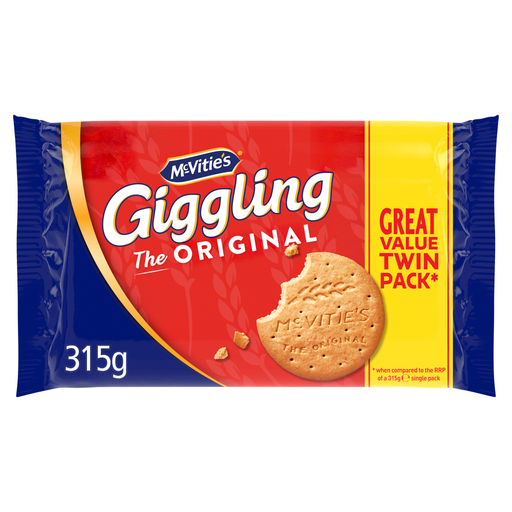 Image unavailable
McVitie’s The Original Digestives, 2 × 315 g
Two packets suit sharing on separate occasions when you want to leave one unopened. The Joybuy listing states 15% wholemeal wheat flour, while McVitie’s Original product page states 16%; check the actual packet’s ingredients and allergen advice rather than assuming the two descriptions are identical.
View on Joybuy
 Image unavailable
Gullon Zero Sugar Free Original Digestives, 400 g
This is a single 400 g packet labelled sugar-free, rather than a standard plain-digestive recipe. Check its ingredients, allergen statements and any consumption warning on the pack before sharing; the name alone does not establish suitability for a child’s dietary requirements.
View on Joybuy
 Image unavailable
McVitie’s Dark Chocolate Digestives Twin Pack, 2 × 266 g
The two 266 g packets offer a format for separate sharing occasions, but these are dark-chocolate digestives, not plain ones. Check the exact pack’s ingredients, allergens and serving information before offering them to children.
View on Joybuy
Questions about sharing and storage
Are these conventional digestives suitable for a child who must avoid gluten?
No. The checked conventional digestives list wheat or other gluten-containing ingredients. Choose an alternative using its own current label rather than assuming a digestive biscuit is gluten-free.
How should I keep an opened sharing packet?
Follow the packet’s storage instructions. The checked Tesco, Asda and M&S plain-digestive listings advise keeping biscuits in an airtight container once opened.
Do school-provided after-school snacks follow the same rules as snacks eaten at home?
No. The Department for Education’s school-food guidance addresses food provided in state-funded schools in England, including relevant after-school provision; it does not establish the rules for the other UK nations. Check the setting’s current requirements and any policy for food brought from home.
Does an HFSS description mean digestives are banned from school meals throughout the UK?
No UK-wide conclusion follows from that description. The Department of Health and Social Care’s guidance on certain high-fat, salt or sugar retail promotions applies to businesses operating in and selling to England; school-food requirements are separate. The Department for Education describes updated England school-food standards planned for September 2027 as subject to parliamentary approval, so check the current rules for the particular school setting rather than assuming a proposed change already applies.
What should I do before putting biscuits out to share?
Portion the biscuits for the children eating them and keep the labelled packet available for ingredient checks. Store any remainder according to that packet’s directions.


