Families sharing snacks at home
A larger pack may suit several people over the school holidays. Check the pack weight, preferred flavour and storage directions before choosing.


For snacks shared at home, a 400g plain digestive pack is a starting point if you want a larger pack; check its current allergen and nutrition labels before buying. Choose a chocolate-coated version for its flavour rather than assuming it matches a plain biscuit nutritionally: Marks & Spencer lists more sugars and saturates per 100g for its milk-chocolate digestives than for its plain digestives. If a school will provide the food, check its policy and the rules that apply where it operates.
A larger pack may suit several people over the school holidays. Check the pack weight, preferred flavour and storage directions before choosing.
Check each intended sharer’s requirements against the current pack. Digestives in this selection and the referenced supermarket ranges declare different allergens and precautionary warnings.
If biscuits would be provided to pupils by a state-funded school, check the school’s arrangements and applicable requirements rather than treating a household snack purchase as the same decision. The Department for Education’s school-food guidance concerns food and drink provided in state-funded schools in England.
Start with the pack size and everyone’s ingredient requirements, then compare flavours using nutrition information on the same per-100g basis.
| Priority | What to check | Your needs |
|---|---|---|
| Pack and storage | Check net weight rather than pack appearance. Tesco, M&S and McVitie's have 400g digestive listings; follow the chosen pack’s directions after opening. | I’m sharing biscuits across several snack times, so the pack needs to suit the number of people eating them. |
| Ingredients and allergens | Read the current ingredients, emphasised allergens and any precautionary warning. Tesco Reduced Fat Digestives list wheat and milk and may contain peanuts and nuts; Joybuy lists milk, soya and wheat for McVitie's Milk Chocolate Digestives. | Everyone sharing needs an option that fits their own ingredient requirements; I cannot decide that from the word “digestive” alone. |
| Flavour and nutrition | Compare plain and coated variants per 100g. M&S lists 18.2g sugars and 10.3g saturates for its plain digestives, against 33.2g sugars and 13.8g saturates for its milk-chocolate digestives. | Chocolate coating may be the flavour we want, but I’d like to see how the two labels compare before choosing a larger pack. |
| School provision | Establish whether these are parent-bought snacks for home or food provided by a school. Check the school’s policy and the requirements for its nation; the Department for Education’s England school-food guidance addresses provision in state-funded schools. | If I’m arranging food for pupils rather than buying for home, I need to check the rules that apply to that setting. |
Product labels differ: the referenced Tesco reduced-fat biscuits list wheat and milk and may contain peanuts and nuts, while Joybuy lists milk, soya and wheat for McVitie's Milk Chocolate Digestives.
Check the physical pack’s ingredients and precautionary warnings against each person’s requirements before serving.
M&S lists 33.2g sugars and 13.8g saturates per 100g for its milk-chocolate digestives, compared with 18.2g sugars and 10.3g saturates for its plain digestives.
If chocolate flavour matters, choose it deliberately; otherwise compare the current per-100g panels of the plain options you are considering.
Department of Health and Social Care guidance on HFSS retail promotions addresses a different setting from the food provided in state-funded schools covered by the Department for Education’s England school-food guidance.
For food provided to pupils, ask the school or organiser for its current policy and check the requirements in the nation where it operates.
Its Milk Chocolate Digestives are listed in a 400g pack, including on Joybuy.
Tesco lists a 400g reduced-fat digestive in its own-label range.
M&S lists a 400g plain digestive and a 190g milk-chocolate-coated digestive.
Iceland Foods lists Crawford's Digestives in a 400g pack.
These options cover a 400g milk-chocolate pack for household sharing and a smaller, 150g gluten-free digestive pack. Check the label of either product against everyone’s requirements.
 No image available
A 400g chocolate-coated option for sharing when that flavour suits the group. Joybuy lists milk, soya and wheat as allergens. For this product, Tesco Groceries lists 83 kcal, 4.8g sugars and 2.1g saturates per 16.7g biscuit; check the current pack before serving.
 No image available
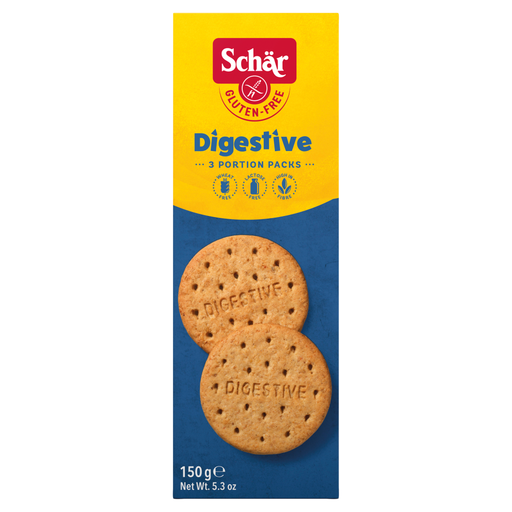
A gluten-free digestive option in a 150g pack. It is smaller than the 400g pack shown here, so consider how much your group needs and check the current label for other ingredients and allergens.
No. Food provided to pupils is a different decision from a snack bought for home. The Department for Education’s school-food guidance addresses food and drink provided in state-funded schools in England; check the school’s current policy and the requirements applicable where it operates.
Not on their own. Department of Health and Social Care guidance concerns retail promotions of products high in fat, sugar or salt, while the Department for Education’s England school-food guidance concerns food provided in state-funded schools. Check the requirements for the particular school setting.
Do not assume so. Tesco’s reduced-fat digestives list wheat and milk and may contain peanuts and nuts; Joybuy lists milk, soya and wheat for McVitie's Milk Chocolate Digestives. Check the current physical label against each person’s requirements.
The answer depends on the exact products. M&S lists 513 kcal, 33.2g sugars and 13.8g saturates per 100g for its milk-chocolate digestives, against 488 kcal, 18.2g sugars and 10.3g saturates for its plain digestives. Those figures compare two M&S products, not every digestive on sale.
Follow the directions on the pack you buy. Tesco and M&S digestive listings advise cool, dry storage and an airtight container after opening.